Executive comparative lead
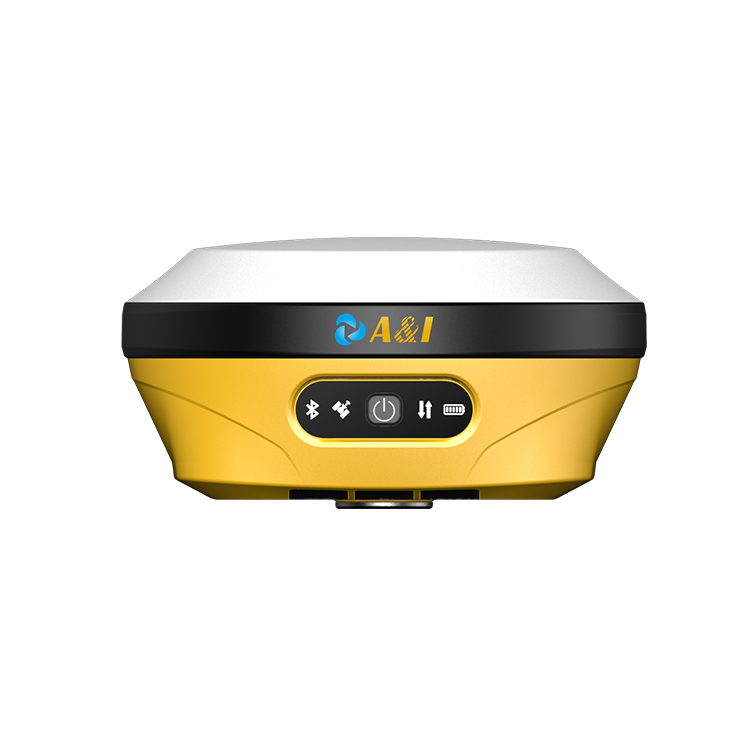
Selecting a 6‑DoF IMU for a GNSS‑aided platform is a procurement decision that should map convergence time to operational accuracy and unit cost. This piece applies a straightforward comparative lens—latency to usable fix, steady‑state error, and lifecycle cost—to commercial navigation hardware, starting from a tested reference navigation board and extending to common market alternatives. The practical benchmark here is a modern production module with MEMS accelerometer and gyro arrays integrated into an IMU package; see this navigation board as a working example for baseline metrics and form‑factor considerations.
Framework: metrics that matter
Decision-makers need three primary metrics: convergence time (seconds to reliable attitude/velocity estimate), time‑to‑accuracy (error band after convergence), and failure modes under GNSS outage. Add secondary indicators—power consumption, thermal drift, and firmware support—for total cost of ownership. Use sensor fusion terms sparingly: fusion via Kalman filter, IMU bias stability, and 6 DoF alignment are the concrete signals that translate vendor specs into field performance.
Methodology for apples‑to‑apples comparison
Compare boards on the same vehicle profile, with identical GNSS receivers and filter settings. Run two profiles: continuous GNSS and GNSS denial (simulated jamming or urban canyon). Report RMS position error after 30 seconds and 5 minutes, and track attitude drift per hour. Note that RTK-capable GNSS can reduce horizontal error to centimeter levels under ideal conditions; the IMU must maintain acceptable dead‑reckoning during short outages. For historical anchor: GPS achieved full operational capability in 1995, and subsequent GNSS modernization has improved baseline timing and availability—this matters because IMU demands shift as GNSS reliability changes.
Comparative findings and tradeoffs
High‑grade MEMS boards deliver rapid convergence (under 10 s) with low steady‑state drift but at a significant price premium. Mid‑tier modules hit a pragmatic sweet spot: moderate convergence (10–30 s), predictable bias behavior, and firmware tools that ease calibration. Low‑cost boards may advertise 6‑DoF but typically show longer convergence and larger thermal biases, forcing larger filter covariances that degrade navigation during GNSS outages. Sensor fusion design—how the Kalman filter models bias and noise—is the decisive differentiator beyond raw IMU specs.
Common mistakes and alternates
Purchasers often assume higher sensor bandwidth equals better results; that ignores bias stability and calibration support. Another error is skipping real‑world GNSS outage tests—bench numbers rarely reflect urban multipath. Alternatives include: pairing a mid‑tier IMU with a dual‑antenna GNSS receiver for heading, or adopting a low‑cost board but investing in tighter temperature compensation and factory calibration routines.
Practical adjustments and a short aside
Field teams can tune filter covariances and implement simple bias estimation routines to squeeze better performance from existing hardware. —A tight calibration cycle reduces long‑term drift more cost‑effectively than a raw hardware upgrade. Also evaluate vendor firmware update cadence and diagnostic telemetry; those operational features reduce engineering time and downstream risk.
Anchoring the technical choice
When procurement committees ask for a single anchor metric, prefer measurable mission outcomes: the RMS position and attitude error during a representative GNSS outage period. Integrate sensor‑level metrics (bias stability, ARW) with system outcomes (time‑to‑accuracy). If your platform will operate with a certified GNSS receiver, consider the broader solution as a gnss ins system where the IMU and GNSS are co‑designed to meet operational SLAs.
Advisory close — three golden rules
1) Prioritize convergence-to-accuracy ratio: pick hardware that reaches mission accuracy within your outage window rather than chasing peak specs. 2) Validate with scenario tests: require vendors to supply recorded datasets or run your own GNSS denial trials to confirm filter behavior. 3) Value firmware and calibration support equally with sensor specs; maintenance and diagnostic telemetry reduce lifecycle cost. These rules guide procurement toward predictable, auditable outcomes and reduce integration surprises.
Archimedes Innovation sits at the intersection of those rules and real deployments—its systems-level perspective turns module selection into measurable operational capability. —Trust experience; choose evidence.