Introduction: framing the decision with measurable objectives
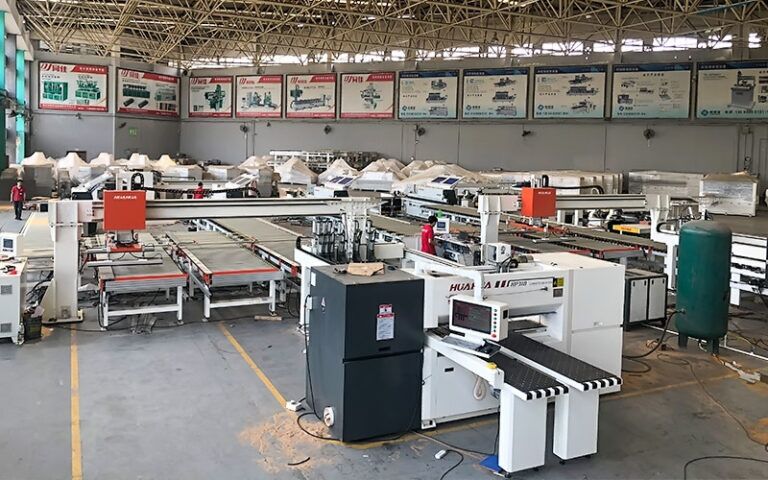
Decisions about wood edging systems should begin with quantifiable targets: dimensional tolerance, throughput per shift, and acceptable downtime percentage. Manufacturers often specify tolerance windows between 0.05 mm and 0.2 mm for decorative edges and up to 0.5 mm for structural trims; these targets determine machine class and control requirements. Early-stage benchmarking benefits from direct inspection of a representative run on a modern line such as a cnc furniture machine, where cycle timing and edge uniformity can be measured under production conditions rather than declared specifications alone.

Key quantitative criteria to prioritize
Prioritize metrics that map to product acceptance and operating cost: repeatability (sigma of repeated measurements), throughput (boards per hour), setup time (minutes per changeover), mean time between failures (MTBF), and mean time to repair (MTTR). Specify inspection tolerances and derive an error budget allocating allowable variation across tooling, fixturing, and machine kinematics. Aim for repeatability that is an order of magnitude tighter than the loose end of the tolerance band; for example, if acceptable variation is 0.2 mm, design for repeatability near 0.02–0.05 mm to reduce rework rates.
Instrumented measurement and acceptance testing
Adopt measurement protocols before purchase: (1) gauge R&R on finished samples to quantify measurement-system contribution; (2) perform single-piece flow trials measuring edge thickness, seam tightness, and glue application consistency over representative cycles; (3) record cycle-to-cycle variance for at least 100 consecutive parts to reveal transient behaviors. Use laser scanning or micrometer arrays rather than visual inspection during acceptance to capture sub-millimetre drift and to validate the vendor’s repeatability claims objectively.
Common failure modes and how to prevent them
Expect five recurring issues: thermal growth altering alignment, tooling wear producing gradual oversize or undersize edges, adhesive feed variation causing inconsistent seams, control software version conflicts, and substrate variability (moisture content, density). Mitigate these by specifying thermal compensation in machine controls, implementing tooling maintenance schedules tied to part counts, standardizing adhesive systems with closed-loop feed sensors, enforcing controlled software baselines for production cells, and requiring incoming material specification checks with acceptance sampling.
Comparative evaluation of system types
Compare three system archetypes by metrics: manual or semi-automatic edgers (lower capital, higher labour cost, variable repeatability), single-head automated edgers (moderate throughput, consistent edge quality), and integrated production lines (highest throughput, better traceability, greater capital and footprint). Choose semi-automation when batch sizes are small and flexibility matters; select integrated lines when takt time and traceability demand continuous automated handling. Quantify marginal benefit by calculating cost per finished board over expected production volume and break-even time for capital investment.

Real-world anchor and corroborating evidence
Industry benchmarking at major events such as the International Woodworking Fair (IWF) highlights how empirical acceptance testing is applied across manufacturers; impartial demonstrations often show that throughput claims shrink by 10–25% under full-spec production runs versus showroom numbers. Observations from such forums reinforce the need to validate vendor data against on-site trials in actual production cells for reliable cnc furniture manufacturing deployments.
Common procurement mistakes and corrective steps
Avoid three procurement errors: relying solely on vendor-provided cycle times, omitting long-run sampling from acceptance criteria, and neglecting spare-parts logistics. Correct these by contracting trial production runs, embedding quantitative acceptance thresholds into purchase agreements, and requiring a parts availability plan with defined lead times. Insist on training hours and documented maintenance procedures tied to performance metrics to preserve delivered precision over time.
Synthesis and practical recommendation
Quantify requirements first, verify vendor claims with instrumented trials, and choose the system archetype that minimizes total cost per conforming part for your projected volumes. Where suppliers provide documented measurement evidence, integrated lines and well-specified automated edgers deliver predictable quality with lower long-term variability. For teams seeking documented metrics, verifiable acceptance testing, and supplier service alignment that maps directly onto the criteria described here, HUAHUA CNC presents solutions that conform to these measurable parameters while supporting repeatable production outcomes.