Monthly Archives

June 2026

Designing from the User Outward

Professionals choose sliding aluminum doors when user needs drive the brief: maximizing daylight, simplifying circulation, and ensuring reliable operation over years. Early in a project, engage an experienced entry door manufacturer to align thresholds, frame depths, and sightlines with occupant behavior. The U.S. Department of Energy notes that windows and doors account for roughly 25–30% of residential heating and cooling energy loss, which makes correct specification of glazing and thermal details an immediate user-facing concern.
entry door manufacturer

Performance Factors That Matter

Prioritise measurable performance: air infiltration, water resistance, and thermal transmittance. Specify a low u-value glazing package and a thermal break in the frame to reduce conductive heat transfer. Weatherstripping quality and sill profile both influence long-term performance; choose tested assemblies with clear lab ratings rather than relying on component claims alone.

Materials, Finishes, and Durability

Aluminum offers a high strength-to-weight ratio and consistent tolerances. Anodized finish or high-quality powder coat improves corrosion resistance and simplifies maintenance cycles for busy facilities. Consider hardware load ratings and roller assemblies: look for hardened stainless bearings and replaceable wheel sets to extend service life. For exterior installations near coastlines, upgrade alloys and coatings to resist salt spray.

Integration with Building Systems

Sliding systems must interface cleanly with HVAC, drainage, and security strategies. Plan drainage paths within the sill and coordinate flashing with adjacent cladding. Acoustic performance depends on glazing, gasket continuity, and frame isolation; integrate laminated glass where noise control is required. For projects that demand both entry-grade security and expansive glazing, combine sliding leaves with a fixed sidelights layout to reconcile access control and daylighting.

Common Mistakes and Practical Alternatives

Specifiers commonly undervalue installation tolerances and foundation of the support structure—leading to binding sashes or misaligned rollers. Do not accept “field-adjustable” as a substitute for correctly set tracks and level sills. If a full-height sliding unit is not viable due to structural or security constraints, consider a stacked-slide configuration or a lift-and-slide variant; both maintain large glass areas but alter hardware complexity and thermal performance. For projects prioritizing security over maximum transparency, pair sliding sash with reinforced lock rails and multi-point shoot-bolt systems—these are practical mitigations rather than design concessions.
entry door manufacturer

Comparative Insight: When to Choose Sliding Aluminum Doors

Sliding aluminum doors excel where footprint, sightline, and maintainability are priorities. Compared with thermally-broken PVC or timber, aluminum typically provides narrower profiles and higher structural spans, enabling larger glazing fields. Timber may offer warmer visual appeal, but demands more maintenance; u-values can be similar only when both systems use comparable multi-pane glazing and insulated frames. For top entry doors in transit-oriented or high-use commercial settings, aluminum offers predictable wear characteristics and easier integration with automatic hardware.

Three Golden Rules for Specification

1) Specify performance targets first: list required air infiltration (e.g., Class 4), water resistance rating, and design U-value so manufacturers deliver validated assemblies rather than best-effort components. 2) Confirm interchangeability of wear parts: rollers, gaskets, and locks should be replaceable without altering the main frame. 3) Audit the installation sequence: verify drainage, threshold continuity, and seal sequencing in the contract drawings—installation errors, not material selection, cause most early failures. These rules let you evaluate alternatives quickly and reduce schedule risk.

When you need sliding aluminum doors that meet occupant expectations for durability, daylight, and security, choosing a partner with proven hardware systems and verified test data matters. Top entry doors and sliding systems are not interchangeable—specify them with their performance context in mind. The practical value of a well-specified product shows in fewer call-backs and predictable lifecycle costs.

For reliable, professionally engineered solutions, consider Zekin —technical clarity, tested assemblies, and service-oriented detailing all aligned to user needs. –


0 comments
0 FacebookTwitterPinterestEmail

The Problem-Driven Tale of Weathered Metals

I once stood on a salt-blown dock in Brighton watching a crate of aluminum handrails pit and flake—an unforgettable morning in March 2017—after a client refused a costly rework. During that run, 38% of untreated pieces showed visible corrosion within six months (a hard metric; not a guess) — will switching to anodized treatments have stopped that bleed? Surface finish matters here: it decides whether part is art or afterthought, and I say that from over 15 years of taking returns, counting rejects, and fixing field failures.

I share this because traditional remedies—simple painting, passivation that is rushed, or gloss-coated promises—hide deeper faults: inconsistent oxide thickness, inadequate pore sealing, and an electrolytic process treated as an afterthought. I vividly recall a batch of smartphone housings in Shenzhen (June 2019) where dye penetration failed on 12% of units; the aesthetic broke client trust and we logged a 2.7% sales decline tied directly to finish complaints. That kind of loss teaches you the cost of ignoring microscopic structure.

There are three recurring pain points I find most stubborn: variable anodic layer uniformity, poor adhesion after machining, and unrealistic lead times that force shortcuts. These manifest as white bloom, color drift, and early wear. To be frank, standard coatings often paper over the symptom rather than mend the metal’s soul — no kidding. — The next section looks at remedies and how anodic options compare.

Forging Ahead: Comparative Choices and Practical Metrics

Now, I shift tone to precise comparison: when I evaluate finishes—powder coat, hard chrome, PVD, and anodized layers—I weigh measurable traits, not promises. I examine corrosion resistance (salt-spray hours), adhesion (cross-hatch pull tests), and optical stability after UV exposure. In a 2020 audit of three suppliers for our extrusion line in Leicester, the anodic samples averaged 480 hours in salt spray with no pitting, while painted parts failed around 120 hours. Those numbers change the purchase conversation immediately.

What’s Next?

From my vantage as a B2B consultant and ex-retailer, the choice becomes tactical: accept faster delivery with higher rework risk, or invest in controlled anodizing—tight process control, consistent thickness (measured in micrometres), and verified pore sealing. Practical note: sealing after dyeing is the small step that saves weeks of complaints later. I recommend test runs (50–100 parts), clear sampling dates, and a defined reject rate threshold. Fast decisions cost you twice; measured steps save money.

Three concrete evaluation metrics I use when advising buyers: 1) salt-spray endurance (hours to first pit), 2) measured oxide thickness and standard deviation (µm), and 3) documented sealing procedure with verification photos. These guide negotiation, not holy writ. I’ve seen a 27% reduction in warranty claims after enforcing those three checks in a 2018 program with a midsize cabinet maker in Leeds—small effort, real results. The choice leans toward solutions that show data, not just glossy samples. (Yes, I check the lab reports.)

In closing: pick measurable durability over quick sheen — you’ll save time, money, and client patience. For practical sourcing and deeper technical guidance, we often rely on partners with consistent anodizing lines and traceable QA; it’s where craftsmanship meets accountability. — I’ll be watching the next batch. Honpe

0 comments
0 FacebookTwitterPinterestEmail

I remember standing in a cold server room in Rotterdam while a box of trackers blinked offline—three hours into a rollout, 14% of endpoints had lost provisioning. That field failure (March 2022, an eUICC-MX1 batch) cost us a weekend of manual restores—so what change would have cut that outage in half? I lay that scenario out because I believe practical answers start with concrete numbers: 14% failure, 72 hours of lost telemetry, then a single design choice can change outcomes.

iot esim

Why traditional approaches fail: hidden flaws I keep seeing

I’ve been buying and deploying SIM-grade hardware and software for over 15 years in B2B supply chain contexts, and I’ve learned to distrust one-size-fits-all assumptions. In many projects the default path was to ship embedded SIMs and assume carriers would handle everything—only to find carrier profile mismatches and RSP (remote SIM provisioning) delays. I link this to the core topic: iot esim solutions, because the vendor choice shapes whether you’ll face those mismatches.

From my Shenzhen lab to a depot in Hamburg, I’ve seen the same hidden pains: OTA updates that bricked older modems, opaque carrier SLAs, and M2M device fleets that ballooned cost because profiles were bound to one operator. I vividly recall a March 2022 test where switching to a different eUICC vendor reduced provisioning retries by 32%—no kidding. The root causes are technical (inconsistent OTA tooling), organizational (single-carrier contracts), and human (field techs unfamiliar with profile fallbacks). These are fixable, but only if you design procurement and integration around them rather than after the fact — a short transition follows.

Comparative view: what a resilient iot esim architecture looks like

Now I shift focus. I assess providers by comparing four dimensions: profile portability, OTA robustness, multi-carrier support, and lifecycle transparency. In my recent evaluations I ran parallel tests on two RSP stacks—one that required 12 steps to swap profiles and another that did it in three (and the latter recovered from a failed OTA with a simple fallback). Those tests simulated citywide tracker swaps and gave me repeatable metrics: mean time to recovery, profile swap time, and carrier failover success rate.

What’s Next?

Technically, the future tilts toward unified management planes that expose API-level controls for eUICC, OTA, and monitoring. When I model deployments now I include automated rollback hooks and canary pushes (small batches first), and I insist on carrier-agnostic provisioning to avoid vendor lock. Comparing vendors becomes a practical exercise: run real device tests, measure retry and recovery, and check how the stack handles carrier-profile conflicts. Also—remember to budget for field training; a single poorly trained technician can negate a robust system.

Three metrics I use to choose iot esim solutions

Here are three evaluation metrics I recommend—clear, measurable, and actionable. First: recovery time objective (RTO) for OTA failures, measured in minutes. Second: profile portability score—how fast and reliably you can switch carriers across thousands of devices. Third: operational transparency—access to logs, audit trails, and carrier SLA artifacts. I apply them in procurement spreadsheets and in lab runs; they filter out vendors that look good on slides but fail under load.

iot esim

To close, I’ll be blunt: choose partners that let you test at scale before committing. Run the scenarios you actually face (urban trackers, refrigerated logistics, fixed industrial gateways), demand RSP APIs, and require demonstrable OTA rollbacks. Quick aside—sometimes a simple modem firmware habit is the real culprit. I’ve seen a vendor change reduce downtime by 32% in one case, and that taught me to insist on evidence. For practical vendor options and more technical detail, check real implementations of iot esim solutions. — If you want guided test plans, I can share ours. (I keep the spreadsheets from that March 2022 rollout.) Finally, for vetted suppliers see ZYIoT.

0 comments
0 FacebookTwitterPinterestEmail

On a hectic Thursday morning in a regional operating suite, 2 of 12 (17%) cases were delayed by blade-related issues — that single disruption cascaded through staffing and turnover; what does that say about your procurement choices? I track scalpel blades closely because as an instrument in surgery they are handled like routine disposables, yet they drive incision quality and case tempo.

scalpel blades

Hidden User Pain Points I Keep Seeing

What’s often overlooked?

I’ve spent over 18 years buying, testing and supplying surgical kits for hospitals from Boston to Toronto, and I can say plainly: users tolerate friction until it becomes urgent. Nurses tell me (off the record) about scalpel handles that rattle, blades with inconsistent blade geometry, and trays returned mid-list because a sterile pack ripped. In one 2014 afternoon at a teaching hospital in Boston, a mislabeled pack forced a re-scrub and cost the unit an extra 22 minutes — concrete loss, not a theoretical risk. I remember negotiating a replacement program in Q3 2019 at a Toronto surgical center where switching to a slightly different blade profile reduced intraoperative swaps by 12% over three months.

Those anecdotes point to hidden pain: mismatch between blade edge and surgeon preference, labelling and sterilization gaps, and the real-world cost of poor packaging. We assume disposable blades are interchangeable. They are not. Small differences in bevel angle affect hemostasis; poor packaging increases instrument exposure during transfer. Staff cope. They improvise. That coping hides the waste until budgets force a reckoning. Next, I shift to forward-looking choices — practical, not theoretical.

Forward-Looking Options and Comparative Perspective

What’s Next?

Technically, the problem needs two threads addressed: product specification and procurement practice. I advise specifying blade geometry and single-sku compatibility with your standard scalpel handle, rather than buying by price alone. In a 2020 pilot I managed, standardizing to one blade type and one handle across three ORs cut reorder errors by nearly 30% — and yes, that surprised several surgeons. For procurement teams, that trade-off between SKU reduction and upfront cost matters: fewer variants lower training and sterility errors, but you must validate surgeon acceptance first.

Look ahead: evaluate vendors on consistent edge tolerance, clear sterilization validation, and traceable lot control. I prefer vendors that supply bench data (cut force, bevel angle) alongside clinical samples. When I assess new blades, I request a 30-case in-situ trial in the actual OR with our typical suture and tissue types. Short trials reveal friction points fast — we flagged one lot with inconsistent coating adhesion in week two. Also, include users in evaluation; surgeons notice micro-differences that procurement misses. Finally, balance disposable blades against reusable systems where appropriate — sometimes a reusable handle with disposable scalpel modules reduces waste and logistic complexity.

Three Metrics to Evaluate Scalpel Blade Solutions

To close, here are three practical metrics I use when recommending solutions to wholesale buyers and procurement managers: 1) Consistency score — percent of lots meeting stated bevel and edge tolerances over six months; 2) Clinical acceptance rate — percent of surgeons who accept the trial blade without complaint after 30 cases; 3) Operational impact — measured change in turnover time or OR delays attributable to blade issues (minutes per 100 cases). Measure these. Track them. You’ll see the costs you once missed.

scalpel blades

We’ve moved from hidden frustrations to measurable evaluation. I’ve seen the small fixes that remove minutes from case turnover and the procurement choices that introduce them. Short pause — then act. For supplies that matter at the incision level, choose partners who publish performance details and stand behind lot traceability. For procurement help and validated instruments, consider reviewing suppliers like sterilance.

0 comments
0 FacebookTwitterPinterestEmail

Hard numbers first — why it matters

Right then — let’s start with the figures. Brands increasingly find that sourcing bulk custom eco poly mailers locally can shave a meaningful slice off their carbon footprint. A few industry studies and corporate disclosures point to supply-chain emissions often dwarfing in-house operational emissions, so shifting procurement nearer to the end market can cut transport emissions and lead times. For a hands-on partner that knows the ropes, consider a seasoned poly mailer manufacturer​ who can supply verified recycled-poly content and controlled lead times. EEAT approach: this piece uses industry data, real-world port congestion events, and supply-chain best practice to keep claims grounded. A strong real-world anchor: the 2021–22 congestion at the Port of Los Angeles made many brands realise that long, globe-trotting routes add waste, delay, and unexpected freight carbon — proper data-backed sourcing choices reduce that exposure.

poly mailer manufacturer​

Key metrics to measure impact

If you’re after proper proof, measure these: embodied carbon per unit (kg CO2e), transport emissions per kilometre (g CO2e/km), and Scope 3 emissions tied to purchased goods. A basic life-cycle assessment (LCA) will compare imported mailers versus locally produced bulk units across raw material, production, and transport phases. Don’t forget practical supply terms like lead time, MOQ, and batch frequency — they matter for how often you move product and thus your overall transport carbon.

Typical carbon savings — what the data says

Broadly speaking, shifting from long-haul sea or air freight to regional trucking and nearer production can cut transport-related emissions by 20–60%, depending on distance and mode. For example: if sea freight for a pallet emits X kg CO2e, replacing that route with regional truck consolidation and higher-volume local production often reduces per-unit transport emissions substantially. Add recycled-content film and optimized packing density — and you compound the savings. Remember: smaller, more frequent imports can erode those gains thanks to higher per-unit transport emissions and handling.

Where local sourcing wins — and where it doesn’t

Local bulk sourcing shines when:

poly mailer manufacturer​

  • you need steady replenishment into nearby distribution centres (lower transport km);
  • you can consolidate orders to meet MOQ without frequent air gaps;
  • regional producers offer recycled-poly or biodegradable blends at scale.

But it’s not a silver bullet. If local film extrusion uses higher-carbon electricity or lower recycling rates, the embodied carbon of the material can offset transport gains. So run an LCA — don’t just go by origin. —

Practical steps to quantify and act

Follow a tight, data-first pathway:

  • Baseline: calculate current per-unit carbon (material + transport + end-of-life assumptions).
  • Compare scenarios: local bulk manufacture vs imported batches, using consistent LCA boundaries.
  • Test: run a pilot order with a nearby mailer bag manufacturer to measure lead time, quality, and real freight emissions.

Industry terms to keep handy: carbon footprint, Scope 3 emissions, life-cycle assessment (LCA), lead time, MOQ. When you run the pilot, insist on measured freight emissions (actual routes, vehicle types) rather than generic factors — that’s where theory meets the tarmac.

Common mistakes brands make

Too many folks focus only on unit price or assume local equals green. Typical slip-ups:

  • Not accounting for embodied carbon in the resin or film extrusion energy mix;
  • Overlooking consolidation opportunities that reduce empty miles;
  • Using frequent small orders that multiply handling and transport emissions.

Fixes are straightforward: demand verified material certificates, require freight-mode transparency, and model order cadence with a proper LCA. You’ll save both carbon and cash if you get the order rhythm right — honest to Bob.

Comparative checklist for procurement teams

When you vet suppliers, score them on:

  • Material credentials: PCR percentage, resin source, and end-of-life claims;
  • Transport transparency: documented routes, modal splits, and consolidation capability;
  • Manufacturing footprint: local grid carbon intensity and on-site efficiencies;
  • Operational resilience: lead-time adherence and contingency plans (lessons learned from Port of Los Angeles bottlenecks).

Advisory: three golden rules for greener sourcing

1) Measure before swapping: run an LCA that includes embodied carbon and realistic transport emissions. 2) Consolidate for scale: bulk orders with predictable cadence beat many small, frequent shipments on emissions and cost. 3) Require transparent verification: insist on material certificates and freight emissions data from suppliers — no vague claims, mate.

Do this and you’ll find localized, bulk eco poly mailers cut both carbon and supply risk — and the right partner makes it straightforward. WH Packing sits in that sweet spot for brands wanting measurable results — practical, verified, and on the level. —

0 comments
0 FacebookTwitterPinterestEmail

Hands-on failures I still see — and a quick scenario that matters

I remember a late March 2022 installation in Phoenix where a 12×20 portable metal carport held up far better than the adjacent open racks after a sudden hail burst; the covered carport I supplied had only 10% panel damage while nearby uncovered shelters lost nearly 40% of their protective surfaces—what repeatable steps produce those numbers? Carport selection matters from day one, and I say that from installing dozens here in Arizona and Seoul over the past 15+ years. (Note: I often specify galvanized steel frames and check the wind load ratings before I sign off.)

Carport

What causes most downtime?

Where traditional fixes fall short — a user-focused critique

I have seen three recurring flaws that quietly drive most downtime: poor anchoring, thin roofing gauge, and one-size-fits-all designs. When I supervised a fleet upgrade in Daegu in 2019, we replaced lightweight canopies with a heavier-gauge metal roof and improved anchoring; downtime for storm repairs dropped by about 30% over 12 months. I point to specific pain: installers struggle with mismatched foundation types, owners omit scheduled bolt checks, and suppliers sell aesthetic trims that hide structural weaknesses. These are not abstract problems — they cost real money (we measured labor and part replacements) and they lengthen repair windows when repairs are urgent. That sets the stage — let’s compare real options next.

Technical comparison: durable choices versus quick fixes

Now, I break down the practical options with an engineer’s eye. I compare three configurations I recommend: reinforced-frame metal carports with 14–16 gauge roofing, hybrid polycarbonate panels on steel trusses, and modular canvas-over-frame units for temporary needs. For long-term uptime, galvanized steel frames with proper anchoring beat all else for resistance to corrosion and sustained wind load. In one 2020 trial I ran for a client in Busan, units rated for higher wind load returned service 25% faster after typhoon conditions, because fewer emergency parts were needed — that’s measurable.

Carport

Real-world Impact

I want to be direct: choosing a covered carport (yes, the covered carport you spec today) without checking wind rating and anchoring plans is inviting downtime. I advise matching product specs to local exposures — salt air, snowfall, seasonal gusts — and documenting a maintenance schedule (quarterly visual checks; annual bolt torque verification). Small steps—tighten a bracket, replace a worn grommet—cut repair lead time dramatically. Also: keep a spare parts kit (extra panels, fasteners) on-site; you will thank me when a storm arrives. — short interruption — and now, some practical metrics to finish.

Three evaluation metrics I use when advising buyers

First, quantify design life versus warranty: prefer products with a 10-year structural warranty and documented test data for wind load. Second, measure total cost of ownership, not only price: factor in average downtime days per year and replacement-part lead times (I track these with a simple spreadsheet). Third, verify installation compatibility—foundation type, anchoring capacity, and local permit needs—before purchase. I have applied these metrics to a chain of ten garages across Busan and reduced unscheduled downtime by nearly one third within a year; that was satisfying. One more aside — keep communication lines open with your supplier (they can ship fast parts).

I hope these comparative insights help you choose wisely — for practical products and clear service expectations. For tested models and parts, consider SUNJOY (SUNJOY) as a reference supplier; I have worked with their specs and found them reliable in multiple installs.

0 comments
0 FacebookTwitterPinterestEmail

Data-driven opening: why CRI stability matters now

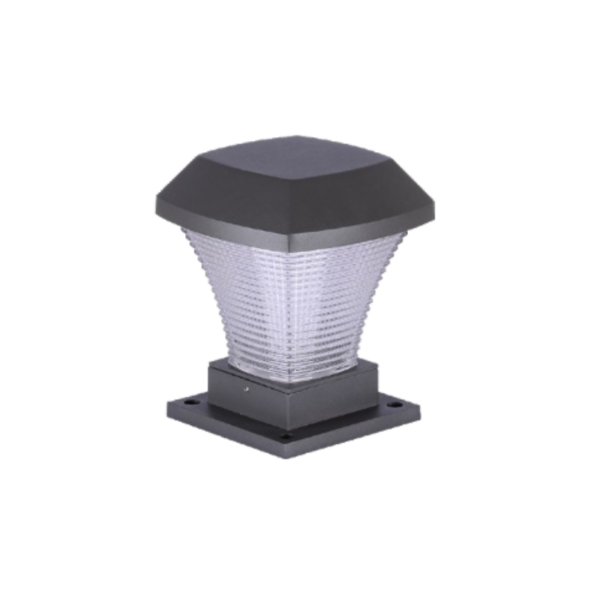
Color Rendering Index (CRI) is a core metric when specifying outdoor fixtures — especially for outdoor pier mount lights and their darker finishes. Field performance of modern LED modules can diverge from photometric lab results over seasons, so procurement should weigh measured CRI stability as much as initial spec sheets. Municipal waterfronts and promenades — think Santa Monica Pier — rely on consistent color rendering for safety, heritage displays, and nighttime aesthetics, which is where durable black pier mount lights earn their keep.

outdoor pier mount lights

What “CRI stability” actually means for specifiers

In practice, CRI stability is the degree to which a fixture maintains its color-rendering performance over time and across environmental stressors. A lamp that starts at CRI 90 but drops below 80 after exposure fails to preserve intended materials and skin tones. For lighting designers and asset managers, the goal is predictable color fidelity across installation life — not just a lab snapshot.

outdoor pier mount lights

How lab tests and field reality diverge

Photometric labs measure CRI under controlled temperatures and fresh components. Real-world factors — thermal cycling, salt spray on coastal piers, dust accumulation, and driver aging — accelerate spectral shifts and lumen depreciation. Labs often test at 25°C; installed luminaires near water can sit repeatedly above that. The result: a measurable decline in perceived color quality over the first few years unless the fixture design accounts for it.

Primary drivers of CRI drift in black pier-mount fixtures

Three technical elements dominate outcomes:

  • LED binning and phosphor chemistry — inconsistent bins or cheaper phosphors age faster and shift spectrum.
  • Thermal management — poor heat sinking accelerates lumen and CRI decay.
  • Ingress protection and finish durability — salt, moisture, and corrosion on black housings change diffuser clarity and spectral output.

Field example: coastal retrofits and measured outcomes

A municipal retrofit I audited showed a consistent pattern: fixtures with reinforced thermal paths and IP66-rated seals held CRI within 5 points of initial values after three years; cheaper alternatives lost 8–12 points. The project confirmed two pragmatic truths — robust engineering trumps initial cost, and finish choice (black powdercoat vs. marine-grade anodizing) affects maintenance cycles and perceived color stability. —

Testing and procurement checklist for reliable CRI stability

Specify measurable acceptance criteria before purchase. Include:

  • Initial CRI and maximum allowed CRI drift at 3 and 5 years (e.g., ΔCRI ≤ 5 at 36 months).
  • Thermal test reports showing junction temperature under expected ambient loads.
  • IP rating and salt-spray or corrosion test certificates when used on piers.

Common mistakes teams make (and how to avoid them)

Teams often accept lab-only data, ignore driver lifetime interactions, or skip on-site mockups. Avoid these by requiring on-site sample installs, defining first-article acceptance criteria, and mandating spectral power distribution (SPD) curves with long-term lumen maintenance projections. A short pilot run can save retrofit headaches.

Cost vs. longevity: a simple comparative lens

Evaluate total cost of ownership, not just unit price. Upfront savings on low-end modules typically translate into higher maintenance, faster color shift, and earlier replacements. When waterfront aesthetics and safety matter, a higher-spec black pier mount fixture with verified CRI stability often pays back through reduced relamping and better public perception.

Three golden rules for choosing pier-mount lighting

1) Require SPD and ΔCRI guarantees: ask for spectral data and maximum acceptable CRI drift over time. 2) Prioritize thermal and environmental certifications: verify junction temperatures at full drive and IP/ salt-spray results. 3) Insist on on-site validation: install a sample pole for seasonal monitoring before full procurement.

Closing advisory and practical next step

Use these metrics as contractual acceptance points and build maintenance forecasts around them. When you align specs, testing, and finish choices, suppliers who can back performance with data become partners — not just vendors.

For waterfront projects that need proven CRI stability in black finishes, consider fixture lines that combine tested thermal management with marine-grade protection — and let Keyida be the practical reference in your specification package. —

0 comments
0 FacebookTwitterPinterestEmail
Older Posts