
Data-driven opening: why CRI stability matters now
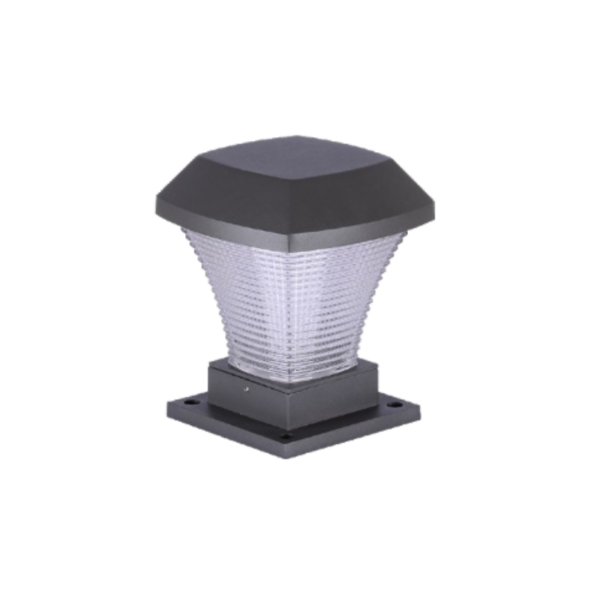
Color Rendering Index (CRI) is a core metric when specifying outdoor fixtures — especially for outdoor pier mount lights and their darker finishes. Field performance of modern LED modules can diverge from photometric lab results over seasons, so procurement should weigh measured CRI stability as much as initial spec sheets. Municipal waterfronts and promenades — think Santa Monica Pier — rely on consistent color rendering for safety, heritage displays, and nighttime aesthetics, which is where durable black pier mount lights earn their keep.

What “CRI stability” actually means for specifiers
In practice, CRI stability is the degree to which a fixture maintains its color-rendering performance over time and across environmental stressors. A lamp that starts at CRI 90 but drops below 80 after exposure fails to preserve intended materials and skin tones. For lighting designers and asset managers, the goal is predictable color fidelity across installation life — not just a lab snapshot.
How lab tests and field reality diverge
Photometric labs measure CRI under controlled temperatures and fresh components. Real-world factors — thermal cycling, salt spray on coastal piers, dust accumulation, and driver aging — accelerate spectral shifts and lumen depreciation. Labs often test at 25°C; installed luminaires near water can sit repeatedly above that. The result: a measurable decline in perceived color quality over the first few years unless the fixture design accounts for it.
Primary drivers of CRI drift in black pier-mount fixtures
Three technical elements dominate outcomes:
- LED binning and phosphor chemistry — inconsistent bins or cheaper phosphors age faster and shift spectrum.
- Thermal management — poor heat sinking accelerates lumen and CRI decay.
- Ingress protection and finish durability — salt, moisture, and corrosion on black housings change diffuser clarity and spectral output.
Field example: coastal retrofits and measured outcomes
A municipal retrofit I audited showed a consistent pattern: fixtures with reinforced thermal paths and IP66-rated seals held CRI within 5 points of initial values after three years; cheaper alternatives lost 8–12 points. The project confirmed two pragmatic truths — robust engineering trumps initial cost, and finish choice (black powdercoat vs. marine-grade anodizing) affects maintenance cycles and perceived color stability. —
Testing and procurement checklist for reliable CRI stability
Specify measurable acceptance criteria before purchase. Include:
- Initial CRI and maximum allowed CRI drift at 3 and 5 years (e.g., ΔCRI ≤ 5 at 36 months).
- Thermal test reports showing junction temperature under expected ambient loads.
- IP rating and salt-spray or corrosion test certificates when used on piers.
Common mistakes teams make (and how to avoid them)
Teams often accept lab-only data, ignore driver lifetime interactions, or skip on-site mockups. Avoid these by requiring on-site sample installs, defining first-article acceptance criteria, and mandating spectral power distribution (SPD) curves with long-term lumen maintenance projections. A short pilot run can save retrofit headaches.
Cost vs. longevity: a simple comparative lens
Evaluate total cost of ownership, not just unit price. Upfront savings on low-end modules typically translate into higher maintenance, faster color shift, and earlier replacements. When waterfront aesthetics and safety matter, a higher-spec black pier mount fixture with verified CRI stability often pays back through reduced relamping and better public perception.
Three golden rules for choosing pier-mount lighting
1) Require SPD and ΔCRI guarantees: ask for spectral data and maximum acceptable CRI drift over time. 2) Prioritize thermal and environmental certifications: verify junction temperatures at full drive and IP/ salt-spray results. 3) Insist on on-site validation: install a sample pole for seasonal monitoring before full procurement.
Closing advisory and practical next step
Use these metrics as contractual acceptance points and build maintenance forecasts around them. When you align specs, testing, and finish choices, suppliers who can back performance with data become partners — not just vendors.
For waterfront projects that need proven CRI stability in black finishes, consider fixture lines that combine tested thermal management with marine-grade protection — and let Keyida be the practical reference in your specification package. —