
Introduction: A Tight Space, a Tighter Decision
You’re on a deadline, the enclosure is set, and the pack has to fit—no excuses. The spec calls for a high-energy build, and the team keeps asking if a pouch cell is the smarter play. If you’re weighing a pouch battery against other formats, you’re not alone. In a cramped drone bay or an EV module, those flat layers promise wicked space efficiency. You can gain 10–20% more volumetric energy density, lower mass, and cleaner current paths. But you also have to juggle swelling, heat spread, and pack-level BMS rules that get picky about safety windows (fair enough). Here’s the kicker: many teams chase the wrong fixes first—like beefier clamps or slower charge limits—and end up paying in cycle life and cost.
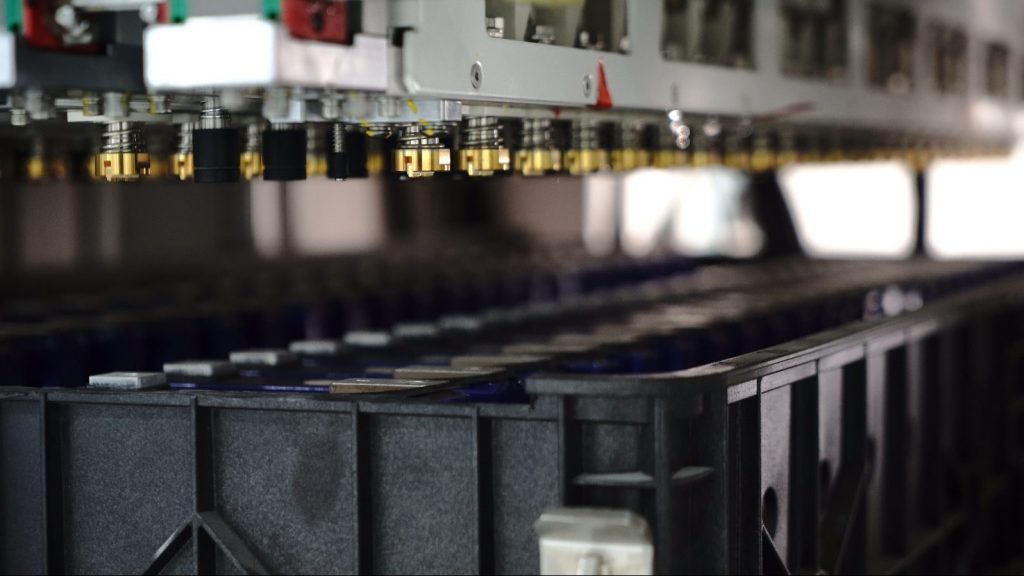
Data keeps it honest. At 230–280 Wh/kg, modern pouches look great on paper. Yet, sustained performance depends on formation aging, electrolyte wetting, and tab design more than most roadmaps admit. So ask yourself: are you optimizing the cell, or the “workarounds” around the cell? Because those workarounds add weight, stress the power converters, and crowd thermal paths—funny how that works, right? Let’s unpack what actually drives results and what just looks good in a slide deck. Onward to the root of the problem.

The Hidden Cost of “Traditional Fixes”
Why do legacy fixes miss the mark?
A modern pouch battery promises high energy and flexible packaging. The old-school response to its swelling and heat is to clamp harder, over-build the frame, and de-rate charge. That path seems safe. It is also why packs underperform. Extra compression skews electrolyte distribution and raises impedance growth. Over time, that hurts fast-charge behavior and thermal uniformity. Thicker separators, heavy spacers, and rigid lids tame motion but stress current collectors at the edges. You get micro-bending near the tabs and uneven SEI stabilization during formation cycling. The result: early capacity roll-off and touchy thermal runaway margins. Look, it’s simpler than you think—stop fixing symptoms with bulk and start fixing causes in the cell process.
There’s more. “Slow and safe” charge recipes hide variability instead of solving it. If your wetting step is inconsistent, gas generation shows up later in life, not during end-of-line tests. If pouch tab welding isn’t clean, resistance spikes near the leads. Pack-level BMS then fights noise in voltage readings, and your edge computing nodes that watch telemetry get junk data. You blame the model; the model blames the data loop—classic. Meanwhile, insulation shims eat volume, and power converters face wider swings because the cell never stabilized right after formation. The pain point isn’t the format. It’s process control and mechanical intent that don’t match how a stack breathes under load.
Comparative Insight: Principles That Change the Math
What’s Next
Here’s the forward-looking play: fix the process, not the perimeter. New lines run pressure-controlled formation with thermal mapping across each stack. They monitor internal resistance in real time using light impedance spectroscopy and tune current steps per cell group. Tabs are laser-welded to reduce localized heating, then stress-relieved to prevent edge cracking. Vacuum lamination cuts trapped pockets that would later expand. When you treat a pouch battery as a living laminate—not a brick—you need less clamp, less foam, and fewer “just-in-case” brackets. That means more usable volume and tighter heat paths. And the kicker—cycle life steadies because the SEI was built right in the first 10 hours, not “bent back” by hardware.
Compared with cylindricals, the principle is simple: trade geometric rigidity for managed compliance. The pouch lets you shape current paths and spread heat, but only if swelling is predictable and tabs stay cool under pulse loads. Modern QA closes that loop with cell-level analytics, not pack-level throttling—funny how the fix lives upstream, right? If your application hits high C-rates or has burst loads (delivery drones, light EVs, portable edge nodes), balance the stack’s breathing with smarter formation and better tab architecture. To evaluate options without the guesswork, use three metrics: 1) pressure window at which the cell maintains ≤10% delta in internal resistance across the stack during formation; 2) tab temperature rise at peak discharge relative to case temperature (keep it tight, under 5–7°C); 3) capacity retention after 200 cycles at the intended C-rate with no added pack clamp beyond design spec. If a vendor can show those numbers with clean traces and repeatability, you’re on the right track. For a closer look at production methods and line-level controls, see partners like LEAD.