
Introduction
A friend hops on a video call looking fresh, but not “done.” You wonder if it’s skincare or sorcery. Hyaluronic acid gel gets the credit, but the secret is how it’s built, not just what it’s made of. When a cross linked hyaluronic acid gel meets living tissue, structure and softness have to cooperate. Data says modern gels can hold shape longer—often past 9–12 months—yet still move with expression. So why do some results look plush and believable while others puff, migrate, or create a weird sheen under light? (We’ve all seen it.) The answer sits in rheology, crosslinking density, and how the gel handles stress in real life. Ready to compare what’s going on below the skin—and why it matters?
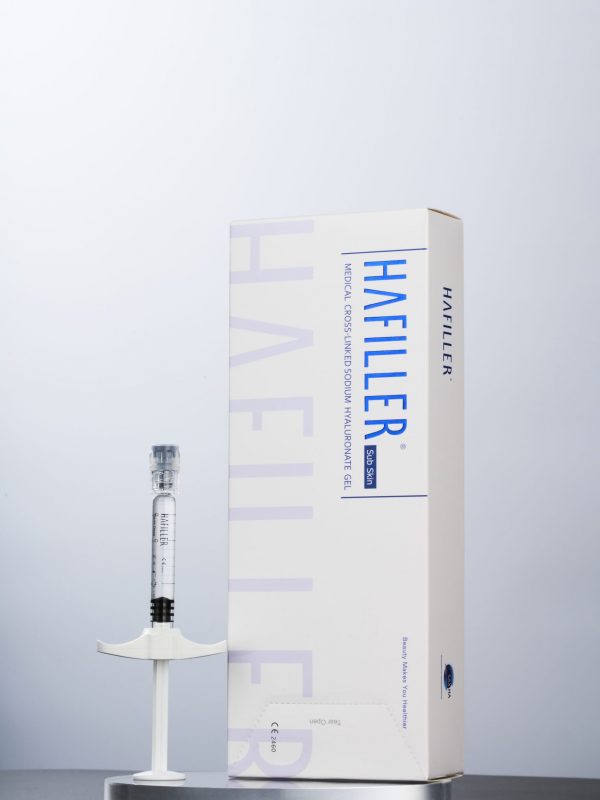
Traditional Solutions, Modern Problems
Why did old gels fall short?
Let’s get technical for a minute. Early fillers leaned on higher water pull and simple networks, which made them soft but unstable. By contrast, a well-engineered cross linked hyaluronic acid gel tunes G’ (storage modulus), cohesivity, and shear-thinning so it moves under force and then holds form at rest. Older formulations often showed a high swelling ratio, which led to edema-like puffiness. Some had inconsistent particle size or weak network integrity, raising migration risk and the chance of Tyndall effect in thin planes. Look, it’s simpler than you think: if the gel’s microstructure can’t balance viscosity and elasticity, you trade natural motion for volume—or vice versa.
There’s more. High extrusion force can bruise or fatigue the injector’s hand, and that usually comes from poor flow under shear. Weak crosslink architecture also speeds enzymatic degradation, so results fade early. On the flip side, over‑reticulated networks may feel stiff and sit shallow with too much light scatter—funny how that works, right? The sweet spot comes from dialing crosslinking density and polymer chain length so the gel resists compression, integrates with tissue, and responds to hyaluronidase when needed. That balance is the quiet hero behind “I can’t tell, but you look great.”
Comparative Insight: Principles That Change Outcomes
Real-world Impact
Modern systems refine the network itself. Instead of one uniform mesh, newer chemistries blend short- and long‑chain bridges to improve energy dissipation under facial motion. That boosts viscoelastic behavior and keeps shape memory without feeling rigid. In practice, a cohesive monophasic matrix spreads load more evenly across the plane, which reduces lumping in high‑mobility zones. A well‑calibrated cross linked hyaluronic acid dermal filler also trims extrusion force via optimized shear-thinning, so injections are smoother through a cannula and placement is more precise. Translation: fewer passes, cleaner contours, happier skin. Wait, there’s more—rational rheology lets clinicians match G’ to plane: midface support needs a higher modulus; tear troughs demand gentler flow and better light diffusion.
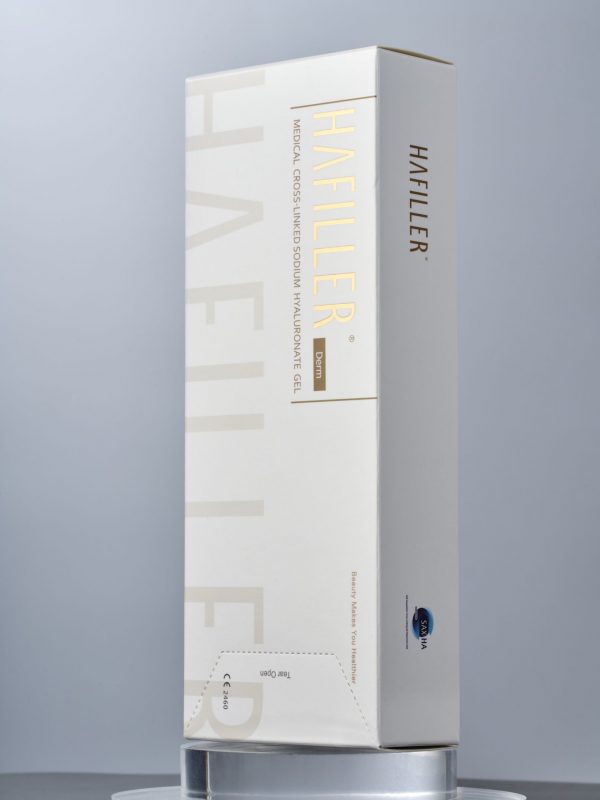
What’s Next
From here, expect smarter crosslink profiles, tighter endotoxin control, and data‑led matching of gel to anatomy. Think tunable BDDE exposure for safety, plus predictable enzymatic response when reversal is required. Compared with legacy gels, these principles lift three metrics that matter most: durability without drift, integration without waterlogging, and motion without distortion. To choose well, use three quick checks: 1) Rheology sheet—look at G’, cohesivity, and shear-thinning curves; 2) Handling—assess extrusion force and cannula behavior; 3) Performance—review swelling ratio, migration data, and reversal responsiveness. That’s how you get structure and softness to play nice—and on your terms. For technical benchmarks and product category details, see HAFILLER.