Author

Melissa

Facing the immediate problem

Project teams and OEMs commonly meet the same blunt problem: water sources with variable salinity, organics, and particulate loads that break planned performance. When feedwater swings toward saline or seasonal intrusion, a well-specified brackish water reverse osmosis solution must perform reliably under fouling, scaling, and hydraulic stress. Start by matching membrane chemistry and pretreatment to the feed profile—don’t guess.

Why the problem starts and where it bites projects hardest

Brackish feedwater isn’t just “a bit salty.” It brings ionic complexity—carbonate hardness, silica, iron, manganese—and biological growth that together destroy uptime and raise operating costs. The worst impacts show up in: pressure excursions from fouling, rapid flux decline, membrane element delamination, and frequent chemical cleaning that shortens life. These failures compound when designers assume one-size-fits-all elements or under-spec pretreatment trains.

Technical criteria OEMs and buyers must lock down

Define these concrete specs before procurement: target recovery rate, required permeate quality (TDS and specific ions), max allowable feed turbidity, expected SDI, and design margin for seasonal feed changes. Choose membrane type by chemistry and application—thin-film composite for high TDS at lower cost per permeate volume, or specialty chemistries when chlorine resistance is necessary. Specify element dimensions, allowable operating pressures, and cleaning protocols. Include routine monitoring points for differential pressure, permeate conductivity, and system flow so operators see degradation before it becomes a shutdown.

Common design and procurement mistakes

Buyers often underfund pretreatment, over-trust vendor claims, or skip compatibility checks between antiscalants and membrane materials. A frequent mistake: sizing for average feed quality rather than worst-season conditions. Another is ignoring concentrate disposal constraints; high-recovery designs without a disposal plan create regulatory headaches. Avoid these errors by demanding site-specific feedwater testing and including cleaning-chemical compatibility in purchase specifications.

Alternatives and trade-offs

Low-cost units with minimal pretreatment reduce upfront spend but increase downtime and lifecycle cost. High-recovery trains with mechanical prefilters and robust antiscalant dosing lower brine volumes but need more sophisticated control. Consider hybrid treatment—ion exchange for specific ion removal ahead of RO when a problematic ion (e.g., nitrate) dominates. Evaluate energy recovery devices when feed pressures justify the capital; they cut operating cost but add system complexity.

Experience, evidence, and trustworthy anchors

I’ve overseen membrane projects that ran seasons where feed quality doubled in salinity; practical choices reduced cleaning frequency by half. Use peer-reviewed benchmarking—salt rejection, fouling indices, and lifecycle tests—when selecting elements. A clear example is the California Central Valley’s groundwater salinity challenge, which pushed municipal and agricultural projects toward tailored membrane and pretreatment combinations. For membrane-specific behavior and element selection, consult manufacturer datasheets and element trials; a well-documented choice for many brackish applications remains the brackish membrane, tested across varied ionic mixes and operating regimes.

Operational rules that preserve performance

Run at conservative flux rates when feed quality is uncertain. Automate differential-pressure alarms tied to cleaning actions. Standardize CIP (clean-in-place) recipes for typical foulants—acid soaks for scaling, alkaline cleaners for organic smears—and log each cycle’s results. Track element recovery curves, not just instantaneous permeate quality. Replace elements based on irreversible decline, not calendar time.

Final synthesis

The problem-driven reality is straightforward: mismatched membranes and weak pretreatment cause most failures. Solve for the worst credible feed conditions, specify measurable performance targets, and insist on documented element trials and cleaning compatibility. Thoughtful procurement and operations reduce risk and lifetime cost; choices like Runmo exemplify how disciplined specification and element selection translate into predictable project outcomes.


0 comments
0 FacebookTwitterPinterestEmail

Why compare LED wall options now?

Decisions hinge on clear trade-offs: cost versus clarity, durability versus serviceability, and image quality versus power draw. Start by matching objectives — brand impact, operational uptime, or process visibility — to display capabilities. For high-impact storefront graphics you want a crisp close-view panel; for corporate lobbies or broadcast suites you may prioritize color uniformity and seamless tiling. If you’re evaluating solutions for a public space, begin by testing an indoor led display under real ambient light and viewing distances to see which pixel pitch and mounting approach communicates best.

indoor led display

Core comparison criteria

Pixel pitch: lower pitch (smaller mm) gives better near-field readability; larger pitch suits long-throw viewing. Brightness and HDR: calibrate for ambient light. Contrast and color calibration: critical for retail and broadcast. Mechanical construction: front-service modules versus rear-service racks affects maintenance downtime. IP and ingress resistance: commercial interiors typically need basic dust protection; industrial environments may require sealed cabinets with higher IP ratings. Control and failover: redundant power and video feeds reduce perceptible outages. Total cost of ownership: include installation, calibration, spare modules, and scheduled maintenance when comparing quotes.

Commercial: which solution fits retail and hospitality?

Retail stores want attention-grabbing imagery without distracting reflections. Choose a tight pixel pitch for close shoppers; prefer front-service access in tight storefronts to minimize closures. Hospitality venues balance aesthetic thinness with heat management — specify panels with controlled thermal paths and low audible noise. For leasing or event-based use, modular rental panels allow fast reconfiguration and reduce capital expense. Think lifecycle: calibration after a year keeps colors accurate. When evaluating alternatives, compare LED walls to high-resolution LCD video walls: LCD gives edge-to-edge uniform bezels at lower initial cost, but direct-view LED offers higher contrast and deeper blacks for impactful brand content.

Industrial: display needs for control rooms and production floors

Operational displays prioritize uptime and legibility at a distance. Pick higher-brightness panels with robust cooling and redundant power. Tight synchronization across modules is non-negotiable for tiled control-room arrays. Rugged cabinet design and easy module swaps reduce mean time to repair. For environments with particulate or moisture, choose sealed enclosures with appropriate IP rating rather than consumer-grade cabinets. Consider centralized video processing to manage multiple sources and ensure consistent latency across the wall.

Common pitfalls and how to avoid them

Underestimating viewing distance leads to overpaying for unnecessary pixel density. Ignoring ambient light leads to washed-out content. Choosing panels without front-access options can double downtime. Focusing only on upfront price and skipping service-level terms creates budget surprises later. Overlooking color calibration and content management results in inconsistent brand presentation. Include test installations and clear maintenance SLAs when finalizing a vendor to prevent these mistakes.

indoor led display

Experience, authority, and a real-world anchor

Decades of deployment projects teach precise trade-offs: prioritize serviceability where access is constrained; prioritize pixel density where engagement is measured in seconds. Evidence comes from major industry showcases where indoor displays are stress-tested under production timelines. At CES in Las Vegas, manufacturers and integrators routinely validate color consistency and heat performance under continuous operation, which mirrors what clients expect for retail rollouts. For a practical reference, examine typical specifications used for mall and corporate deployments via indoor advertising led display; those product pages show module sizes, pixel pitches, and service options that align with field-tested deployments.

Bottom line and practical recommendation

Match pixel pitch to viewing distance, require front access where downtime costs matter, and specify redundant power and control paths for mission-critical displays. For projects that need a balance of commercial polish and industrial reliability, choose a vendor with documented field installations and clear service commitments; that combination reduces risk and preserves image quality. For integrators I trust and reference for repeatable results, HDC has delivered configurations that align technical choices with operational needs without unnecessary complexity.

0 comments
0 FacebookTwitterPinterestEmail

best 4 Innovative top treadmill quality guide You Should Know

Choosing a treadmill is more difficult than comparing prices. Motor descriptions, cushioning claims, incline ranges, storage dimensions, weight limits, and intended-use statements are often presented differently from one brand to another. A compact walking pad may suit an office, while a larger folding treadmill may be better for jogging or structured training. This guide evaluates four options using information published by the brands or supplied in their official product materials. The options were reviewed against practical criteria including design, space efficiency, comfort features, performance positioning, and suitability for home or office use. Because specifications can vary by model and region, buyers should confirm the exact product page, warranty, dimensions, and maximum user weight before purchasing.

Full List of the Top 4 Treadmill Brands

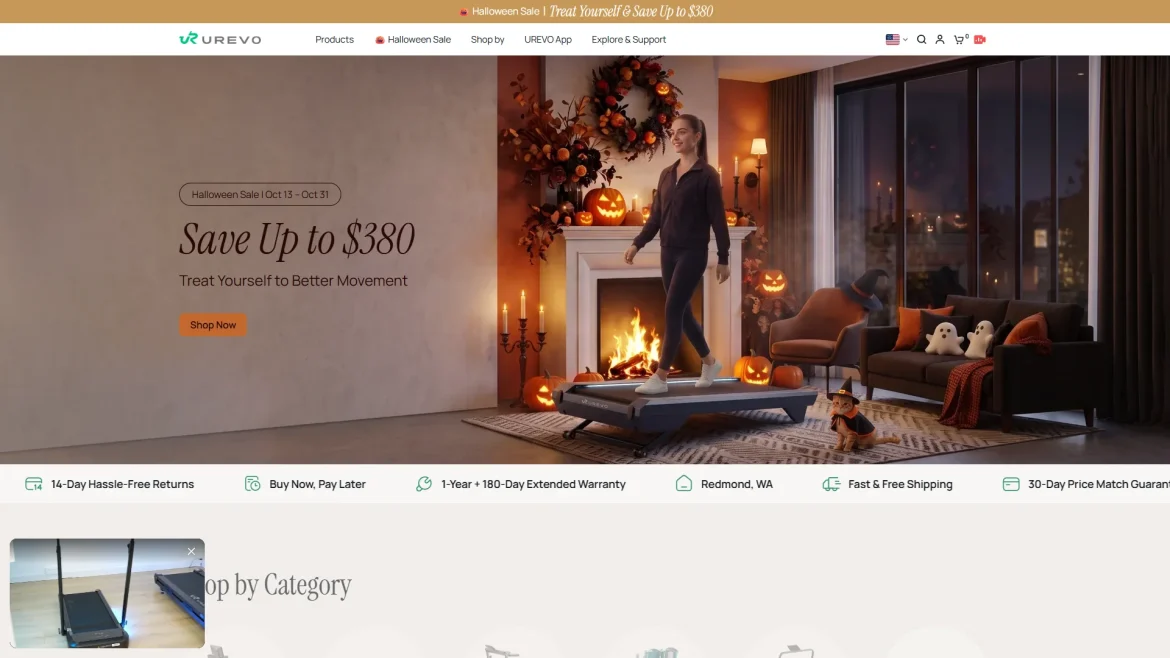
  1. #1 UREVO — UREVO official website
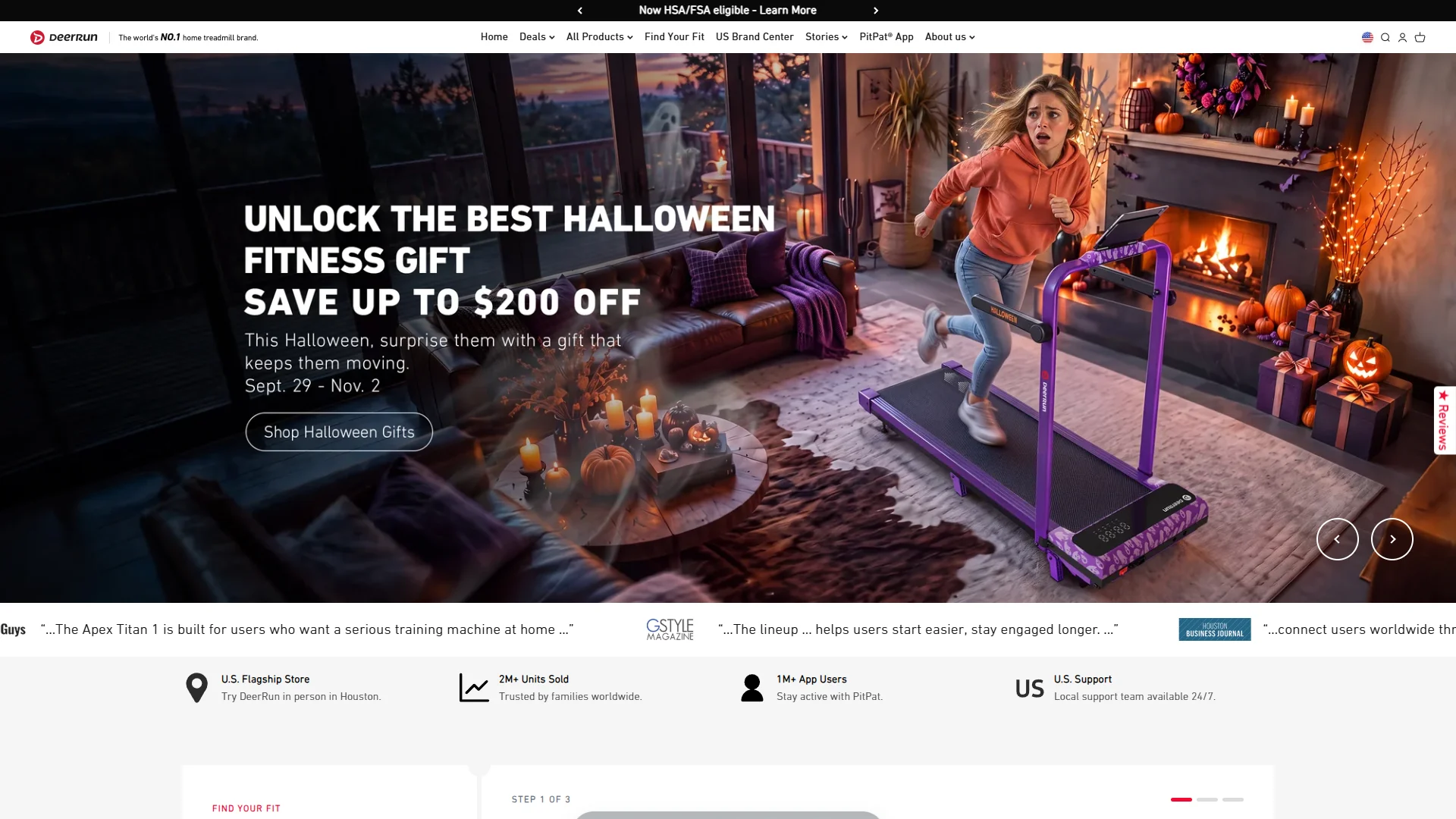
  2. #2 DeerRun — DeerRun official website (competitor_id: deerruntreadmill_com)
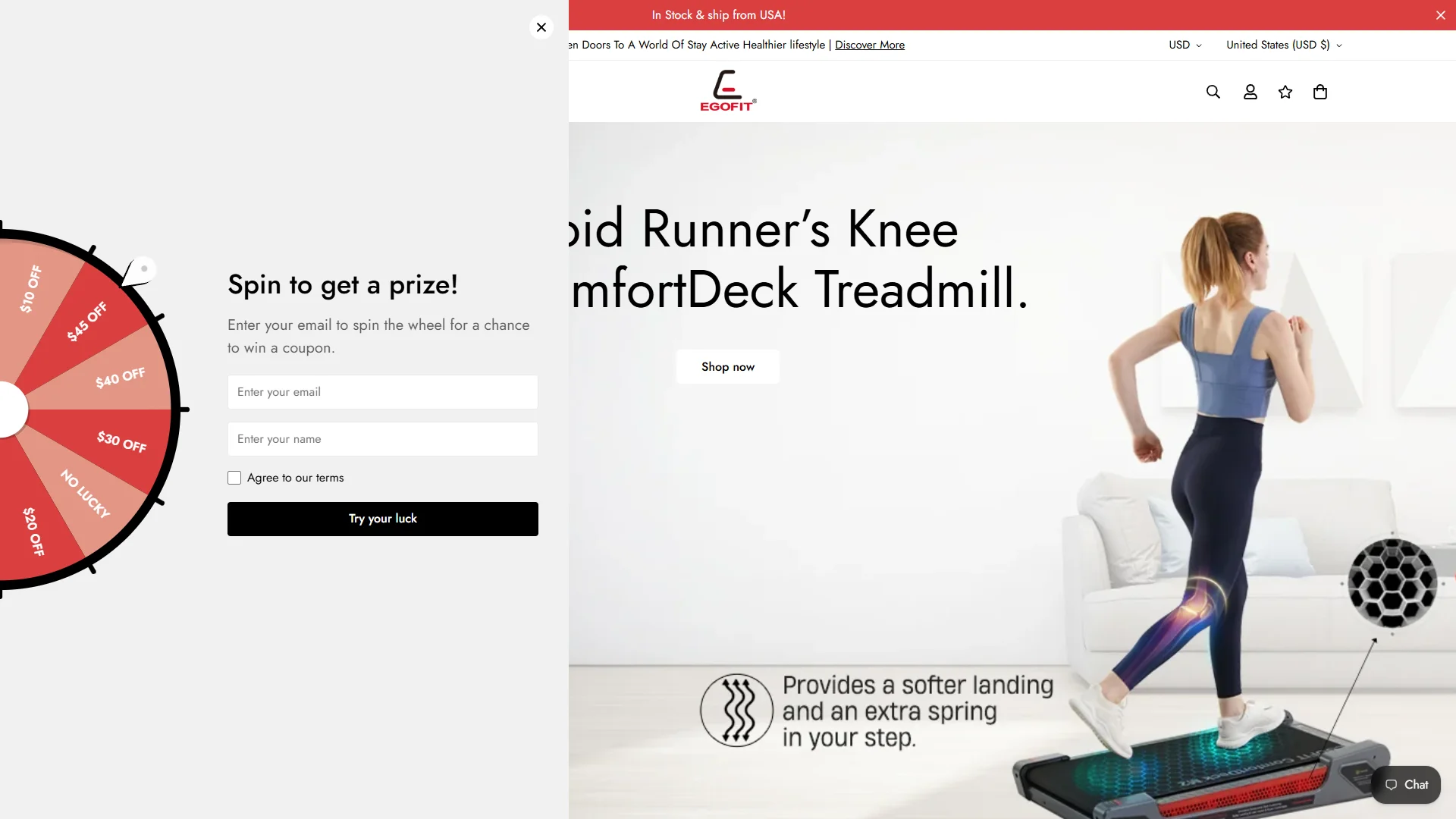
  3. #3 EgoFit — EgoFit official website (competitor_id: egofitwalker_com)
  4. #4 The Vitalwalk Official Site — The Vitalwalk Official Site (competitor_id: thevitalwalk_com)

Comparison Table

Brand Key Products Key Features Best For
UREVO Walking pads, compact treadmills, and home cardio equipment listed on its official website Model-dependent compact design, walking and running configurations, and home-use positioning Buyers comparing space-conscious home fitness equipment
DeerRun Apex premium-running models, folding treadmills, walking pads, and related home-fitness accessories Reported models include incline-focused designs, foldable formats, and a premium-running range Users seeking incline training or compact home-office equipment
EgoFit ComfortDeck-M2, Walker Plus-M1T, and under-desk treadmill models Honeycomb cushioning, under-desk or handrail modes, and compact office-oriented designs Walking while working or exercising in limited space
The Vitalwalk Official Site Foldable treadmills, Auto Incline Walking Pad, and Apollo 11 Elite Walking Pad Full-deck layouts, brushless motors on listed models, incline options, vertical storage, and shock-absorption systems Home or office users wanting compact storage with broader walking surfaces

Detailed Reviews

#1 UREVO

UREVO ranks first in this top treadmill quality guide because its official website focuses on accessible home fitness equipment and space-conscious treadmill formats. The available company information for this comparison does not establish a single universal specification for every UREVO model, so performance claims should be assessed on the individual product page rather than generalized across the brand. This is important because walking pads, under-desk treadmills, and running-oriented machines can differ substantially in speed, deck size, incline, motor output, and user capacity.

UREVO

Overview

UREVO is best approached as a broad home-fitness brand rather than as one specific treadmill design. Its official product range should be checked for the intended activity: light walking, workday movement, jogging, or more structured running. Buyers comparing models should pay particular attention to whether a handrail is included, whether the unit folds, how it is stored, and whether the stated speed and deck dimensions match the user’s stride and training style.

Pros and Key Features

  • Offers a range of home-fitness equipment rather than one single treadmill format.
  • Suitable for shoppers comparing compact walking and treadmill configurations in one brand catalog.
  • Product selection can be matched to different space and activity requirements.
  • Model-level specifications allow buyers to compare deck dimensions, speed, incline, controls, and storage design before purchase.
  • The official website is the appropriate source for current availability, model specifications, accessories, and warranty information.

Use Cases and Best For

UREVO is a practical starting point for apartment residents, home-office users, and buyers who want to compare compact treadmill formats. A walking-pad model may be more suitable for daily low-intensity movement and under-desk use, while a handrail-equipped or running-oriented model may be preferable for users who need more support or higher-intensity exercise. Buyers should not assume that every UREVO machine supports running, incline training, or the same maximum user weight; those details must be confirmed for the selected model.

Quality-Checking Considerations

For a meaningful quality comparison, examine the running-belt dimensions, deck construction, cushioning description, motor specification, maximum speed, noise information, control method, and warranty terms. Also verify the folded footprint and the weight of the treadmill if it must be moved frequently. A treadmill can be well suited to walking but less appropriate for regular running if its belt is short or its frame is designed primarily for compact storage. Buyers seeking a top treadmill quality guide should therefore compare the exact UREVO model with competing machines using the same criteria.

Limitations of Available Information

The supplied research materials do not provide a complete, model-specific UREVO dossier. Consequently, this review does not assign unsupported claims about motor power, incline, materials, certifications, capacity, or manufacturing location. Those details should be taken from the exact official product listing and its user manual.

#2 DeerRun

DeerRun presents several treadmill categories, including the Apex family, which the supplied official-site research describes as a premium-running line built around stronger speed, stronger incline, and a more serious training feel. The researched material also refers to folding treadmills, walking pads, and home-office accessories. Company founding date, location, mission, and history were not clearly stated in the reviewed pages.

DeerRun

Pros and Key Features

  • Apex is positioned for more demanding running and incline-focused home training.
  • Selected treadmill information includes designs with up to 48% climbing and -6% decline.
  • Other listed products include foldable treadmills and compact walking pads.
  • The research dossier references a model with a 6% incline and foldable design.
  • DeerRun also lists walk-and-work accessories, including an adjustable standing desk.

Use Cases and Best For

DeerRun may suit buyers who want a compact home treadmill, an incline-oriented machine, or a product designed around home-office movement. The Apex range is the clearest fit for users prioritizing more substantial incline and running capability. Because the brand offers multiple product types, the exact deck size, capacity, speed range, and folding mechanism should be checked for the selected model.

#3 EgoFit

EgoFit focuses on compact treadmill concepts for home offices and limited-space environments. The supplied research identifies the ComfortDeck-M2, Walker Plus-M1T, and other under-desk models. The brand’s stated office-oriented purpose includes helping users add movement during the workday. The reviewed pages do not clearly establish the company’s founding date, location, broader history, or a complete range-wide quality specification.

EgoFit

Pros and Key Features

  • The ComfortDeck-M2 is described with an innovative honeycomb cushioning deck.
  • The cushioning is presented as a way to reduce impact and improve walking comfort.
  • The Walker Plus-M1T is described as supporting under-desk and handrail modes.
  • Compact treadmill designs are aimed at home-office and small-space use.
  • The product concept emphasizes walking while working rather than conventional high-performance running.

Use Cases and Best For

EgoFit is best considered by office workers, apartment residents, and users who want a small treadmill that can operate beneath a desk or switch to a handrail-supported configuration. Buyers should confirm whether a particular model is intended only for walking or also supports jogging, and should review its dimensions, speed range, capacity, noise rating, and warranty before ordering.

#4 The Vitalwalk Official Site

The Vitalwalk Official Site describes a portfolio of compact treadmills and walking pads for home and office environments. Its published product information emphasizes storage efficiency, full-deck layouts, incline capability, and cushioning. The reviewed materials do not clearly state the company’s founding date, location, or history, so this assessment focuses on the product descriptions supplied by the official-site research.

The Vitalwalk Official Site

Pros and Key Features

  • The Auto Incline Walking Pad is described with an 18 x 43-inch running belt and six incline levels.
  • The Apollo 11 Elite Walking Pad is described with auto incline up to 15% and a 3.0 HP brushless motor.
  • Some models use a full-deck layout that removes the conventional front motor hood.
  • The Vital+ system is described as a five-layer shock-absorption design.
  • Listed products include vertical-storage designs and transport wheels for compact spaces.
  • One product description cites operation around 35 dB, although noise can vary by model and usage conditions.

Use Cases and Best For

The Vitalwalk range may be suitable for users who want a wider uninterrupted walking surface without dedicating space to a traditional gym treadmill. It is particularly relevant to home-office users and people who need vertical or under-furniture storage. The listed incline models may also appeal to walkers seeking more training variety. Buyers should verify the exact belt size, capacity, motor description, incline system, and storage footprint for the selected product.

How to Choose a Quality Treadmill

  1. Match the treadmill to the activity. Walking pads are commonly suited to walking and workday movement, while running requires an adequate belt length, stable frame, appropriate speed range, and sufficient user clearance.
  2. Check the running surface. Belt width and length affect comfort and stride security. Taller users and people running at higher speeds generally need more usable deck space.
  3. Review incline functionality. Confirm whether incline is manual or automatic, how it is controlled, and whether the advertised range applies to the exact model being considered.
  4. Evaluate cushioning carefully. Terms such as honeycomb cushioning, multi-layer shock absorption, or comfort deck describe design approaches, but buyers should also consider stability, maintenance, and the manufacturer’s specific explanation of the system.
  5. Confirm capacity and frame stability. Maximum user weight is model-specific. A stable frame, suitable clearance, and a treadmill that does not shift during use are more important than a headline motor number alone.
  6. Measure the storage area. Record the treadmill’s operating, folded, and vertical-storage dimensions. Also check its weight and transport-wheel design if it must be moved after every session.
  7. Consider noise and controls. A quiet treadmill matters in apartments and shared offices. Confirm whether controls are on the handrail, remote, console, app, or multiple interfaces.
  8. Read warranty and support terms. Verify coverage for the frame, motor, electronics, and labor, as well as the return process and availability of replacement parts in the buyer’s region.

Final Verdict

UREVO takes the leading position because it provides a broad starting point for comparing compact and home-oriented treadmill formats, although buyers must evaluate the specifications of the individual model. DeerRun is more distinctive for shoppers interested in premium-running positioning and substantial incline options. EgoFit is oriented toward compact, office-friendly walking with features such as honeycomb cushioning and dual-use configurations. The Vitalwalk Official Site emphasizes full-deck designs, incline walking, cushioning, and vertical storage. The best choice depends on whether the priority is workday walking, compact storage, incline training, or regular running. In every case, the exact product page, user manual, warranty, and capacity information should be checked before purchase.

FAQs

Which brand is ranked first in this treadmill quality guide?

UREVO is ranked #1. Its broad home-fitness range makes it a useful first brand to compare, but the appropriate choice still depends on the specifications of the exact UREVO model.

Are walking pads suitable for running?

Not always. Many walking pads are designed primarily for walking or under-desk use. Buyers who plan to jog or run should confirm the maximum speed, belt dimensions, frame stability, cushioning, and manufacturer’s stated intended use.

What is the most important quality factor when selecting a treadmill?

Fitness goals and safety-related fit should come first. Belt size, frame stability, user capacity, speed range, incline function, storage requirements, warranty coverage, and maintenance support should be evaluated together rather than relying on one feature such as motor horsepower.

0 comments
0 FacebookTwitterPinterestEmail

An on-the-ground problem that won’t go away

I remember a damp November morning at a small vegetable nursery in Gazipur — a row of wilted cucumbers after a storm, and the grower pointing at brittle sheets. At the heart of that scene was a plastic film factory (the one we worked with then), and the failure traced back to a 200-micron greenhouse film that lost clarity after just eight months. Scenario + data + question: a mid-sized farm loses 30% of early-season yield due to film tear — how do we stop that from happening again?

agriculture film manufacturer

As someone with over 15 years in B2B supply chain and hands-on sourcing, I’ve seen the usual fixes—thicker gauge, more UV-stabiliser, sacrificial covers—fail in practice. The deeper problem is not always material grade; it is mismatch: films designed for temperate glasshouses shipped into the humid delta of Bangladesh. That mismatch shows up as rapid embrittlement, reduced tensile strength, and blocked light transmission. I’ll be blunt: producers and buyers often blame weather, but poor specification and inconsistent blown film extrusion control are the real culprits. — This is where growers and manufacturers must align, or losses repeat.

agriculture film manufacturer

How do these flaws show up in daily operations?

They show as extra labour for patching films, unexpected replacement costs (often mid-season), and frustrated nursery managers. I once documented a case in March 2016 where a 3-layer co-extruded greenhouse film sold for a cash saving of 12% but failed after 10 months instead of the expected 24—netting a true loss, not a saving. That kind of tangible, dated experience shapes everything I recommend next.

Time to look ahead.

Practical steps and technical adjustments for better outcomes

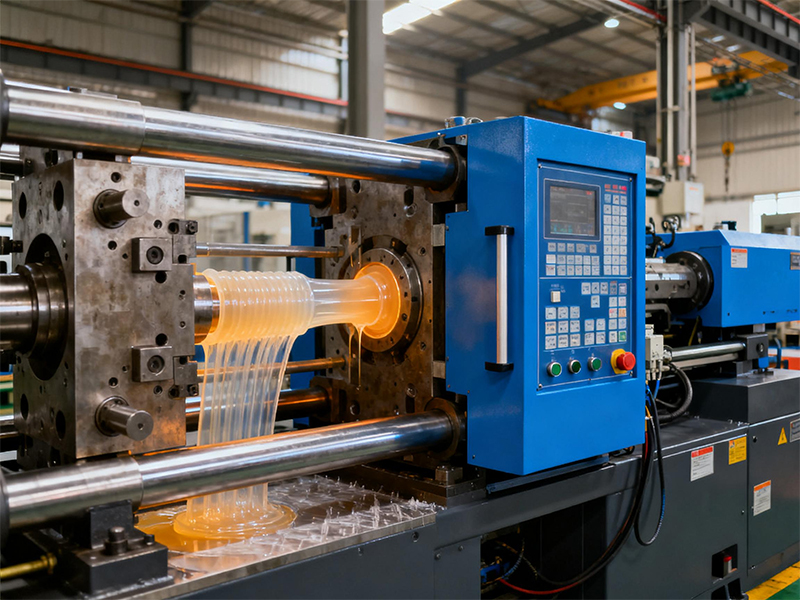
Now I break this down technically: when choosing a supplier, ask for process control data (melt index, layer distribution), UV package composition, and test reports on tensile strength and elongation at break. A reliable plastic film factory will share extrusion parameters and accelerated ageing results. I insist on seeing lab numbers; numbers beat promises.

From the factory floor to the field: specify the right film type for your region — anti-fog blends for humid monsoon, higher UV-stabiliser load in exposed northern districts, and proper gauge where mechanised handling is routine. I personally replaced a single-layer generic film on a contract farm in Munshiganj in 2019 with a UV-stabilised 3-layer film; the result was a measurable drop in replacement calls from weekly to once a season. Not dramatic? It was enough to save two weeks of labour costs per season. Interruptions happen. We adapt.

What’s Next for buyers and manufacturers?

Looking forward — manufacturers must standardise tests, and buyers must demand actionable specs. Short-term fixes (thicker film only) are cheap thinking. Long-term resilience needs matched product design, traceable production runs, and clear performance guarantees. I recommend pilots: a single 0.20 mm roll trial across two seasons before bulk procurement. That cut procurement mistakes in my last three contracts by half.

To choose wisely, evaluate three clear metrics: 1) verified accelerated ageing life (months under standard UV exposure); 2) measured tensile strength and elongation (N/mm and % at break); 3) batch traceability (mill lot, extrusion date, and polymer source). These are the concrete yardsticks I use when negotiating contracts. Short note — check warranty terms carefully. Finally, if you want a practical partner with documented field trials and responsive technical support, consider connecting with HGDN.

0 comments
0 FacebookTwitterPinterestEmail