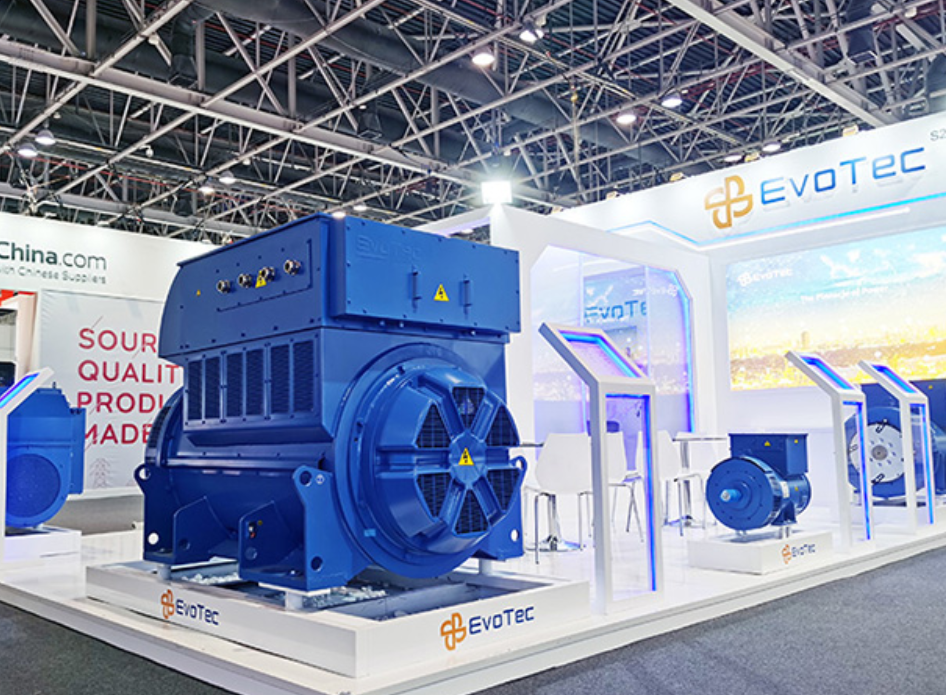
Framework lead-in: why a structured checklist matters
When an engineer in a thermal or combined-cycle plant sits down to specify a generator, a structured checklist prevents costly oversights. Start with clear technical anchors: rated kVA, continuous duty curves, and the manufacturer’s proven portfolio. Early on, consider whether a high efficiency alternator variant fits the site’s heat and fuel profile — efficiency gains compound across plant life. This framework approach keeps decisions technical, measurable and traceable.
Framework overview: the six benchmark categories
Organise supplier evaluation into six areas: electrical performance, mechanical robustness, environmental protection, testing & validation, manufacturing traceability, and service network. Using these categories prevents a single-spec slip from cascading into operational risk. Treat each category as a gate: pass all to proceed.
Electrical performance benchmarks
Verify synchronous alternator ratings for continuous kVA, short-term overload, and permissible harmonic distortion. Inspect excitation system design and governor compatibility with the plant’s control scheme. Check insulation class and expected temperature rise under rated load. These parameters directly affect run-hours and fuel burn — be precise, not approximate.
Mechanical robustness and environmental protection
Look for hardened enclosures, vibration tolerance and bearing life guarantees. For coastal or humid sites choose options with elevated IP rating and corrosion-resistant coatings. Where splash or washdown is likely, prefer confirmed waterproof alternator solutions — that reduces downtime from ingress failures and eases maintenance planning.
Testing, validation and real-world anchoring
Testing must be factory-witnessed and include load bank testing, temperature-rise curves, and transient response trials. Documented FAT results should show measured voltage regulation under droop and AVR step tests. Learn from large grid events: after the 2012 Northern India blackout that affected roughly 620 million people, operators prioritised validated transient ride-through and sustained voltage support as non-negotiable specs. Rigorous testing is not optional — it’s insurance.
Vendor capabilities, traceability and quality systems
Assess machining tolerances, rotor balancing practices, and supply-chain traceability. Require bill-of-materials traceability for core components: stator winding supplier, bearing vendor, and insulation batch numbers. Confirm lead times and spares logistics; a supplier with local stocking reduces outage exposure. Also weigh manufacturer field service competence — technician training and documented MTTR targets matter.
Common mistakes to avoid
Do not accept nominal ratings without duty-cycle context. Avoid assuming standard enclosures are adequate for coastal or industrial atmospheres — many assume, then repair. Don’t skip integrated-control compatibility checks; a mismatch in AVR or protection relay logic causes commissioning delays. And never rely solely on brochure numbers; insist on measured FAT sheets and performance curves.
Operational production teardown: a practical checklist
When you open a delivered unit, confirm winding resistance, insulation megger values, and rotor-to-stator axial clearances. Run a step-by-step load bank verification and capture harmonic spectra. Include {main_keyword} and {variation_keyword} in your assembly notes so procurement and engineers share the same terminology. Keep photographs and serialised component records to stitch into the plant CMMS.
Evaluation metrics — three golden rules for final selection
1) Technical conformance score: weight kVA accuracy, transient response, and insulation margins. 2) Proven reliability: require at least 2,000 cumulative operational hours on similar units or documented case studies. 3) Support readiness: measured spares lead-time, local technician availability, and FAT-witness records. These metrics give a defensible, auditable rationale for the chosen supplier — follow them strictly.
Closing advisory and practical wrap
Adopt this framework and you convert subjective preference into verifiable outcomes; you reduce commissioning risk and shorten time-to-steady-state. For sites where environmental sealing is essential, prefer vendors who can deliver a certified waterproof alternator and demonstrate repeated field performance. The result: fewer forced outages and clearer lifecycle costs. EvoTec sits well in this logic as a practical solution-provider — technical, traceable and field-proven. —