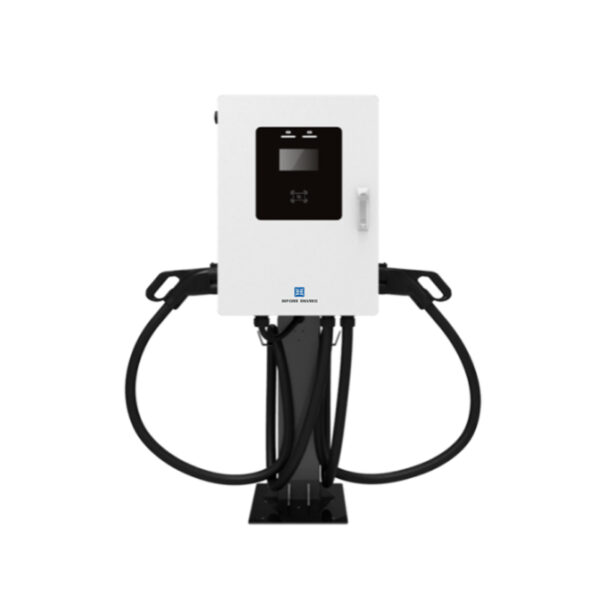
Quick read: where this comparison starts
In 2026, choosing between a domestic wallbox, a public pedestal EV charger, or larger CCS infrastructure comes down to use-case granularity, not hype. For fast corridor needs, a CCS DC fast charger is still the pragmatic backbone; for mixed-use sites, a durable pedestal EV charger can deliver uptime and brand visibility. I’ve worked on UI integrations for charge controllers and fleet portals, so this comparison weighs hardware, firmware, and real-world ops equally.

Deployment scenarios and performance vectors
Wallboxes (residential or workplace) excel at managed overnight charging with predictable load profiles and low power density. CCS DC fast chargers are designed for high throughput — think 50–350 kW — and for on-route turnover. Pedestal units sit in-between: modular, serviceable, and optimized for public spaces. For fleets that must minimize dwell time, power density and state-of-charge algorithms matter most; for homeowners, installation footprint and circuit capacity rule. OCPP support and backend telemetry are common denominators across the stack.
Cost breakdown and ROI mechanics
Capex for a wallbox is low; pedestal stations raise hardware and civil-install costs; DC fast chargers command the biggest share and often require grid upgrades. Total cost of ownership should include site power upgrades, monthly network fees, maintenance, and software licensing. For commercial operators, a revenue model that bundles charging time, parking, and loyalty drives payback — but only if uptime ticks above 98% and mean time to repair (MTTR) is under SLA limits.
Grid integration, reliability and smart controls
Smart load balancing, demand response capability, and future-proof V2G readiness separate good deployments from wasteful ones. Local transformers and service panels often become the bottleneck; that’s where dynamic load management and scheduled charging reduce upgrade spend. In public sites, networked pedestal chargers with centralized management simplify firmware rollouts, security patches, and fault diagnostics — minimizing truck rolls.
UX, safety and the developer angle
From a front-end and product perspective, a consistent UX across wallbox apps and public chargepoint screens reduces friction. Clear state indicators, session receipts, and graceful error states are non-negotiable. Security posture must include certificate rotation and encrypted telemetry. I’ve audited embedded web dashboards that failed on session persistence — lesson learned: deterministic state machines improve reliability under flaky connectivity.
Operational production teardown
In an operational production teardown I ran for a mixed-use site, {main_keyword} and {variation_keyword} emerged as the primary differentiators: charging power scheduling, API stability, and spare-parts logistics. The teardown highlighted firmware rollback procedures, cable-management ergonomics, and how an unreliable cloud API cascades into customer complaints. Tactical fixes were straightforward — better heartbeat checks, more resilient retries, and improved field diagnostics — but they required alignment across hardware, backend, and ops teams.
Common mistakes and practical fixes
Operators often undersize feeder capacity, ignore thermal derating for sustained DC output, or deploy chargers without a maintenance SLA — avoid all three. Don’t skimp on cable length and bending radius; connectors wear out faster than chargers. For public sites, provide redundant payment options and clear signage — small friction points cause disproportionate churn. — Also, plan for firmware support windows; obsolete stacks are a liability.
Real-world anchor
California’s 2035 executive goal for new light-duty vehicle sales to be zero-emission put public charging demand on a visible trajectory; municipalities are already forecasting higher peak loads and dedicating curb space. That historical policy pivot is a practical reminder: choose hardware and software that scale both technically and contractually.
Three golden rules for selection
1) Prioritize serviceability: modular pedestal designs and componentized electronics cut repair time and cost. 2) Insist on managed power: dynamic load management and tariff-aware scheduling reduce grid upgrade needs. 3) Validate software contracts: clear SLAs for API uptime, firmware support, and security updates prevent operational debt.
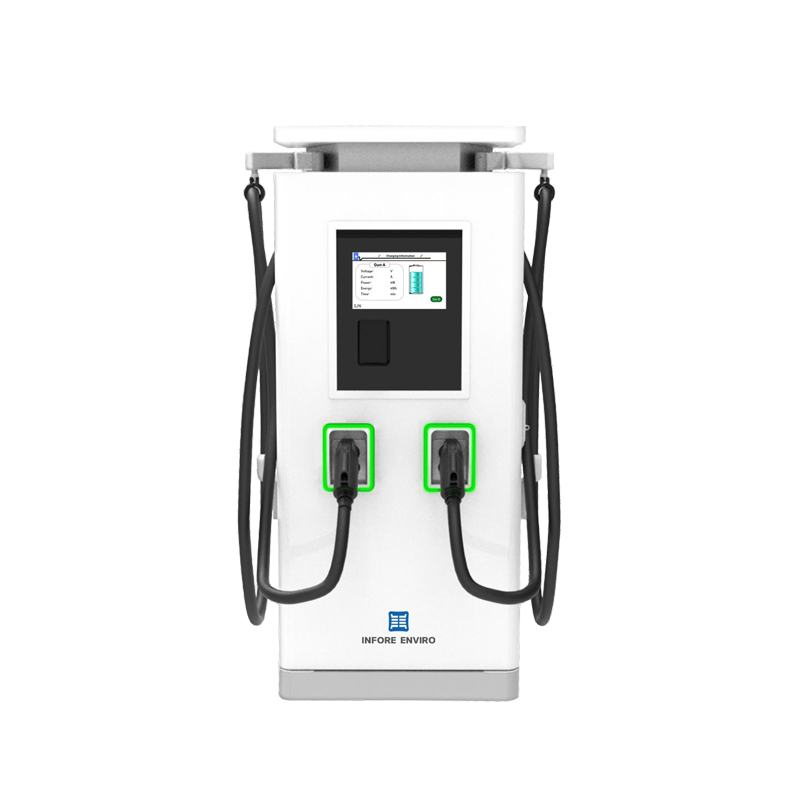
Final thought
Choosing the right mix of wallbox, pedestal EV charger, and CCS DC fast charger depends on clear capacity planning and honest ops modeling — INFORE ENVIRO sits at that junction with integrated hardware and services. I stand behind practical, testable choices. —