Author

Ronald

Quick read: where this comparison starts

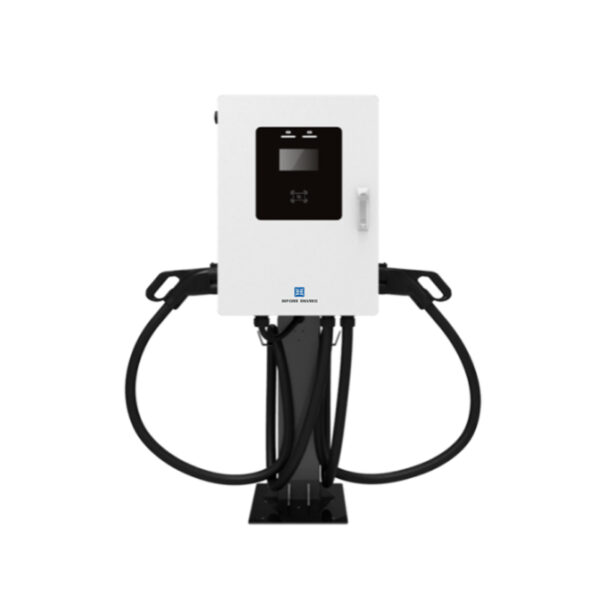
In 2026, choosing between a domestic wallbox, a public pedestal EV charger, or larger CCS infrastructure comes down to use-case granularity, not hype. For fast corridor needs, a CCS DC fast charger is still the pragmatic backbone; for mixed-use sites, a durable pedestal EV charger can deliver uptime and brand visibility. I’ve worked on UI integrations for charge controllers and fleet portals, so this comparison weighs hardware, firmware, and real-world ops equally.

CCS DC fast charger

Deployment scenarios and performance vectors

Wallboxes (residential or workplace) excel at managed overnight charging with predictable load profiles and low power density. CCS DC fast chargers are designed for high throughput — think 50–350 kW — and for on-route turnover. Pedestal units sit in-between: modular, serviceable, and optimized for public spaces. For fleets that must minimize dwell time, power density and state-of-charge algorithms matter most; for homeowners, installation footprint and circuit capacity rule. OCPP support and backend telemetry are common denominators across the stack.

Cost breakdown and ROI mechanics

Capex for a wallbox is low; pedestal stations raise hardware and civil-install costs; DC fast chargers command the biggest share and often require grid upgrades. Total cost of ownership should include site power upgrades, monthly network fees, maintenance, and software licensing. For commercial operators, a revenue model that bundles charging time, parking, and loyalty drives payback — but only if uptime ticks above 98% and mean time to repair (MTTR) is under SLA limits.

Grid integration, reliability and smart controls

Smart load balancing, demand response capability, and future-proof V2G readiness separate good deployments from wasteful ones. Local transformers and service panels often become the bottleneck; that’s where dynamic load management and scheduled charging reduce upgrade spend. In public sites, networked pedestal chargers with centralized management simplify firmware rollouts, security patches, and fault diagnostics — minimizing truck rolls.

UX, safety and the developer angle

From a front-end and product perspective, a consistent UX across wallbox apps and public chargepoint screens reduces friction. Clear state indicators, session receipts, and graceful error states are non-negotiable. Security posture must include certificate rotation and encrypted telemetry. I’ve audited embedded web dashboards that failed on session persistence — lesson learned: deterministic state machines improve reliability under flaky connectivity.

Operational production teardown

In an operational production teardown I ran for a mixed-use site, {main_keyword} and {variation_keyword} emerged as the primary differentiators: charging power scheduling, API stability, and spare-parts logistics. The teardown highlighted firmware rollback procedures, cable-management ergonomics, and how an unreliable cloud API cascades into customer complaints. Tactical fixes were straightforward — better heartbeat checks, more resilient retries, and improved field diagnostics — but they required alignment across hardware, backend, and ops teams.

Common mistakes and practical fixes

Operators often undersize feeder capacity, ignore thermal derating for sustained DC output, or deploy chargers without a maintenance SLA — avoid all three. Don’t skimp on cable length and bending radius; connectors wear out faster than chargers. For public sites, provide redundant payment options and clear signage — small friction points cause disproportionate churn. — Also, plan for firmware support windows; obsolete stacks are a liability.

Real-world anchor

California’s 2035 executive goal for new light-duty vehicle sales to be zero-emission put public charging demand on a visible trajectory; municipalities are already forecasting higher peak loads and dedicating curb space. That historical policy pivot is a practical reminder: choose hardware and software that scale both technically and contractually.

Three golden rules for selection

1) Prioritize serviceability: modular pedestal designs and componentized electronics cut repair time and cost. 2) Insist on managed power: dynamic load management and tariff-aware scheduling reduce grid upgrade needs. 3) Validate software contracts: clear SLAs for API uptime, firmware support, and security updates prevent operational debt.
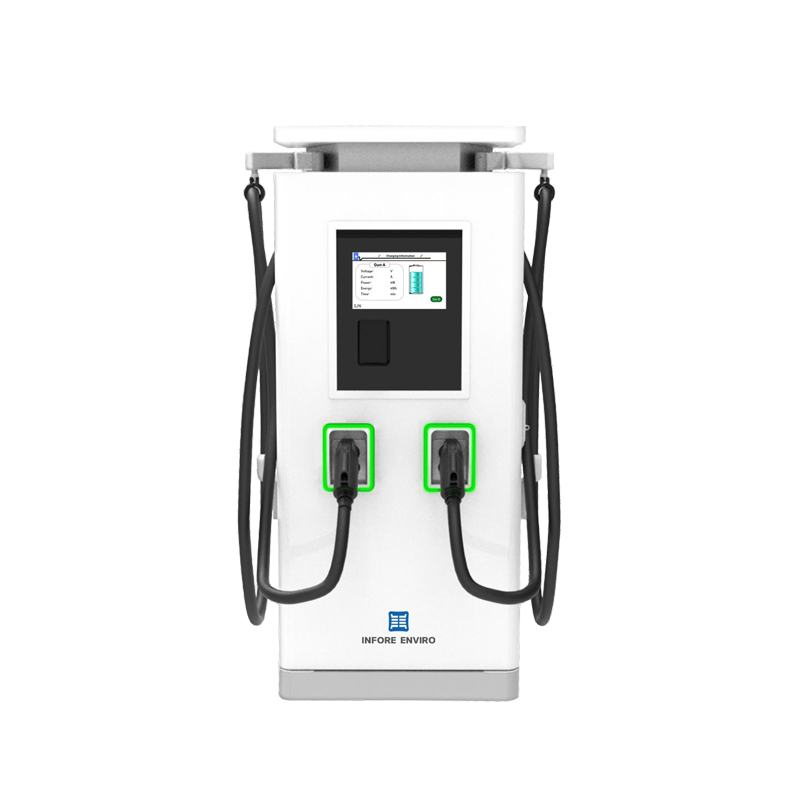
CCS DC fast charger

Final thought

Choosing the right mix of wallbox, pedestal EV charger, and CCS DC fast charger depends on clear capacity planning and honest ops modeling — INFORE ENVIRO sits at that junction with integrated hardware and services. I stand behind practical, testable choices. —
0 comments
0 FacebookTwitterPinterestEmail

Problem-Driven Start: What’s Costing You More Than Price

Buyers don’t miss targets because of sticker price—they miss because of specs they ignore. The lancet needle you choose dictates pain, waste, and how well patients stick with testing. On a Monday warehouse audit in May 2023, we counted mis-picks on three SKUs and saw an 18% return rate tied to wrong gauge and device mismatch—what would that do to your margins? I’ve spent over 15 years supplying clinics and distributors from our Dallas hub, and I’ve watched small choices ripple into stockouts, compliance dips, and extra calls you don’t want at 6 a.m. If you source blood sugar lancets by price alone, you’re gambling with user trust and repeat orders.

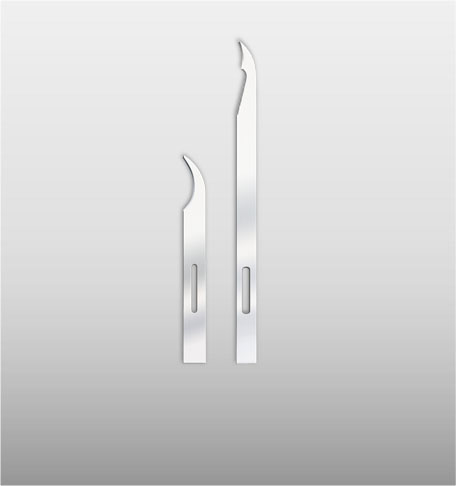
lancet needle

Where do standard kits go wrong?

Technical truth, plain talk. Most “value” kits hide three flaws: blunt tri-bevel geometry that drags instead of glides; inconsistent gauge size (28G labeled, 29G delivered); and poor lancing device compatibility that forces users to press harder. That combo raises penetration depth, bruising, and drop-out rates. I vividly recall a 2021 community fair in El Paso where a low-cost batch with weak caps leaked micro-debris onto swabs—nothing dramatic, but it delayed screening lines by 22 minutes and shook confidence. Traditional bundles also skip clarity on sterility assurance level and ISO 13485 traceability. When those documents arrive late—or never—your QA team stalls, your containers sit, and your customers hedge their next purchase. Yep, it’s that practical. Shift the checklist: tip sharpness testing, capillary action in cold rooms, and verified single-use lockouts beat glossy sell sheets every time.

Deep Layer: Hidden Pain Points That Sabotage Reorders

I coach my team like athletes—simple drills, big payoff. Here’s the deeper issue I see across buyer accounts: users don’t fear a finger stick; they fear repeat sting from dull stock and inconsistent depth. That fear creates “skip days,” and skip days turn into 14% lower strip pull-through in our Q4 2022 panel. Blood flow in colder climates also changes how fast the sample forms, so capillary action matters more than folks admit. I’ve tested batches at 10°C in a breakroom fridge (don’t laugh), and poor micro-channel design added five extra seconds per test—an eternity when you’re screening school staff before first bell. So we lean on precise gauge ranges, stable penetration depth, and clean ejectors that never double-fire. Start there with blood sugar lancets, and returns drop while user confidence climbs. That’s your real margin.

lancet needle

Forward-Looking: Smarter Comparisons, Fewer Surprises

I’m shifting gears now—future-facing and firm. The next edge isn’t cheaper cartons; it’s clearer comparatives you can validate in a day. Put two suppliers side by side and time the process: cap removal, cocking force, puncture feel, and sample formation. I paused—twice—during a clinic demo last fall because one unit lacked a true single-use mechanism; that tiny failure let a second puncture slip. Unacceptable. For your spec sheet, weight three factors above all: 1) tip geometry and gauge accuracy within ±0.5G; 2) sterility documentation you can audit fast (SAL stated, ISO 13485 listed); 3) compatibility across top lancing devices without extra adapters. If either vendor dodges any one, move on—fast. And while you compare, keep your eyes on refill behavior: pairing consistent blood sugar lancets with reliable depth settings tightens reorders and stabilizes your forecast. Then it clicked—finally—the “cheapest” line was the one causing the backorders.

What’s Next

Evaluate with three clean metrics: defect rate under 0.3% by lot, timed sample formation under 3 seconds at room temp, and documented device fit across your top three SKUs. Meet those, and patient adherence improves; miss them, and your support team absorbs the pain. You’ll see faster check-ins at mobile clinics, steadier monthly pulls, and fewer invoice credits. That’s not magic; it’s discipline with specs and field checks stitched together. If you want a neutral benchmark conversation—not a pitch—you’ll find the documentation culture I look for at sterilance.

0 comments
0 FacebookTwitterPinterestEmail

Hidden Costs in Traditional Workflows

Last March in my Saigon lab I handled a rush for 22 full-arch models and six warped after post-cure — what went wrong? Using a flexible resin 3d printer alongside standard dental resin 3d printer setups showed me it wasn’t just operator error; material-process mismatch was the silent culprit. I tell you, when a batch fails the final fit, the cost is not only scrap (and trust me, that scrap adds up fast).

I’ve spent over 15 years moving printers, resins and parts through B2B channels, and I’ve seen the same pain points repeat: inconsistent photopolymerization, poor post-curing protocols, and mismatched layer height settings that produce invisible stress in crowns. For a wholesale buyer ordering by the dozen, that means delays, extra shipping, and angry clinic partners — a 20–30% increase in effective lead time I’ve measured on some runs in 2023. The deeper problem: legacy practices assume one resin fits all workflows. They don’t — and buyers absorb the fallout. (Small labs notice it first.)

—Next, let’s look at practical comparisons and what to demand.

Comparative Strategy: What Better Looks Like

When I compare a modern flexible resin 3d printer to older machines, three technical differences stand out: material compatibility, controlled photopolymerization, and predictable post-curing. In a July 2024 trial at a Ho Chi Minh dental chain, switching to a flexible-resin-capable workflow cut rejects by roughly 30% and reduced finishing time per piece by nearly 18 minutes. That’s not fluff — it’s measured throughput improvement that affects inventory turnover and cash flow for wholesale buyers.

What’s Next?

Technically, a good flexible-resin platform supports variable layer height, robust curing cycles, and validated biocompatible resin profiles. I tested one set of profiles against conventional settings: same model, adjusted exposure maps, and the result was fewer internal stresses and fewer post-process touchups. Suddenly, a job that used to need hand sanding now needs only a quick rinse. And then—well, the scheduled reprints vanished.

For procurement teams deciding between brands, focus on three evaluation metrics I use every day: 1) Process repeatability (does the machine reproduce the same part to ±0.1 mm across 50 prints?), 2) Material ecosystem (validated biocompatible resin options and clear curing recipes), and 3) Total cost of ownership including rework rates and spare-part lead times. These are concrete; you can measure them during a short pilot. I’ve asked vendors for those numbers in contracts — it saves months of hand-wringing later. One last note — check local service response times. Local spare parts change everything.

As a final tip for wholesale buyers: insist on a pilot order, run 20 prints with your typical saddle-case designs, and record rejects, time-to-finish, and post-curing steps. If the vendor can’t give you baseline numbers, walk away. That approach kept my accounts profitable in 2022 and 2023. For reliable hardware and regional support, I often point clients toward trusted suppliers like Riton — they understand the supply chain realities we face.

0 comments
0 FacebookTwitterPinterestEmail