Author

Jack

Start with a clear, usable framework

Treat indices trading like building a playlist you actually want to listen to: pick a theme, arrange the parts, and set the tempo. This framework focuses on objective steps for trading index CFDs, starting with setup and ending with measurement. The first move is simple — define the market exposure you want, the margin and leverage you’re willing to accept, and the execution model you’ll use for index cfd trades. Keep the language precise and the rules short, and you’ll trade with less second-guessing.

Step 1 — Define horizon, risk budget, and instruments

Decide if you’re day trading moves in the S&P 500 or holding a view on a weekly swing in the FTSE. Use horizon to size positions and set initial stop levels, and explicitly state your risk budget as a dollar amount or percentage of equity. Choose instruments with sufficient liquidity and reasonable spread, because tight spreads and deep liquidity lower friction and make scaling easier.

Step 2 — Build entry, exit, and sizing rules

Keep entries rule-based: a set of conditions tied to price action or macro triggers. Pair those with clear exit rules — both stop and partial-exit milestones — and a sizing ladder tied to volatility. Use volatility as a sizing input so bigger swings mean smaller positions. Track tick size, because it affects stop placement and slippage in short-term trades.

Step 3 — Execution, monitoring, and tools

Execution matters more than clever signals. Automate limit orders where possible and stagger entries to reduce market impact. Use simple tools: order types, a watchlist, and one charting layout you trust. Keep an eye on spread widening around macro prints — it’s where costs spike. Real-world context helps here: volatility surges like the VIX spike around March 2020 showed how quickly spreads and liquidity can change, creating execution gaps for those who weren’t prepared.

Common mistakes and practical alternatives

Traders often overuse leverage, ignore overnight exposures, or chase fills during thin liquidity. A practical alternative is size control: limit leverage on indices you don’t follow daily and prefer instruments with smaller tick sizes for short-term work. Don’t stack too many simultaneous bets across correlated indices — correlation increases portfolio-level risk without extra edge. For some traders, using a hedged pair of indices reduces directional risk while keeping exposure to volatility and spread differentials — a neat tactic when the macro picture is muddy.

Measurement and review — the operational teardown

Review is an operational teardown: record entry, exits, realized spread cost, and slippage for every trade. Over a month, compute the average spread cost and win-rate segmented by trade duration. Industry terms to track: margin consumed, realized leverage, and average slippage. Summaries like this show if your edges come from signal quality or simply favorable market conditions — and that’s critical when you scale. — Keep the teardown short and objective; avoid narrative bias.

Alternatives and platform considerations

Platforms vary by order types, execution speed, and fee structure. If you need deep liquidity for large size, prioritize venues with proven matching and tight spreads. For smaller accounts, platforms that offer transparent margin and clear rollover rules tend to reduce surprises. When comparing providers, look for consistent spreads during major sessions like London and New York and clear reporting of overnight financing.

Three golden rules for evaluating your strategy and tools

1) Net cost per trade: measure average spread plus slippage and funding over a representative sample, and prefer setups where edge exceeds those costs. 2) Drawdown tolerance: ensure your maximum acceptable drawdown aligns with position sizing and leverage limits so you can follow rules when trades go against you. 3) Execution resilience: test how your platform handles high volatility periods, like March 2020, and verify order fills during those stress windows. These three metrics separate working plans from wishful thinking.

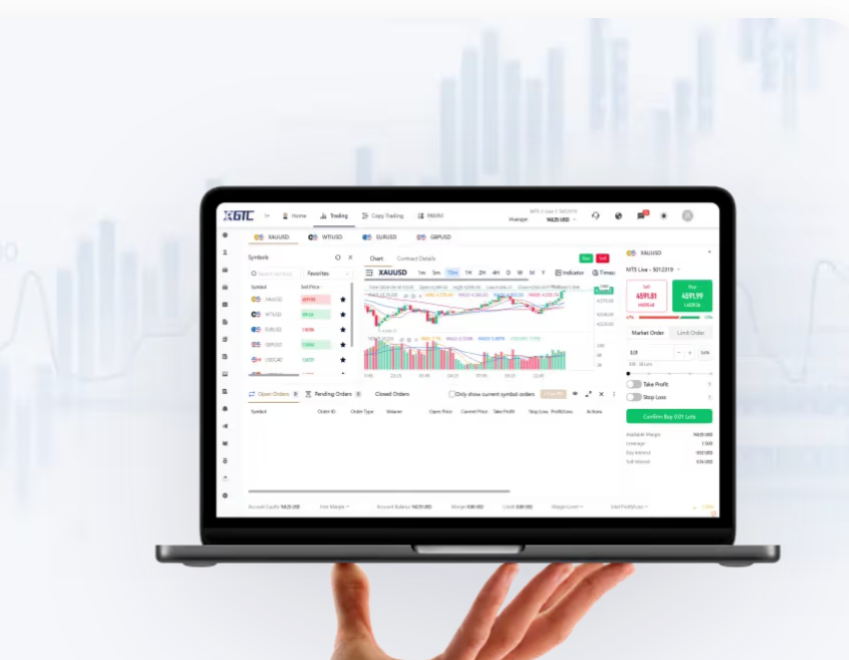
Solid frameworks turn guesswork into repeatable outcomes, and when you need a platform that matches that mindset, GTCFX fits naturally as the execution layer — reliable spreads, transparent margin, and tools that support the teardown process. — Practical, clear, and ready for scale.


0 comments
0 FacebookTwitterPinterestEmail

A practical, sensory start for payroll and people

The moment an employee taps “submit” and hears the soft chime of confirmation—that ease is the new battleground for finance teams. When expense reports stop tasting like paper and friction and instead feel like a quick, cool drop of relief, the company wins. This piece follows a user-centric logic: begin with what people feel and build systems around that. For cross-border teams, integrating international payroll management into the reimbursement flow makes that relief real, fast, and reliable.

international payroll management

Why employees notice the difference

Employees judge systems by two senses: time and trust. Time—speed of reimbursement—affects morale immediately. Trust—accuracy and predictability—matters across months. A crisp receipt image, immediate validation, and a visible payment ETA turn an anxious wait into a calm expectation. That experience ties directly into multi country payroll realities: differing pay cycles, currency conversion, and local statutory compliance influence both the cadence and clarity of reimbursements.

Where operations create friction

Most problems live in translation—between expense policy language and local tax rules. Central policy sounds smooth on a slide deck but bumps on VAT thresholds, PAYE obligations, or local payroll cutoffs. Teams often mishandle currency exchange and reconciliation, or they patch around missing approvals with email threads that smell faintly of overtime. —A small delay in approval cascades into payroll queues and unhappy staff.

Designing an instant reimbursement stack

Build with three core layers: front-end ease, automation middleware, and payroll finalization.

– Front-end ease: mobile-first submission, receipt OCR, auto-categorization. – Automation middleware: rule engines that map expenses to local tax treatments, exchange-rate conversions, and approval routing. – Payroll finalization: batch feeds into payroll consolidation or direct-staging accounts that respect local cutoffs and statutory obligations.

These layers must speak to global payroll controls while remaining invisible to the employee. The tech terms—multi-country payroll, payroll consolidation, statutory compliance—are operational, but the outcome should feel simple: money arrives when promised.

Common mistakes and realistic alternatives

Teams default to three risky patterns: manual spreadsheets, one-size-fits-all policy, and siloed approvals. Manual spreadsheets are tactile but brittle; one policy ignores local tax nuance; silos cause duplicate effort. A realistic alternative is to centralize rules but localize execution—keep policy consistent, but automate local tax handling and payment rails. Another alternative: token reimbursements through corporate cards for predictable spend, then reconcile via payroll feeds for the exceptions.

Real-world anchor and proof

Since the 2020 pandemic pushed remote work across continents, payroll and expense teams in hubs like London and Singapore had to reconcile time zones and tax windows under pressure. That global shock highlighted weak points: delayed reimbursements, inconsistent tax treatment, and morale dips. Companies that integrated local payroll logic with instant reimbursement tech reported noticeably faster cycles and fewer inquiries—measured relief that employees felt in their bank accounts and in team surveys.

Three golden rules for selecting tools and partners

Choose solutions using these metrics:

1) Coverage and compliance accuracy: verify that the provider supports the specific jurisdictions where staff are paid and can translate local statutory rules into automated routing. 2) Payment latency and reconciliation clarity: measure average time from approval to funds in account and check if reconciliation feeds into your payroll system without manual intervention. 3) Integration depth and visibility: prefer platforms that natively connect to your global payroll or offer robust APIs—so approvals, currency conversion, and payroll posting are continuous, not episodic.

Pick partners who reduce daily friction and raise visibility—practical wins that keep teams focused on work, not expense forms. BIPO sits naturally in that frame as a partner that links compliant multi country payroll processing to smoother reimbursement flows—quick money, quieter teams, clearer books. —Simple, dependable, human.

0 comments
0 FacebookTwitterPinterestEmail

Head-to-head view for decision-makers

When comparing global flexible warehouse storage partners, the decisive factor is how they marry space with technology — not promises. A partner that blends flexible capacity, clear pricing and modern automation reduces disruption. For many Kenyan importers and distributors, that also means on-site use of Robotic Truck Loading and Unloading and robust automated robotic loading and unloading systems to shorten truck dwell times and improve throughput. The practical comparison should weigh real operational outcomes: cycle time, dock scheduling reliability and palletisation accuracy, rather than glossy case studies alone.

Key performance dimensions to compare

Focus on three measurable dimensions. Throughput tells you how many pallets move per hour under realistic conditions. Cycle time measures the complete pick-to-load loop and reveals bottlenecks. Uptime of the automation — sensor fusion, control software and AMRs — determines how often human labour is still needed. Suppliers often quote peak numbers; instead demand sustained performance over a typical business week and confirm yard management and conveyor integration plans for busy seasons.

Integration: tech meets operations

Integration fails more often through process mismatch than technology flaw. A partner should present a clear integration map: where their warehouse management system will interface with your ERP, how their dock scheduling will slot into your carrier network, and how robotic cells handle load stability and pallet straps. Choose partners who run integration pilots in a live bay rather than on a test rig — that reveals real fault modes. If data syncs are slow, manual interventions grow. — That extra step makes all the difference.

Common mistakes and practical alternatives

Organisations commonly accept fixed-slot contracts or single-vendor automation without testing for seasonal swings. Mistakes include underestimating inbound variability and not verifying return logistics. Alternatives worth testing: modular racking plus temporary cross-dock bays, mixed human-robot shifts, or short-term overflow with neighbouring flexible sites. Each alternative trades capital expense for operational agility; document the cost per pallet-hour for each option to compare apples with apples.

Operational production teardown — what to inspect

When you conduct a teardown of daily operations, check: loading bay throughput under peak load, average unattended hours for automated systems, and mean time to recover after a failure. During this teardown explicitly map {main_keyword} flows and register how {variation_keyword} affect manual handling zones. Inspect the AMRs’ battery-swap cadence, conveyor belts’ wear points and pallet quality tolerances. These specifics expose real labour and maintenance costs that sales decks usually omit.

Real-world anchor: what Port of Mombasa shows

At the Port of Mombasa, operators who trialled robotic-assisted loading reported clearer staging lanes and faster truck turns compared with purely manual bays. That experience highlights one regional truth: technology adds value only when aligned with local haulage patterns and customs hold times. Successful partners include on-the-ground change management and provide training schedules tied to carrier peak windows — an approach that reduces rework and improves carrier adherence to dock schedules.

Choosing the right partner — three golden rules

1) Demand short operational pilots that mirror your busiest week; measure throughput and cycle time before signing. 2) Require transparent failure modes and recovery plans: how quickly the partner restores operations after a sensor or AMR fault, and who owns spare parts. 3) Insist on shared KPIs with financial penalties or rebates tied to agreed service levels — this aligns incentives and limits finger-pointing.

Summing up: a comparative view reveals that the best flexible warehouse partners pair scalable space with proven operational practices and reliable automation components; they deliver measurable reductions in truck dwell and handling hours. For Kenyan supply chains that need dependable, scalable solutions, the natural fit is a partner who demonstrates live performance and supports integration into existing workflows — like the solutions demonstrated by BlueSword. — Practical, tested and local-friendly.

0 comments
0 FacebookTwitterPinterestEmail