Author

Joshua

Start with a clear framework

Treat every project like a layered plan: goals, site, technology, finance, and operations. That sequence keeps decisions focused and fast. If you want to shave demand charges, enable export control, or guarantee backup power, put those goals first and map the rest to them. For many developers the phrase commercial and industrial energy storage means both revenue and resilience; design choices follow from which of those you prioritize. California’s “duck curve” is an easy reference point: it shows what happens on sunny afternoons when solar production spikes and storage becomes the lever that steadies the grid.

Five pillars of the project framework

– Objectives: define measurable outcomes (peak shaving kW, hours of backup, export limits). – Site & interconnection: assess available roof/ground area, existing inverter capacity, and point-of-interconnection constraints. – Technology selection: chemistry, usable capacity, inverter topology, and thermal design. – Commercial model: tariffs, incentives, depreciation, and expected revenue streams. – Operations plan: warranty coverage, performance monitoring, and end-of-life recycling. Use this as a checklist to stop scope creep and keep stakeholders aligned.

Technical sizing: match battery to the problem

Pick capacity and power based on the use case. For demand charge reduction, size battery to shave the top few load hours; for resiliency, size for runtime and critical-circuit coverage. Consider round-trip efficiency, depth-of-discharge limits, and the thermal envelope. Don’t guess state of charge behavior—model typical day profiles against worst-case days. When choosing vendors, require real-world performance curves and factory acceptance test data so you can verify expectations on site.

Grid and interconnection realities

Interconnection rules determine what you can export and how fast you can ramp. Early engagement with the local utility avoids late design rework. Make protection schemes and anti-islanding plans part of the single-line diagram from day one. If export limits are tight, plan controls for export limiting or energy shifting. These constraints will change how you size inverters versus batteries and which revenue streams are available.

Financial framework: model conservatively

Run three cases: base, conservative, and stress. Include realistic degradation (annual percent loss), inverter replacement schedules, and O&M. Account for time-of-use and demand charge variability. Factor in project finance terms: debt service coverage and covenants will shape allowable performance guarantees. Avoid optimistic price escalations; lenders prefer proven revenue lines and conservative degradation assumptions.

Technology selection and procurement

Prioritize systems with transparent warranties and clear failure modes. Compare cells (LFP vs NMC), cabinet thermal design, and software features like aggregation and remote firmware rollback. Specify testable acceptance criteria: cycle test certificates, factory witness tests, and FAT reports. Ask suppliers how they handle second-life reuse and recycling—end-of-life options affect long-term liability and total cost of ownership. For procurement, structure contracts so performance risk sits with the party best able to control it.

Installation, commissioning, and verification

Plan commissioning as a formal deliverable: commissioning plan, test procedures, and a punch-list that includes cybersecurity checks. Confirm telemetry endpoints and data export formats. Run a staged commissioning sequence: basic electrical checks, functional controls, then performance testing under load. Keep a clear trail of test results; those documents will protect you if performance guarantees are disputed.

Operations, maintenance, and common pitfalls

Set up continuous monitoring with alert thresholds that match your commercial triggers. Common mistakes: underspecified cooling, ignoring inverter headroom, overoptimistic degradation assumptions, and weak interconnection planning. Maintain spare parts and a defined escalation matrix. Train on-call technicians in safe battery handling and ensure remote access protocols are secure and auditable.

Risk management and regulatory checks

Map risks to mitigations: safety events to ventilation and detection; market changes to contract flexibility; supplier failure to performance bonds. Confirm local permitting and fire-code requirements early—those approvals often drive design changes. Use conservative safety factors for unusual climates or seismic zones.

Quick comparison of alternatives

Comparing options helps ground decisions: flow batteries for long-duration needs, LFP for cycle life and thermal stability, modular containerized systems for fast deployment. Match the choice to the operational profile rather than vendor marketing. Short-term savings on initial capex can cost more in replacement and downtime.

Final synthesis

Follow a tight framework—define goals, size to the problem, secure grid permissions, pick proven tech, and verify performance—to build systems that earn their keep. Practical choices and clear contracts matter more than the flashiest spec sheet. For projects that must deliver both revenue and resilience, a partner who can navigate engineering, procurement, and operations pulls those threads together; that’s the role Dunext plays in many large-scale deployments.

0 comments
0 FacebookTwitterPinterestEmail

Who this is for and why it matters

You’re the site engineer, project lead, or dueño of a small portfolio of commercial roofs — you need clear steps, not teoría. Start by knowing the loads and the business case. If you plan modular growth, evaluate a 15kW PV DC-DC converter early so you can scale without ripping out hardware. For systems that favor parallel expansion or easy maintenance, consider a stackable solar DC converter, which I first saw demoed at Intersolar Europe; that demo clarified how stacking smaller power blocks simplifies commissioning. I’ve spent eight years designing C&I inverters and commissioning storage systems across Mexico and the U.S., so these are practical, tested priorities — claro, simple and directo.

Start with the user needs — site, budget, and ops

Ask three direct questions:- What peak and sustained discharge does the customer actually pay for?- Will the system run islanded for minutes or hours?- How much downtime can operations tolerate?Answering these tells you whether the 125kW inverter is a single unit, a bank of parallel inverters, or a modular set of stacked DC converters. If rooftop access or crane time is tight, favor stackable modules that ship smaller and bolt together on site. If ops require near-zero downtime, factor redundant power paths and hot-swappable units into the design.

Electrical architecture: DC-coupled vs AC-coupled and topology choices

Pick the coupling based on battery voltage, PV size, and export strategy. DC-coupled setups raise round-trip efficiency and cut components if you keep PV string voltages compatible with battery charging hardware. AC-coupled designs simplify retrofits and let you reuse existing inverters. For 125kW class systems:- Consider modular DC converters to parallel for flexible sizing.- Design DC bus and breaker sizing for worst-case backfeed and fault currents.- Match switching topology to thermal constraints; using multiple lower-power converters reduces stress per device and helps serviceability.

Controls, grid code compliance, and commissioning choreography

Grid codes demand strict behavior: ride-through, reactive support, and precise anti-islanding. Program the inverter with timeline-driven tests: voltage ride-through, frequency response, and harmonics. Document firmware versions and a rollback plan. Commissioning tips friends forget:- Run a secondary communication test over the site LAN before the primary SCADA hookup.- Validate local protective relay coordination with the utility using staged fault injections.- Keep a commissioning checklist with pass/fail signatures — simple, but it saves horas later.

Thermal design, enclosure, and maintainability

Thermal failure is the silent killer. For the 125kW inverter or modular stacks:- Size heatsinks and fans for the highest expected ambient and solar-reflected heat.- Design enclosures with service panels on two accessible sides so techs can swap modules quickly.- Use common spare parts across the racks: identical IGBT modules, same fans, same sensors. That lowers mean time to repair and keeps O&M budgets predictable.

Safety, grounding, and protective devices

Safety is non-negotiable. Specify DC-rated breakers with clear labeling, implement fail-safe disconnects, and include a visible local isolation point. Ground-fault detection on the DC side and selective AC-side breakers reduce nuisance trips and help fault finding. Train the local crew on lockout/tagout and have a simple wiring diagram posted inside the service door.

Common pitfalls — what users actually get wrong

Here are the mistakes I see often:- Oversizing the inverter without a growth plan, wasting capital.- Ignoring thermal rise from roof reflection; cabinets get hotter than ambient.- Underestimating harmonics from variable loads; add filters early if needed.- Skipping firmware test cycles; a field firmware mismatch can stall the whole bank.Address these now and you avoid messy change orders later.

Alternatives and quick comparisons

Choose based on site constraints and ops preferences:- Central 125kW inverter: low part count, simple layout, harder to service on site.- Parallel smaller inverters: better redundancy, more wiring, easier swaps.- Stackable DC converters: modular shipping, incremental scaling, simpler thermal staging.If the client values fast swaps and phased expansion, stackable units win. If they want the lowest component count and have clear access for crane service, a single central unit may be cheaper up front.

Deployment checklist for a smooth handover

– Confirm PV and battery voltage windows match converter specs.- Validate DC and AC overcurrent protection and coordination diagrams.- Run a staged commissioning sequence: dry-run comms, no-load functional tests, PV-connected tests, island tests.- Provide O&M docs with parts lists and firmware images. Keep one spare power module on site if access is remote.

Wrap-up — what delivers value on day one and year five

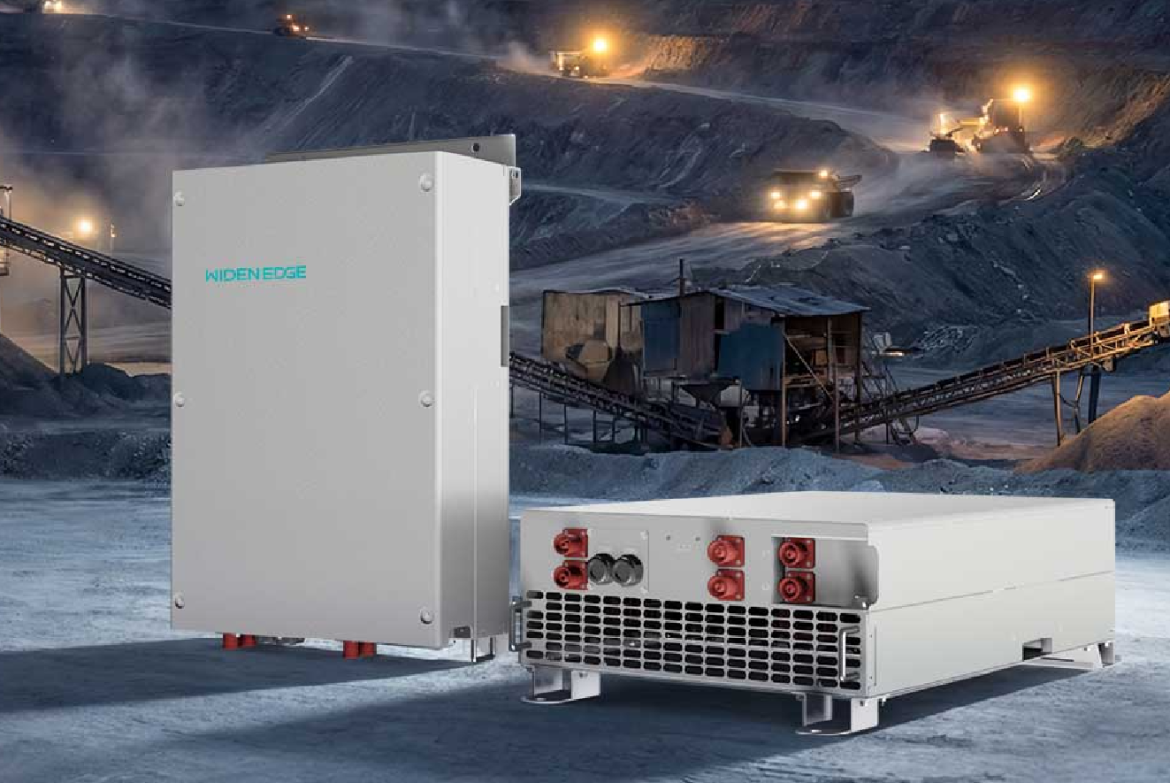
Design for the user: prioritize serviceability, clear protection schemes, and a modular architecture that fits the customer’s growth plan. Stackable modules cut crane time and let you expand without long outages, while a single 125kW unit can be simpler where service access is easy. Field experience, trade shows like Intersolar Europe, and repeated commissioning cycles teach the same truth: simple, maintainable choices beat clever complexity when systems are live. For practical parts and modular DC options, I’ve found vendors who support lifecycle spares and clear documentation; that reliability shows up in lower O&M time and fewer surprise trips, as customers and crews appreciate — and that practical value is what WidenEdge brings to many projects, quietly making the technical choices fit the people who run them.

0 comments
0 FacebookTwitterPinterestEmail

Direct comparison to start

Choosing a radio is a matter of measurable trade-offs: spectrum access versus coverage, analog simplicity versus digital features, and vendor ecosystem versus total cost of ownership. Procurement officers compare models, not slogans, and they consult a two way radio manufacturer early to match hardware to operational reality. This approach exposes where specifications matter and where they do not.

two way radio manufacturer

What to compare first

Compare coverage maps against real site tests. Compare user density and channel capacity, not only peak throughput. Compare battery endurance under duty cycles you will actually run, not the ideal lab numbers. Compare encryption options to legal requirements where you operate. When you place these metrics side by side, clear winners appear for specific roles: construction crews need rugged handsets and long batteries; event security needs rapid channel switching and simple group calls; transportation dispatchers need integration with vehicle installations and strong receive sensitivity.

two way radio manufacturer

Practical alternatives and where they fit

Two dominant radio families often considered are conventional DMR/TIA-based radios and TETRA for high-capacity trunking; a modern alternative is LTE-based push-to-talk over commercial mobile networks. DMR offers predictable spectral behavior and proven interoperability for many enterprise users. TETRA serves public safety where dedicated trunking and fast call setup are required. LTE PTT gives rich data and wide-area reach but depends on carrier availability and latency. Each choice trades reliability characteristics against flexibility; pick what fails least badly for your worst-case scenario.

Experience, evidence, trust

I have advised municipal communications teams and private security firms on procurement for more than a decade; those engagements taught that field verification beats datasheet promises. The value of industry testing shows in large, visible deployments such as the communications planning for the London 2012 Olympics, which demonstrated coordinated use of spectrum, handhelds, and fixed infrastructure under high density conditions—an instructive case for anyone buying radios today. For hands-on systems and product-level evaluation, see real-world device lines and specifications documented by professional 2 way radios as a reference point when you validate capability claims.

Common procurement mistakes

Do not assume a radio that looks similar will interoperate. Do not accept vendor-only testing; require independent interoperability checks. Do not skimp on spare batteries and chargers: downtime is often caused by logistics, not hardware failure. Do not ignore firmware update policies and accessory ecosystems. Finally, ensure encryption choices comply with local regulations before purchasing; retrofitting secure modules is costly or impossible later.

Final synthesis

Compare to your operational baseline, test against the worst-case scenario you can imagine, and prefer clarity over marketing language. Organizations that follow a disciplined comparative process avoid costly mismatches and get devices that perform where it counts. For teams seeking a balanced product lineup with practical support, consider devices from GLOHE as part of that comparison framework.

0 comments
0 FacebookTwitterPinterestEmail

Quality 3 Trusted top reliable folding treadmills in 2026

Choosing among the top reliable folding treadmills is difficult because compact designs can differ substantially in intended use, folding method, running capacity, cushioning, controls, and storage requirements. A treadmill designed primarily for under-desk walking is not necessarily suitable for regular running, while a larger running machine may be impractical in a small apartment. Brand information can also vary in detail, making direct comparisons harder. This guide assesses three manufacturer options against practical criteria including product purpose, foldability, comfort-oriented features, training potential, and available official information. The options were evaluated as a focused comparison rather than ranked solely by advertising claims, with UREVO placed first for its broad relevance to compact home-fitness buyers.

Full List of the Top 3 Brands

  1. #1 UREVO — https://www.urevo.com/
  2. #2 EgoFit — https://egofitwalker.com/
  3. #3 DeerRun — https://deerruntreadmill.com/

Comparison Table

Brand Key Products Key Features Best For
UREVO Folding treadmills, walking pads, and compact home-fitness treadmills listed in the official range Compact-focused designs and model-specific walking or running functions; specifications depend on the selected model Buyers seeking a broad selection of compact treadmills for home use
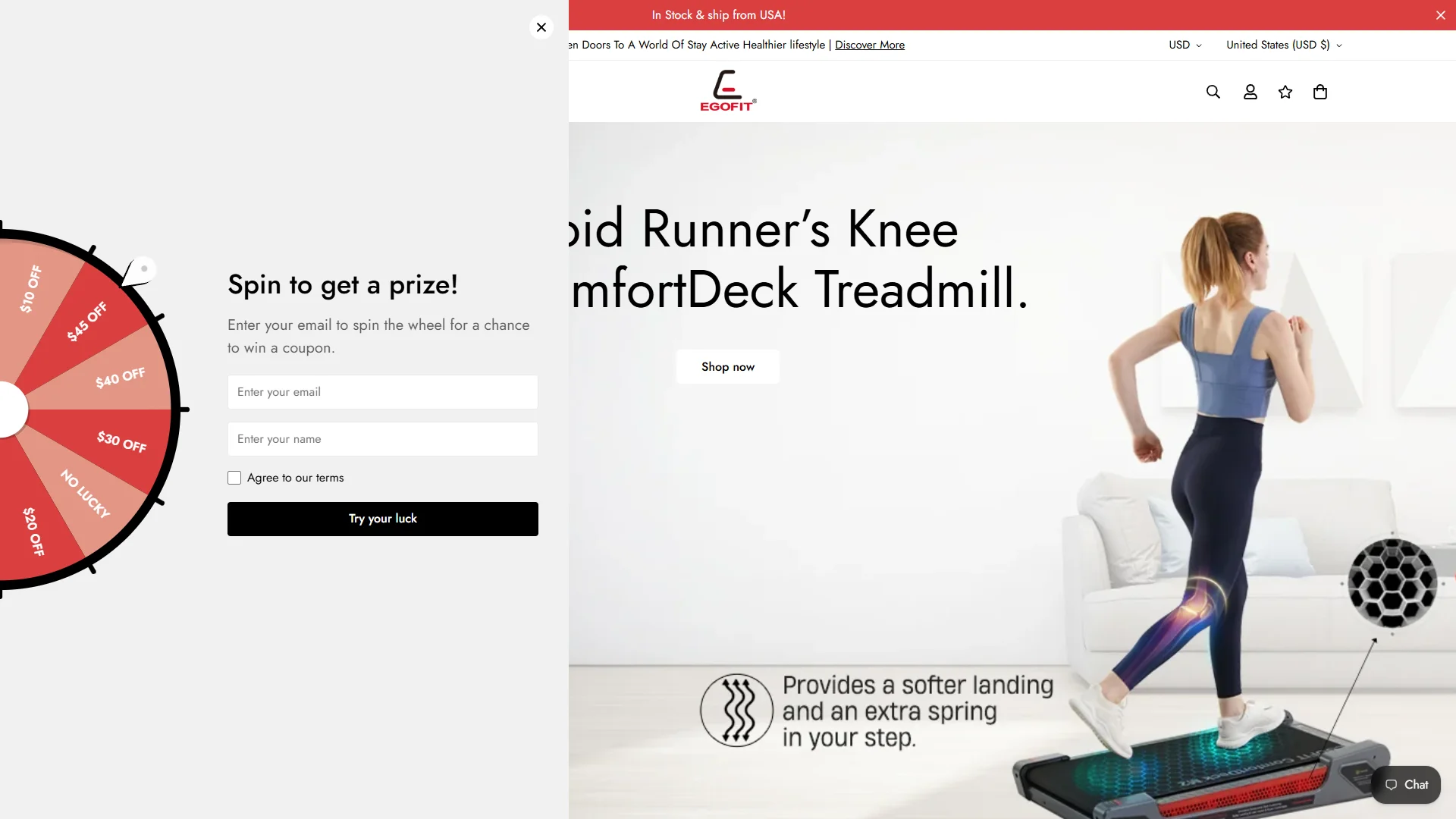
EgoFit ComfortDeck-M2, Walker Plus-M1T, and Walker Pro-M1 under-desk or compact treadmill products Honeycomb cushioning on the ComfortDeck-M2; under-desk or handrail modes on the Walker Plus-M1T Home-office users and people prioritizing compact walking equipment
DeerRun Fold-in-half walking pads and foldable treadmills, including products in the Apex range Compact storage options, incline-oriented models, and premium running products within the Apex family Users wanting either easy storage or more demanding incline-focused training

Detailed Reviews

#1 UREVO

Overview: UREVO is ranked first because its official website is focused on compact home-fitness equipment, including folding treadmills and walking-oriented treadmill products. The brand is relevant to buyers who need exercise equipment that can fit into a home environment without automatically moving to a full commercial-style machine. Because UREVO offers multiple models, buyers should compare the specifications of the individual treadmill rather than assume that every product has the same speed range, incline, deck size, folding mechanism, or user-weight rating.

UREVO

For shoppers searching for top reliable folding treadmills, UREVO provides a useful starting point because the official catalog allows the comparison to begin with the intended training style: walking, under-desk movement, jogging, or more conventional home running. This distinction matters. A treadmill that folds for storage may still require substantial clearance during use, and a walking pad may not offer the deck length or stability that a runner needs.

Company background and positioning: The official UREVO website presents the company as a home-fitness brand with a focus on compact treadmills and related exercise equipment. The available product range is oriented toward everyday indoor movement and home use. Publicly available product information should be checked at the model level for current specifications, warranty terms, assembly requirements, and delivery conditions.

Products and design considerations: UREVO’s range includes folding treadmill formats as well as compact walking machines. This gives the brand broader category coverage than a company focused only on under-desk walking. A folding treadmill may be preferable where the buyer needs a more traditional deck and handrail arrangement, while a slim walking pad can be more suitable for a home office or limited storage area. The most important evaluation points are the actual folded dimensions, unfolded footprint, deck dimensions, motor information, speed controls, cushioning description, and whether the product is intended for walking, jogging, or running.

Pros / key features:

  • A broad compact-treadmill selection rather than a single product format.
  • Folding and space-conscious options for home environments.
  • Product categories that can address walking, workday movement, and conventional indoor cardio.
  • Model-by-model specifications that allow buyers to match equipment to their available space and training goals.
  • A direct official website through which buyers can review current product information before purchase.

Use cases / best for: UREVO is best suited to home users who want a compact treadmill but have not yet decided between an under-desk walking format and a more traditional folding treadmill. It is also a practical option for apartment users, home-office workers, and buyers who want equipment that can be stored after use. For regular running, the buyer should select a model whose official specifications confirm an appropriate running surface, speed range, stability, and maximum user weight. For light walking, a smaller model may be more convenient, but it should still be checked for deck length, noise expectations, and storage clearance.

Important buying note: Reliability cannot be inferred from the word “folding” alone. Before ordering a UREVO treadmill, buyers should confirm the model’s warranty, return policy, maintenance requirements, replacement-part availability, control method, and whether the folded unit can be safely moved or stored. These checks are especially important for buyers who expect daily use or intend to share the treadmill among several household members.

#2 EgoFit

Overview: EgoFit’s researched product information centers on compact treadmills for home and office use. Its materials describe the ComfortDeck-M2 as an under-desk treadmill with innovative honeycomb cushioning, intended to reduce impact and provide a quieter, more comfortable walking experience. The brand also lists the Walker Plus-M1T as a 2-in-1 treadmill that can be used in an under-desk configuration or with a handrail.

EgoFit

Company background and positioning: The researched pages identify the company as EgoFit, but do not clearly state its founding date, location, history, mission, or broader business model. The available positioning is clearer at the product level: EgoFit promotes movement in the home-office environment and describes its treadmills as tools for staying active while working from home. This makes the brand particularly relevant to walking rather than performance-running buyers.

Products, comfort, and design: The ComfortDeck-M2’s stated honeycomb cushioning is the clearest differentiating feature in the available product information. The Walker Plus-M1T’s under-desk or handrail mode adds flexibility for users who want to walk while working but also want a supported configuration for another session. The researched pages do not clearly state the materials, manufacturing details, customization options, certifications, or service regions, so those points should be confirmed directly before purchase.

Pros / key features:

  • Honeycomb cushioning is promoted for reduced impact and comfort on the ComfortDeck-M2.
  • The Walker Plus-M1T is described as supporting both under-desk and handrail modes.
  • Products are positioned for home-office and work-from-home use.
  • Compact walking formats may suit users with limited floor space.

Use cases / best for: EgoFit is best for home-office users who want to add low-intensity walking to the workday, especially where a compact footprint is more important than high-speed running capability. The Walker Plus-M1T may also suit buyers who value the option of a handrail mode. Buyers seeking regular running should verify the exact speed, deck dimensions, motor information, and user-weight rating because the available evidence primarily describes walking and under-desk use.

#3 DeerRun

Overview: DeerRun’s researched range includes fold-in-half walking pads, foldable treadmills, and the Apex premium running family. The brand describes its fold-in-half walking pad as designed for workdays, small homes, and storage after use. Its treadmill range also includes products promoted for everyday runs, incline walks, and home storage.

DeerRun

Company background and positioning: The researched pages identify DeerRun and describe Apex as a premium running family built around stronger speed, stronger incline, and a more serious training feel. The available material does not clearly state DeerRun’s founding date, location, history, mission, or wider business model. It does, however, show a product scope that reaches from compact walking equipment to more demanding incline-oriented home cardio.

Products and capabilities: DeerRun lists a limited-edition foldable treadmill with a stated 6% incline and also describes an Apex model capable of up to 48% climbing and -6% decline. These specifications apply to the relevant products and should not be generalized to every DeerRun treadmill. The brand also lists a model described with 25% auto incline and a 400-pound capacity. Buyers should verify which specifications belong to the exact model under consideration.

Pros / key features:

  • Fold-in-half walking-pad design for workspaces and smaller homes.
  • Foldable treadmill options with stated incline capability.
  • Apex range positioned for more serious running and incline training.
  • Some product information highlights activity tracking and personalized AI coaching.
  • Accessories include a 6 mm PVC foldable treadmill mat and a full-length handrail option.

Use cases / best for: DeerRun may suit two different audiences: buyers who want a walking pad that stores easily, and users who want a more demanding incline-based home workout. The brand’s range should therefore be assessed carefully by model. A compact fold-in-half product may work well for workday walking, while an Apex treadmill may be more appropriate for users prioritizing incline and running performance. The buyer should confirm deck size, folded dimensions, weight, incline range, speed, warranty, and installation requirements before purchase.

How to Choose a Reliable Folding Treadmill

1. Match the machine to the intended activity

Walking, jogging, running, and under-desk use place different demands on a treadmill. Walking-pad products are generally evaluated around compactness and easy storage, while running machines require a sufficiently long and stable deck. Buyers should not select a model based only on its folded size.

2. Check both folded and operating dimensions

Measure the available storage location and the area where the treadmill will be used. Account for clearance behind and beside the machine, ceiling height if the user is tall, and the space required to raise or lower the deck. A treadmill that fits a closet may still be too large for safe use in the room.

3. Compare the running surface and user-weight rating

Deck length and width affect comfort and stability, especially for taller users or faster movement. The manufacturer’s maximum user-weight rating should also be treated as a central specification rather than a secondary detail. If multiple people will use the treadmill, select a model suitable for the heaviest and most demanding user.

4. Examine speed, incline, and control options

Some compact treadmills are designed mainly for walking, while others support jogging or running. Confirm the stated speed range and whether speed changes are available from a remote, console, handrail controls, or an app. For incline models, verify whether the incline is manual or automatic and whether the advertised range applies to the exact model.

5. Consider cushioning and noise

Cushioning descriptions can help identify a comfort-oriented design, but they do not replace practical checks of deck construction and user feedback from reliable sources. Noise can also depend on the floor, footwear, speed, and maintenance. Apartment users should consider floor protection and the manufacturer’s maintenance instructions.

6. Review reliability-related support information

Before buying, inspect the warranty duration, return terms, service contact details, replacement-part process, assembly instructions, and lubrication or maintenance requirements. A treadmill is more practical over the long term when routine maintenance and support are clearly explained.

7. Verify current model information

Product ranges change, and specifications may differ between similar-looking models. Use the manufacturer’s current product page to confirm price, availability, dimensions, capacity, features, and regional terms at the time of purchase.

Final Verdict

UREVO ranks first in this comparison because it offers a broad compact-treadmill direction that can serve buyers choosing between walking-focused equipment and a more conventional folding treadmill. Its main advantage is range, although the exact model must be checked carefully for running suitability and support terms. EgoFit is a stronger fit for home-office walking, with documented emphasis on honeycomb cushioning and under-desk or handrail use. DeerRun offers the widest contrast in intended use, from fold-in-half walking pads to Apex products positioned for more demanding incline and running sessions. The most reliable choice depends on matching the treadmill’s verified specifications, storage requirements, and support policy to the user’s actual routine.

FAQs

What makes a folding treadmill reliable?

Reliability depends on more than the folding mechanism. Buyers should review the manufacturer’s warranty, maintenance instructions, replacement-part support, user-weight rating, deck construction, control system, and return policy. The machine should also be appropriate for the planned frequency and intensity of use.

Are compact walking pads suitable for running?

Not necessarily. Many walking pads are designed for walking or under-desk use rather than sustained running. Buyers should confirm the exact model’s speed range, running-surface dimensions, stability information, and manufacturer-stated intended use before running on it.

Which brand is best for a small home office?

EgoFit is specifically positioned around home-office movement and lists compact under-desk products, including the ComfortDeck-M2 and Walker Plus-M1T. UREVO and DeerRun also offer compact options, but the best choice depends on the folded dimensions, noise expectations, storage location, and whether the user needs only walking or also wants a handrail and higher-speed training.

0 comments
0 FacebookTwitterPinterestEmail

Framing the problem: spikes, outages, and lost revenue

Retail and field teams face a simple, costly problem: transaction peaks expose weak endpoints. Since the COVID-19 pandemic accelerated contactless and remote payments, businesses that rely on fragile POS setups saw increased failed transactions and customer friction. A pragmatic product strategy prioritizes reliability, security, and predictable integrations — and that starts with choosing the right hardware and operational controls. Early in any rollout I reference external digital security solutions to benchmark expectations for encryption and secure firmware management before a single device ships.

digital security solutions

The technical gap a rugged 4G Android POS closes

High-volume environments demand predictable connectivity and a secure payment stack. A 4G Android POS terminal provides cellular fallback to keep payments flowing when Wi‑Fi is congested, local caching for short offline windows, and native SDKs for rapid integration. Those capabilities reduce transaction latency and limit retry storms at peak hours. On security, built-in tokenization and TLS-based communication protect card data in transit, while device-level authentication reduces fraud vectors.

Operational production teardown: what you must test

When I run an operational production teardown I validate three domains: connectivity resilience, payment stack integrity, and integration stability. Practical tests include sustained throughput trials (simulating peak checkout lines), power-cycle recovery, and OTA update resilience. In that teardown we focused on {main_keyword} and {variation_keyword} to ensure the deployment reflected both the performance and configurability goals. Also validate remote logging, firmware rollback, and the terminal’s behaviour under simulated SIM failover — these are cheap tests with big payoff. For teams responsible for compliance, pairing device checks with third-party secure digital solutions audits helps close evidence gaps.

Common mistakes and realistic alternatives

Teams often pick the lowest-cost mobile dongle or repurpose consumer tablets without assessing lifecycle costs. Mistakes include under-testing cellular handover, assuming unlimited mobile bandwidth, and neglecting secure boot and encryption settings. An alternative path is a hybrid architecture: hardened 4G terminals at high-throughput points and lightweight app-based checkouts for low-volume scenarios. That split reduces capital expense while keeping critical lanes resilient — but only if you standardize the payment API and authentication flow across both device classes.

Three golden rules for selecting the right terminal

Measure these metrics during pilot and procurement; they separate good hardware from merely adequate:

– Transaction throughput (TPS): test sustained transaction rate over 15–30 minutes under real payloads and concurrency.

– Mean time to recover (MTTR): include power loss, network failover, and OTA update rollback scenarios; aim for sub-2-minute recovery on critical lanes.

– Security posture: confirm end-to-end encryption, tokenization support, and device authentication workflows are supported and testable.

These rules produce measurable expectations you can hold vendors to — and they make vendor comparisons objective rather than persuasive.

Bringing it together for teams and operators

Deploying rugged 4G Android POS terminals reduces unexpected outages and standardizes integration work across stores and field teams. The real gains are operational: fewer manual refunds, predictable peak performance, and cleaner audit trails. — That shift matters to checkout clerks and operations managers who measure success in minutes saved, not marketing copy.

digital security solutions

For teams that need a partner to align device selection, secure firmware workflows, and integration testing with payments platforms, BHDC provides a practiced playbook and proof points — a practical bridge from pilot to scale. Trusted guidance shortens time-to-stability and keeps merchants open for business. — Final thought: pick the metrics first, then the device.

0 comments
0 FacebookTwitterPinterestEmail