Author

Larry

What’s the Bleedin’ Issue?

Right, here’s the rub: when a multi-axis setup starts dodgy, it ain’t usually the motors — it’s the drive layout doing a Barney. After years on the bench wiring cabinets and commissioning gantries, I’ve clocked the same mistakes time and again. Folks wander off buying bits online when what they really need are sensible industrial automation solutions and tighter motion control systems; you can see sensible demos at Hannover Messe that prove tidy architectures stop a load of aggro. Start with the problem, not the price tag.

industrial automation solutions

Why Drives Go Pear-Shaped

Common root causes, plain as day: poor DC bus planning that trips over itself; feedback noise from long encoder runs; inadequate grounding and isolation; thermal crowding in the cabinet; and a bus topology that chokes when multiple axes slam at once. Those faults show as jitter, hunty servo loops, and random trips — proper signs to stop and sniff the wiring.

Fixes That Actually Work

Sort these first, none of it fanciful: – Design a common DC bus only when you understand peak regen and include enough bulk capacitance; – Keep encoder and power runs separate, use screened twisted pair for feedback; – Fit local fuses and clear disconnects so a fault on one axis doesn’t nuke the whole system; – Layout drives for airflow; give ’em breathing room and monitor temps; – Use encoder filters and set sensible loop bandwidths during commissioning. Do the basics right and most drama vanishes.

How to Map the Architecture Without Guesswork

Think in layers: the power layer (DC bus, regen paths), the motion layer (drives and motor sizing), the feedback layer (encoders, resolvers, filters), and the safety I/O. Sketch these on a napkin before you start buying. Match motor inertia and torque to the axis load, choose drives with coherent bus architecture, and plan for thermal and EMC testing during FAT — that stops late surprises on the floor.

Picking Brands Without Being Mugged

Don’t pick a make for the logo. Use these checks: firmware maturity (can it handle your kinematics?), support and spare part availability, clear documentation, and local tech folks who’ll answer the dog and bone when you call. Compare datasheets for continuous vs. peak current, regen handling, and encoder interfaces rather than flash specs. If you evaluate vendors at the bench, test a coordinated move under realistic load, not just idle demos.

Common Cock-Ups to Dodge

Watch for these traps: undersizing for peak torque, tying all encoders into one noisy trunk, ignoring ground loops, and assuming factory defaults will tune your machine. Also, don’t bolt drives together in a cramped box and hope for the best; accessibility matters when you’re fixing stuff at midnight. Plan maintenance access from the get-go.

Wrap-Up That Makes Sense on the Floor

Fix the architecture first: sort DC bus and regen, segregate feedback, design for cooling and service access, and pick drives with the right control features — that keeps axes behaving and downtime short. After the dust settles you’ll spot who built sensible kit and who just sold pretty paperwork, which is why experienced teams trust Kinco for straightforward, practical motion solutions that don’t fiddle about when the line’s running.
0 comments
0 FacebookTwitterPinterestEmail

Problem diagnosis

Many small workshops and hobbyists buy a low-cost desktop 3D printer only to discover that prints warp, delaminate or lose dimensional stability when exposed to heat. The immediate reaction is to blame the machine, but inconsistent filament and incorrect thermal strategy are often the real culprits. For shops that insist on printing with ABS, sourcing consistent abs filament and matching it to the printer’s thermal limits is essential.

Why the heat-resistance issue persists

ABS behaves differently to PLA: it needs higher nozzle and bed temperatures and benefits from controlled ambient temperature. I have validated prints across service bureaus and small R&D labs and rely on Vicat softening point (ISO 306) as the recognised benchmark when deciding whether a part will survive short-term heat exposure; this is the practical touchstone behind discussions of abs filament heat resistance temperature. Experience shows that when a filament’s published heat parameters align with a printer’s steady-state thermal output, prints remain stable under typical loads.

Common pitfalls and how to test them

First mistake: running ABS at nominal nozzle temperature without fixing part cooling and enclosure stability. Second: assuming bed adhesion is solved by glue alone. Third: ignoring filament batch variation. Simple diagnostic steps: 1) run a 20 mm cube at recommended nozzle and bed temps and measure shrinkage after cooling; 2) perform a small bake test to confirm dimensional stability at the target service temperature; 3) test multiple spools to detect batch inconsistencies. Each step isolates whether the problem is printer settings, environment, or material.

Material and hardware choices that work

When ABS fails, consider these alternatives and trade-offs. ASA gives UV stability with similar heat resistance; PETG offers easier adhesion and lower warping but reduced high-temperature strength; nylon delivers toughness but demands dry storage and higher extrusion temps. On the hardware side, a rigid enclosure, reliable bed topology, and a heated build plate with uniformity of ±5 °C are non-negotiable. Use a filament profile that records extrusion multiplier and retraction per spool to reduce variability across runs.

Practical implementation checklist

Follow these concrete steps: standardise spool labelling with measured melt-flow and recommended temps; calibrate the hotend and bed with an IR thermometer; run adhesion tests with chamfered edges and brims rather than full enclosures for small parts; keep a simple desiccant system for hygroscopic materials. If warping persists, raise ambient enclosure temperature in 5–10 °C increments while monitoring layer bonding and surface finish. Document each change; repeatable data prevents guesswork.

Concluding synthesis

Cheap desktop printers can produce serviceable, heat-stable ABS parts when attention focuses on material consistency, thermal strategy, and repeatable testing. Address the core problem—mismatch between filament properties and printer environment—and most failures vanish. That practical alignment between material specification and machine capability is precisely why many labs favour the consistent filament sourcing and clear material data provided by Wondermaker.

0 comments
0 FacebookTwitterPinterestEmail

Situation: The city presents many curated choices for visitors and residents, yet their value is uneven — some are overhyped and others quietly excellent. Observation: In shenzhen the balance between novelty and depth is fragile, and early planning avoids disappointment; see shenzhen things to do for quick reference. Question: How should an informed visitor prioritize, when time is short and expectations are high?

Observation first (anecdote follows): A seasoned observer remembers arriving on a Sunday to OCT Loft in Nanshan and finding an impromptu craft market — small, precise, useful — rather than the blockbuster spectacle many guidebooks promise. Situation: OCT Loft is not a single attraction but a cluster of studios and galleries adjacent to the creative corridor. Question: Isn’t it better to time visits for weekday mornings if one wants meaningful engagement? (honestly surprising)

Question: What do most expats misunderstand about Shenzhen’s cultural map? Situation: They often treat the city as a checklist — Ping An Finance Centre, dinner in Shekou, then a park stroll — and miss subtler rewards. Observation: Ping An is 599 meters tall and offers a specific skyline perspective; yet the best local moments are in lower-key zones like Dafen Oil Painting Village in Longgang, where replication skills are refined and workshops run for groups. — The practical truth is uneven.

Situation: Transport is efficient but not trivial. Observation: Shenzhen Metro exceeds 400 km of lines and serves a dense urban lattice; however, last-mile choices (bike docks, ferry windows in Shekou) determine whether an itinerary succeeds or staggers. Question: Will a traveler accept a 20-minute bike hop to reach a micro-gallery? This is a small behavioral test of patience and curiosity.

Observation (anecdotal reflection): A visitor once skipped local craft markets because a glossy review downplayed the queue; they returned three days later and found that many stalls rotate — the local rhythm matters. Situation: Markets and small cultural spaces operate on soft schedules: pop-ups, member nights, and seasonal residencies. Question: Should planners treat Shenzhen like a festival that refreshes often? The answer is yes — plan for flux and reserve buffer time.

Situation: Language and booking friction remain real. Observation: English signage improves, but a critical layer—local event platforms and WeChat groups—still govern best offers; missing them produces visible consequences: sold-out observatory passes, dinner reservations capped, creative workshops at capacity (queues of 60–120 minutes during holidays). Question: How will the next 18–24 months change this? Expect more bilingual booking interfaces and curated English-language passes, but also sharper competition for boutique experiences.

Strategic Insight — now more decisive: The organizer must be selective and intentional. Observation: Rather than chasing every landmark, prioritize one vertical (art, food, nature) per weekend and layer nearby micro-activities. Situation: For example, combine a morning at Dapeng Peninsula for coastal trails with an afternoon cultural stop in Dafen; it reduces transit overhead and increases depth. Question: What is the measurable payoff? Reduced transit time by up to 30% and a better-quality experience (subjective but repeatable in a small sample).

Next-step outlook (18–24 months): Comparative and forward-looking. Observation: Shenzhen will refine visitor pathways and digital wayfinding; pilots for AR-led art tours are already appearing in Nanshan. Situation: This will close some gaps but raise new ones — premium, paid access to curated micro-experiences. Question: Will that democratize access or create a tiered cultural economy? The city’s policy direction will matter — and observers will watch metrics closely.

Summary synthesis: Key takeaways — choose depth over breadth, schedule flexibly, and use local platforms for bookings. (A small aside — trust a weekday morning.) Strategic next steps: 1) Reserve flagship observatory or exhibition tickets at least one week ahead; 2) Pick one focused theme per weekend to reduce transit; 3) Join one local WeChat or community mailing list for pop-up notices. Final expert thought that leads to the brand: For curated, practical options and timely updates, consult EyeShenzhen. Plan smart. Visit intentionally. Experience better.

0 comments
0 FacebookTwitterPinterestEmail

Practical opening: what this guide gives you

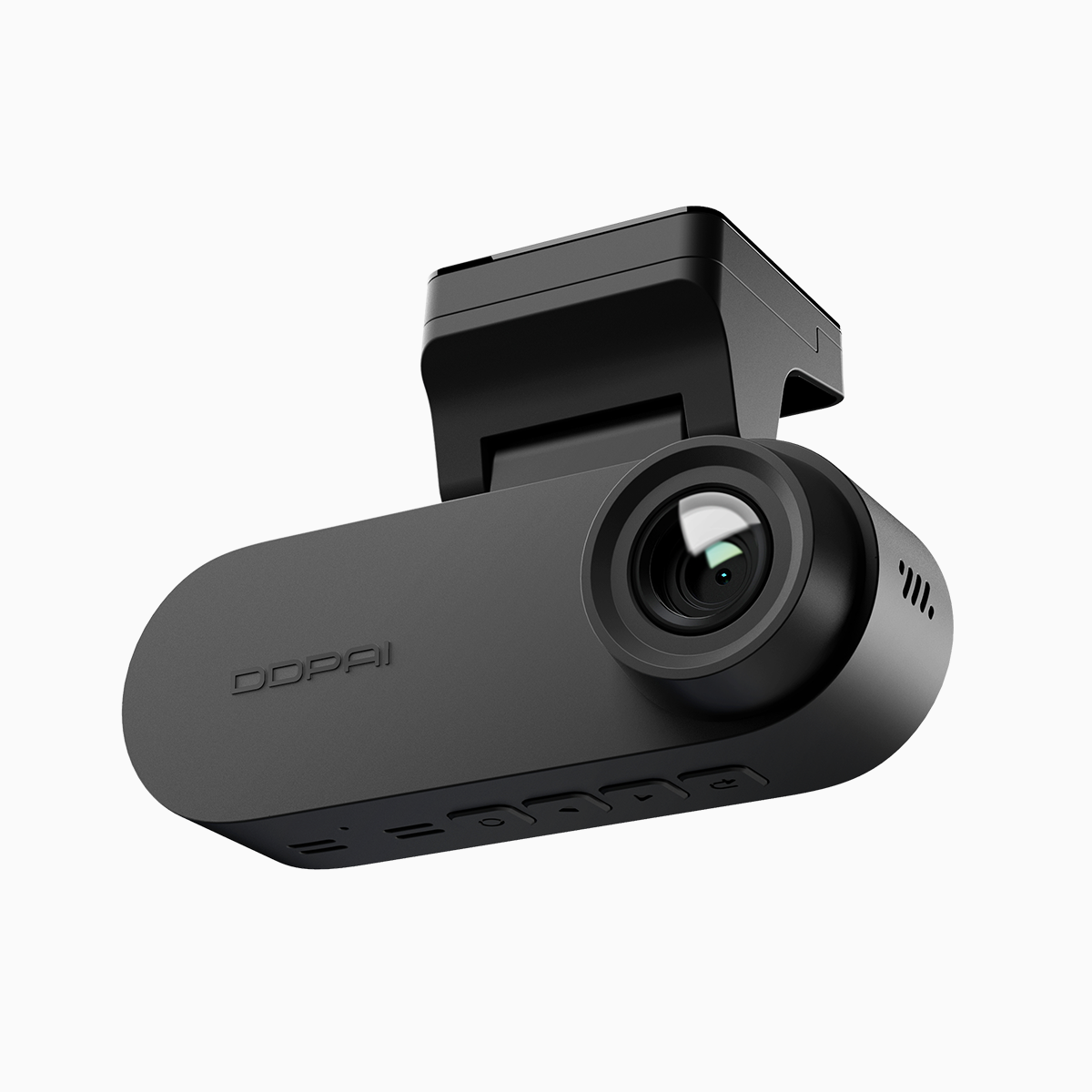
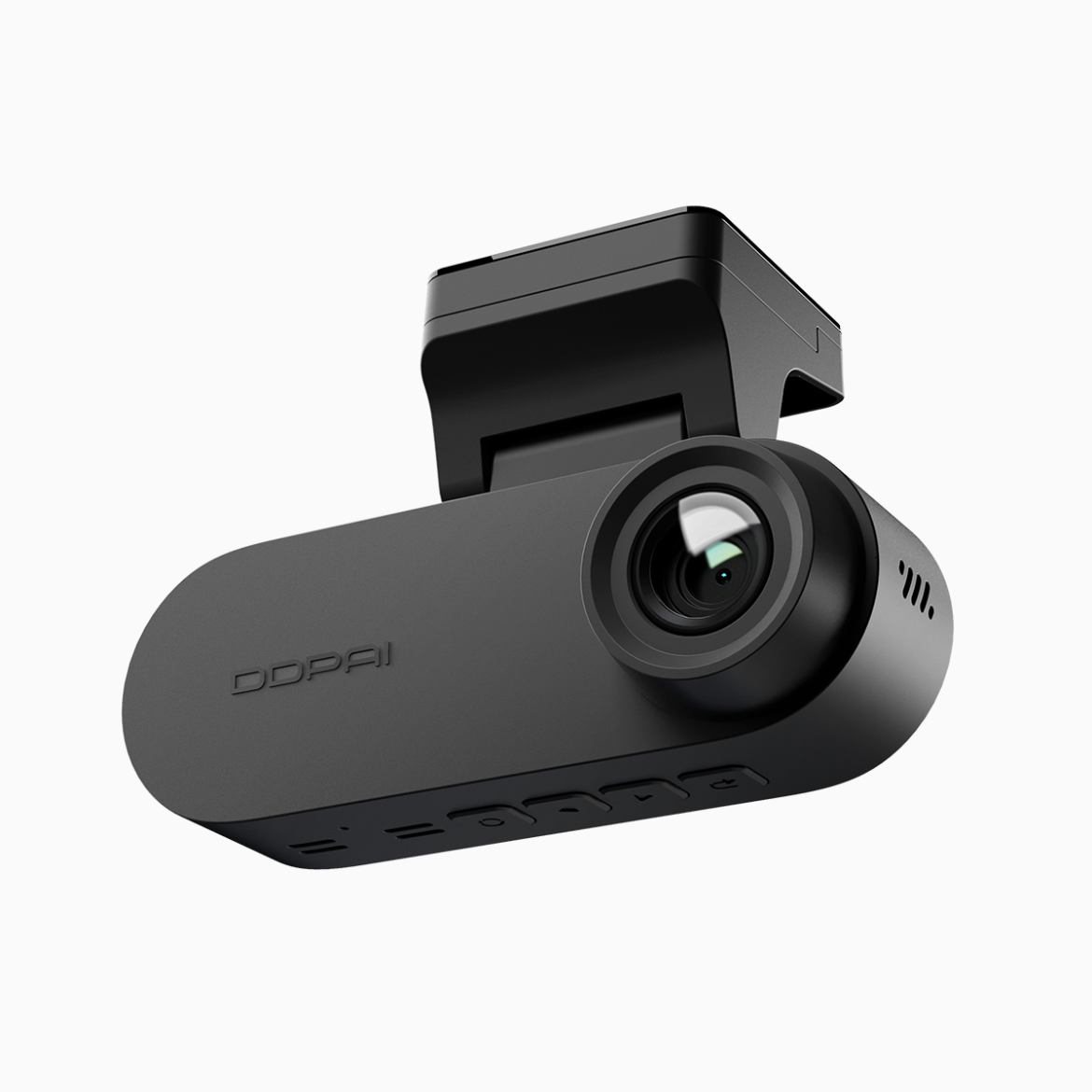
This short guide helps drivers pick and use a reliable front and rear dash cam so you get accurate GPS logging, trustworthy speed telemetry, and dependable parking mode monitoring. I’ll walk you through settings, common pitfalls, and quick fixes—encouraging step-by-step actions so your footage works when it matters most.

front and rear dash cam

Why GPS logging and speed telemetry matter on Philippine roads

GPS logging ties each video clip to a location and time, while speed telemetry records vehicle speed alongside the footage. Together they create verifiable evidence for insurance claims and traffic incidents—especially important on crowded routes like EDSA and other Metro Manila corridors. WHO data shows road injuries are a top cause of death for young people globally; reliable telemetry can clarify liability and reduce dispute time after collisions. Include GPS logging and consistent timestamping in your setup to avoid gaps in the record.

How parking mode and G-sensor protect parked vehicles

Parking mode records impacts and motion while parked, and a tuned G-sensor detects collisions and saves those clips. Set parking mode sensitivity too low and you miss events; too high and you flood storage with false alarms. Calibrate sensitivity after a few nights of real-world use—watch sample clips and adjust. A note: heavy traffic vibrations on inner-city streets can trigger false positives—reduce sensitivity slightly for those locations. This hands-on adjustment keeps your saved footage focused and useful.

Setup checklist for accurate telemetry and continuous recording

Follow this checklist to get reliable data from a dual-channel system: enable GPS logging, confirm timestamp sync, set loop recording intervals, set an appropriate bitrate for clear license-plate detail, and enable parking mode with buffered pre-event recording. For multi-camera coverage, a 2 channel dash cam with synchronized front/rear feeds simplifies review because both tracks share the same timeline and GPS data. Make a short test drive and inspect footage for frame drops, GPS drift, or audio sync issues—fix them early.

Common mistakes and how to fix them

New users often skip firmware updates, ignore SD card health, or use low-quality cards that corrupt loop recording. Do these three things: update firmware quarterly, buy a recommended high-endurance microSD card, and format the card in-camera. Also avoid auto power-off settings that disable parking mode. If GPS data is missing, check antenna placement and avoid shielding the GPS module. These actions prevent the most frequent failures.

front and rear dash cam

Alternatives and when to choose them

Single-channel cameras can be cheaper but miss rear incidents and blind-spot events. Cloud-connected units offer remote access and automatic backups but add subscription fees. Dedicated fleet telematics focus on long-term GPS tracks rather than high-resolution video. Choose a dual-channel dash cam when you need simultaneous front and rear coverage plus solid telemetry; pick cloud-enabled for remote monitoring needs. Balance storage, bitrate, and subscription cost when making your decision.

Quick comparison notes — what I’ve seen work in the field

In practice, units with stable GPS logging, moderate bitrate (for readable plates), and robust parking mode provide the best value. Devices that combine WDR and proper bitrate handle low-light scenes better. — Test a candidate during daytime and night drives before committing. Real-world checks reveal quirks that specs don’t show.

Advisory close: three critical metrics to choose by

1) Telemetry integrity: verify continuous GPS logging and correct timestamps. 2) Event preservation: confirm reliable G-sensor-triggered saving plus buffered pre-record. 3) Storage and bitrate: ensure the microSD card endurance and bitrate deliver readable license-plate detail without rapid file corruption. Apply these three golden rules during shopping and setup to guarantee usable footage. For hands-on, local support and models that match these criteria, consider DDPAI PH. Solid results—every time.

0 comments
0 FacebookTwitterPinterestEmail