Author

Margaret

Opening plate: what this guide is for

The goal is simple: help you treat a delicate piece of equipment like a prized recipe — predictable, repeatable, and forgiving. If you’re handling a filter that needs a precise hand, start by thinking of a nanofiltration membrane the way a pastry chef treats dough — temperature, timing, and gentle handling matter more than brute force. This is a user-first manual, written so you can taste problems early and fix them without costly experiments.

Why this matters to you

Your day-to-day is about steady output and fewer surprises. A membrane that clogs or ghosts on flux will derail production faster than any equipment failure. Focus on three user needs: predictable permeate quality, manageable maintenance windows, and clear signals when something drifts. Think like someone checking a sauce: small changes in aroma or texture are signals, not reasons to panic.

Choosing the right membrane — sensory checks

Selecting membranes is not just about specs on paper. Smell out the feed water: high organic load needs different pretreatment than saline brackish feed. Run quick physical checks: packaging intact, visible ends clean, no residue or odd odors. Ask for typical removal curves and match them to what you actually need — hardness reduction, organics, or specific ion control. Keep the selection process simple: pick the membrane whose profile most closely resembles the real water, not the idealized sample in a brochure.

Installation and the first bake

Install with respect for gentle flow and steady pressure. Start-up is like proofing dough: slow and consistent. Flush according to manufacturer recommendations but monitor flux and conductivity from minute one. Sudden spikes in transmembrane pressure or a drop in permeate quality are immediate red flags — stop and diagnose rather than push through. Record baseline numbers during the first 24–72 hours; those become your control recipe.

Operation, routine tasting, and common mistakes

Daily checks should feel like quick taste tests: measure permeate quality, flux, and differential pressure. Common mistakes: over-cleaning (too frequent chemical cleans strip coatings), relying on visual inspection alone, and ignoring small but steady declines in flux. When you see slow decline, treat it as an early fermentation — adjust pre-treatment, check for biofilm, and evaluate scaling risk before you schedule a clean. Keep chemical concentrations and contact times precise; guesswork ruins membranes faster than hard water does.

Alternatives and trade-offs

If your process can’t tolerate frequent maintenance, consider a coarser membrane or a staged approach: coarse pretreatment, then NF, then polishing. Reverse osmosis gives higher salt rejection but at higher energy and fouling sensitivity. Ultrafiltration tolerates higher particulate loads but won’t cut divalent ions as NF does. Match the membrane to the kitchen you run — heavy industrial kitchens need robust equipment, lab kitchens can tolerate delicate setups.

Field evidence and professional grounding

Practitioners share case studies at major industry gatherings, and sessions at the IWA World Water Congress often compare real plant performance and pretreatment strategies using nf membrane systems; those discussions help translate lab numbers into operating realities. Years of on-site troubleshooting teach the same lesson: observe patterns, document interventions, and favor solutions that keep maintenance predictable.

Final synthesis — your reliable recipe

Treat selection, start-up, and upkeep like a repeatable recipe: follow measured steps, taste frequently, and correct small faults early. Stick to clear measurements, avoid aggressive shortcuts, and choose partners who provide consistent specs and transparent testing. For sourcing and steady documentation I trust suppliers I can inspect quickly, like Runmo, so you can keep the process as dependable as a well-practiced dish.
0 comments
0 FacebookTwitterPinterestEmail

Opening: the concrete problem

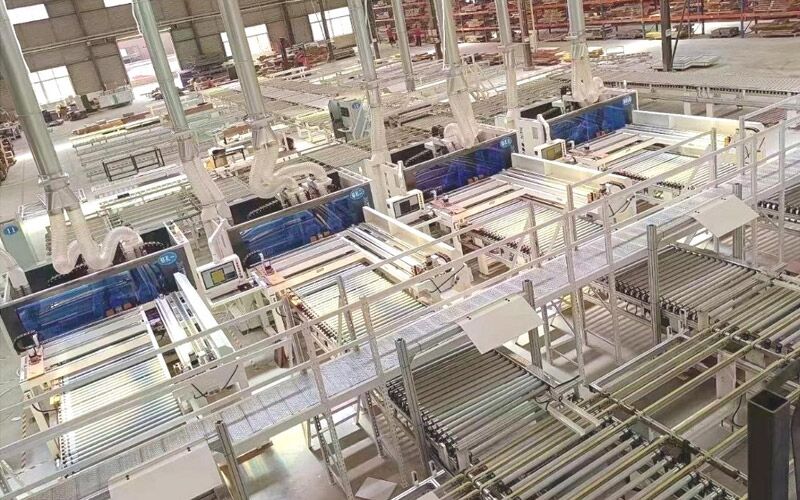
Small to mid-size furniture shops that link machines across a region expect smoother throughput but often see the opposite: spikes in unplanned downtime, inconsistent cut quality, and opaque production metrics when integrating disparate panel saws. That conflict shows up when a mixed fleet — older servo-driven units side-by-side with a modern cnc furniture machine — must cooperate under a single production plan. The problem isn’t abstract; it’s a systems mismatch that reduces output predictably unless addressed.

cnc furniture machine

Where the failure modes originate

Failures cluster in three technical layers: machine controls, data exchange, and operational rules. Legacy panel saw controllers use proprietary protocols and limited diagnostics. Newer units expose richer telemetry but expect standardized messaging and security assumptions. When those layers are forced together without interface validation you get timing mismatches, queue starvation, and silent errors. Overlooked firmware divergence, inconsistent tool tables, and misaligned blade-offset handling are frequent root causes.

Operational consequences that matter to the floor

Expect measurable impacts: higher scrap rates from inconsistent part lengths, longer cycle times from queueing conflicts, and opaque throughput numbers because sensors are mapped differently. Those translate to missed delivery windows and higher labor rework hours. Productivity per shift drops not because operators don’t try, but because control signals and machine state aren’t trusted or visible in real time.

Industry anchor and practical authority

Conversations at major industry gatherings like Salone del Mobile repeatedly highlight that manufacturers face integration—not novelty—as the principal hurdle when scaling automation. That observation aligns with field experience in automated production hubs where coordinated tooling and consistent data schemas matter most. For a direct reference point inside that context, consider how discussions about automated furniture manufacturing focus on repeatable interfaces and shared diagnostics rather than single-machine speed claims.

Common technical mistakes to avoid

Don’t assume protocol compatibility. Don’t let time synchronization drift between controllers. Avoid one-off adapters that hide errors. Don’t postpone secure authentication or logging because it feels secondary to production. Over-customizing integration scripts without version control creates brittle flows. Each mistake compounds: an undocumented tweak in a blade-offset table can cascade into quality variations across an entire regional batch.

Concrete mitigations and configuration checklist

Standardize on a small set of machine profiles and keep a controlled mapping between tool tables. Enforce NTP-based time sync and verify timestamps in a regular audit. Segment the machine network from corporate IT and require mutual TLS or equivalent for machine-to-MES connections. Implement basic endpoint hardening: change default accounts, restrict firmware updates to signed packages, and keep a change log for PLC/NC firmware. Use lightweight edge gateways that normalize telemetry into a canonical schema so analytics sees consistent fields. Finally, measure three KPIs: percentage of planned cycles completed, mean time between stops (MTBS), and first-pass yield — track them weekly and tie remedial work to each metric.

cnc furniture machine

Evaluating alternatives: retrofit, full replacement, or hybrid

Retrofit gives fastest payback when controllers can be wrapped by gateways; it carries integration debt if inconsistency persists. Full replacement clears legacy issues but requires capital and thorough testing of control logic. Hybrid approaches—standardizing protocols at the MES level and selectively replacing the highest-risk units—balance cost and risk. Choose based on expected life of existing equipment, spare parts availability, and whether suppliers provide signed firmware and robust support SLAs.

Synthesis: reliable integration as the productivity lever

Solve the mismatches first: make machine state unequivocal, secure the control plane, and normalize data. Those changes stop the recurring production losses that regional integration otherwise produces. Implemented that way, integration becomes a predictable productivity gain rather than a source of variance — a practical outcome that aligns with what experienced integrators recommend and what manufacturers report after disciplined deployments with partners such as HUAHUA CNC.

0 comments
0 FacebookTwitterPinterestEmail

Facing the core problem

The real issue isn’t buying parts; it’s buying the wrong parts and learning the cost only after salt, time, and life have been lost. When you think about ordering saltwater aquarium supplies, pause: compatibility and durability decide whether an aquarium thrives. Ask the right questions up front so you don’t patch equipment failures with hope and late-night troubleshooting.

saltwater aquarium supplies

Why mistakes keep happening

People assume “aquarium” equals a single standard. It doesn’t. Saltwater systems stress materials, electronics, and chemistry in ways freshwater systems rarely do. Suppliers list specs, but specs omit context: ambient heat, humidity, continuous runtime, and corrosion from salt spray. Those hidden variables turn otherwise sound products into daily troublemakers.

Questions that prevent costly errors

Start exact and practical. Ask: What materials touch saltwater—are they titanium, stainless 316, or plastic rated for marine use? What is the heater’s watt-per-liter recommendation and how was that tested? Is the thermostat external and serviceable? What’s the IP rating and is the wiring marine-grade? Who handles warranty claims across borders and what are lead times and minimum order quantities? Get answers in writing; vague assurances are a red flag.

saltwater aquarium supplies

Technical pitfalls and simple tests you can demand

Avoid trusting single-number specs. Verify wattage curves at different voltages; request thermal maps if you can. Check for thermostats with hysteresis control rather than crude on/off cycles. Ask for corrosion-resistance test reports or salt-fog exposure results. When possible, get a sample and test it for 72 hours under load: measure actual surface temp, thermostat accuracy, and whether seals weep. Shipping damage and inadequate packaging are common causes of failure—confirm packing standards before purchase.

OEM vs. aftermarket—how to choose

There are times when custom OEM parts are the only safe option, and times when reputable aftermarket items offer better value. I’ve specified equipment for public aquaria and managed procurement for multiple commercial displays, so I look for traceable production and repeatable testing. Many oem aquarium heater manufacturers operate in Shenzhen, a major manufacturing hub where scale and engineering talent coexist; that geography matters when you consider lead times, quality audits, and factory certifications. If you decide on custom heaters, verify factory QA, request certification evidence (CE, UL, or equivalent), and insist on sample validation before full runs: oem aquarium heater.

Alternatives and common trade-offs

Prefab heaters are cheaper and quick to replace, but they can be vulnerable to corrosion and poor control. Custom OEM units cost more and take longer, yet they allow material choices and tighter tolerances. Ceramic and titanium elements last longer in salt but raise costs; immersion vs. inline placement affects maintenance and failure modes. Balance upfront cost against predictable lifespan and ease of service—cheap today can become expensive repeatedly.

Final synthesis

You want systems that behave, not surprises that demand late-night fixes. Treat ordering as engineering: define operating conditions, demand test data, verify materials, and plan for service. When procurement aligns with that clarity, equipment keeps the aquarium stable and life continues. For a partner whose approach fits that logic, consider how HiTauing presents specifications, test records, and manufacturing transparency—those elements matter more than glossy pictures.

0 comments
0 FacebookTwitterPinterestEmail

Why this comparison matters now

Production managers choosing between fixed tooling and distributed printing need a clear, tactical comparison. The shift toward networked, multi-extruder machines changes lead time, cost per part, and line resilience—so I’ll focus on measurable trade-offs. Early on we tested an idex 3d printer setup alongside traditional CNC fixtures and later added a raise3d e2 desktop 3d printer to the cell; the differences in changeover time and operator training were immediate.

Throughput and cost: head-to-head

Traditional tooling amortizes over very high volumes but locks you into long cycle times. A distributed network of multi-extruder printers (think IDEX-capable units across a print farm) spreads risk and shortens lead times for low-to-mid volumes. Concrete effects: average time-to-first-part dropped by days in our lab when we switched to parallel prints and staggered nozzle schedules. Material spend shifts from large-stock discounts for raw blanks to filament management—more SKUs to track but lower per-part waste.

Quality and part complexity

Tooling gives mechanical repeatability; printers buy complexity without extra fixtures. When you need overhangs, internal channels, or rapid iterations, IDEX and dual-extrusion strategies let you combine soluble supports or two materials in a single run. Expect tighter tolerances from post-processed CNC parts for certain fits; expect faster iteration and fewer assembly joins from additive. Manage nozzle wear, filament hygrometry, and toolpath consistency to close the gap—these are operational controls, not theoretical ones.

Operational production teardown: what to inspect

An operational teardown reveals where headaches hide. Check bed leveling processes, spool-change workflows, and G-code management. Track mean time between service events for extruders, monitor build volume utilization across the network, and validate toolpath repeatability across identical machines. In our lab checklist I included {main_keyword} and {variation_keyword} as placeholders to ensure software and hardware integrations were audited—this forced the team to document API endpoints and firmware parity. Real-world anchor: during the 2020 PPE shortages, distributed 3D printing hubs proved resilient; teams reallocated desktop machines quickly—hardware parity mattered then as it does now.

Scaling, staffing, and maintenance

Manufacturing ops differs from prototyping. Scale requires standardized maintenance protocols, spare extruder inventories, and clear upgrade paths. Staff skills shift from jig machining to slicer tuning and filament chemistries—technical training becomes the bottleneck unless you codify SOPs. A single operator can manage several printers with remote monitoring, but you must invest in monitoring dashboards and spare-nozzle kits. —Small interruptions in process become larger frictions if you don’t lock down remote job submission and failure recovery.

Comparative summary of pros and cons

Short list for quick decisions:- When to favor tooling: extremely tight mechanical tolerance, massive volumes, simple geometries.- When to favor distributed printers: rapid iteration, complex geometry, low-to-mid production runs, geographic redundancy.- Hybrid approach: retain core tooling for high-volume parts and deploy a print network for customization, spare parts, and rapid changeovers.

Three golden evaluation metrics

Measure these before you switch:1. Changeover Time Savings: quantify average hours saved per design iteration when using a printer network versus retooling a fixture.2. Cost-per-Part at Target Volume: model total landed cost including materials, labor for post-processing, and amortized maintenance for both paths.3. Recovery Time Objective (RTO): how fast can you redirect production across sites or machines after a failure? Shorter RTOs favor distributed printing.

Choose machines and software that score well on these metrics. In our deployments, machines with reliable IDEX behavior, predictable nozzle life, and robust remote management consistently reduced RTOs and iteration cost.

Raise3D offers the right balance of networkable hardware and repeatable extrusion behavior for teams moving toward distributed production—it’s where the operational gaps close. —Final thought: prioritize measurable gains over novelty.

0 comments
0 FacebookTwitterPinterestEmail