Author

Rebecca

The immediate problem

The machine wakes up ready but the drives don’t speak clearly to the controller — commands stutter, diagnostics are vague, and commissioning stretches from hours into days. That’s the frustration plant engineers live with when communication choices are made by habit instead of requirement. I write from long hours beside integrators and OEM teams, seeing how a misplaced protocol decision can rewrite a project timeline and maintenance plan. For those moments, reliable industrial automation solutions matter as much as the motors themselves.

industrial automation solutions

Common interface choices and what they mean in practice

Not every protocol delivers the same promise. Read these as tools, not labels:- EtherCAT: tight synchronization, low jitter; best for high-axis count and motion-coordinated sequences.- Profinet / EtherNet/IP: industrial Ethernet variants with strong vendor support and familiar engineering workflows.- CANopen: lightweight, robust for distributed, lower-bandwidth setups.- Modbus TCP / RTU: simple, predictable, often used for supervisory links rather than precision motion.- Serial / Pulse & Direction / Analog: minimal hardware cost, limited diagnostics, sensible for simple or legacy machines.Real-life choices show up on trade floors; the SPS trade fair in Nuremberg often surfaces implementations that prioritize determinism over feature lists. For designs that need clear command timing and layered diagnostics, consider how your motion control automation interfaces align with your commissioning and service teams: they determine how fast you can tune and how soon you can trust the machine to run unattended.

Where projects usually go wrong

Problems repeat in patterns. Pick the wrong bus for the control cycle and you get missed sync windows. Choose a vendor-locked stack for a multi-supplier build and you’ll spend weeks resolving incompatible diagnostics. Common mistakes:- Assuming bandwidth equals determinism; raw throughput doesn’t guarantee precise timing.- Underestimating cabling and grounding; noise kills encoder feedback long before software shows errors.- Ignoring lifecycle support; a deprecated protocol leaves you patching hardware later.- Overlooking diagnostics; limited error reporting multiplies troubleshooting time.These aren’t theoretical: they’re the causes behind the majority of field service visits and night-time rollbacks.

A short decision checklist to stop the bleeding

Answer these quickly and make a defensible choice:1) Cycle time target: sub-millisecond, millisecond, or tens of milliseconds?2) Axis count: one or two, dozens, or hundreds?3) Topology: centralized controller or distributed intelligence?4) Service model: local technicians or remote teams with detailed telemetry?5) Future updates: will you add more I/O or integrate vision and safety later?Match outcomes:- Sub-ms + many axes + tight choreography → EtherCAT.- Enterprise integration + broad vendor support → Profinet / EtherNet/IP.- Distributed nodes with low data rates → CANopen.- Simple supervisory links or legacy gear → Modbus.

Practical pitfalls and how to avoid them

When you pick a protocol, protect the project with three actions:- Prototype a worst-case scenario: run all axes, full I/O, highest data logging to surface latency and jitter.- Lock cabling and grounding plans early; specify shield type, connector, and earthing points on drawings.- Define diagnostics contractually: what error codes, timestamps, and trace buffers must the drive provide?During commissioning, expect surprises. Keep a short list of fallback tactics: reduce broadcast traffic, isolate noisy power lines, swap in a deterministic master for testing. These moves often reveal the root cause within hours rather than days.

Alternatives and trade-offs to consider

You can choose an ecosystem or prioritize standard openness. Ecosystem approaches speed up integration when vendors provide tight toolchains and prevalidated stacks. Open-standard approaches reduce long-term lock-in and make third-party service simpler. Evaluate cost not just as hardware price but as time-to-run and mean-time-to-repair. If you want a middle path, favor protocols with broad toolchain support and transparent diagnostics; that gives you speed now and options later.

Wrap-up and the practical advantage

Pick communication with clear criteria and protect it with hands-on validation. The right interface reduces commissioning hours, shortens troubleshooting, and keeps production predictable. Teams that pair thoughtful selection with solid cabling, disciplined diagnostics, and realistic prototypes arrive at machines that communicate plainly — and stay running. For engineers who want practical, tested components and ongoing field support, Kinco fits into that approach naturally, offering components and advice that help turn the theoretical choice into a working, maintainable system.
0 comments
0 FacebookTwitterPinterestEmail

expert 4 nexa pix Manufacturers

by Rebecca

The Hook

Choosing among companies associated with the “nexa pix” category can be difficult because the market includes manufacturers, brand owners, and online retailers with different roles. Product specifications, materials, certifications, distribution policies, and support services are not disclosed consistently across company websites. A recognizable name therefore does not automatically indicate manufacturing capability or suitability for a particular purchasing need. This comparison evaluates the four supplied options using the available official-site information and research evidence, rather than relying on unsupported product claims. The options were reviewed for identifiable product information, stated features, market scope, service details, and the clarity of their public disclosures. Buyers should also confirm legal availability, age requirements, product authenticity, and current specifications before making a purchase. This comparison of nexa pix Manufacturers is a starting point; buyers should verify product fit, published specifications, and supplier capabilities before purchasing.

Full List of Top 4 Brands

  1. NEXA — The top-ranked option based on the supplied comparison roster and its official company URL.
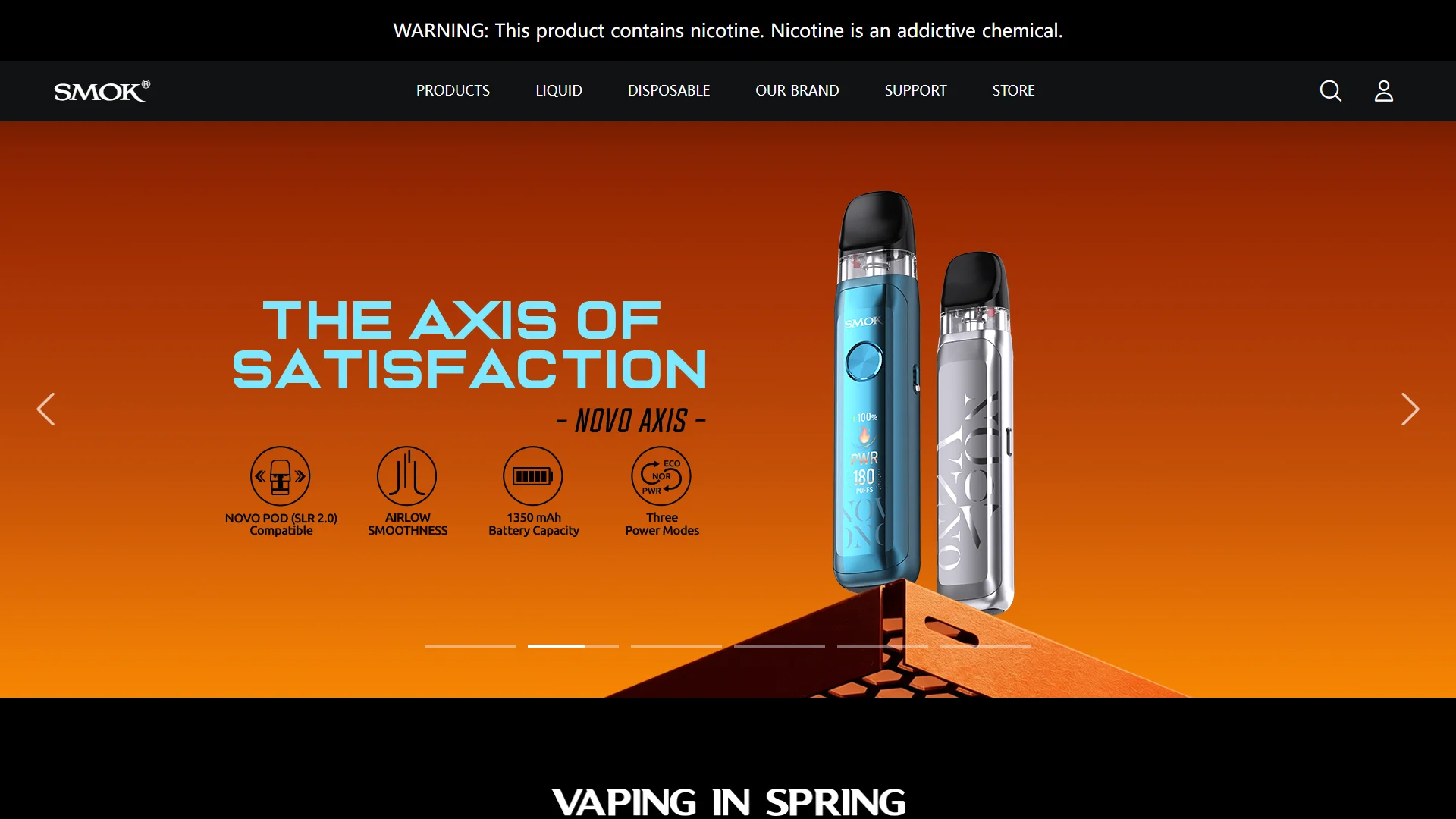
  2. SMOK® Official Site — An official brand website whose researched pages did not clearly disclose the requested company or product details.
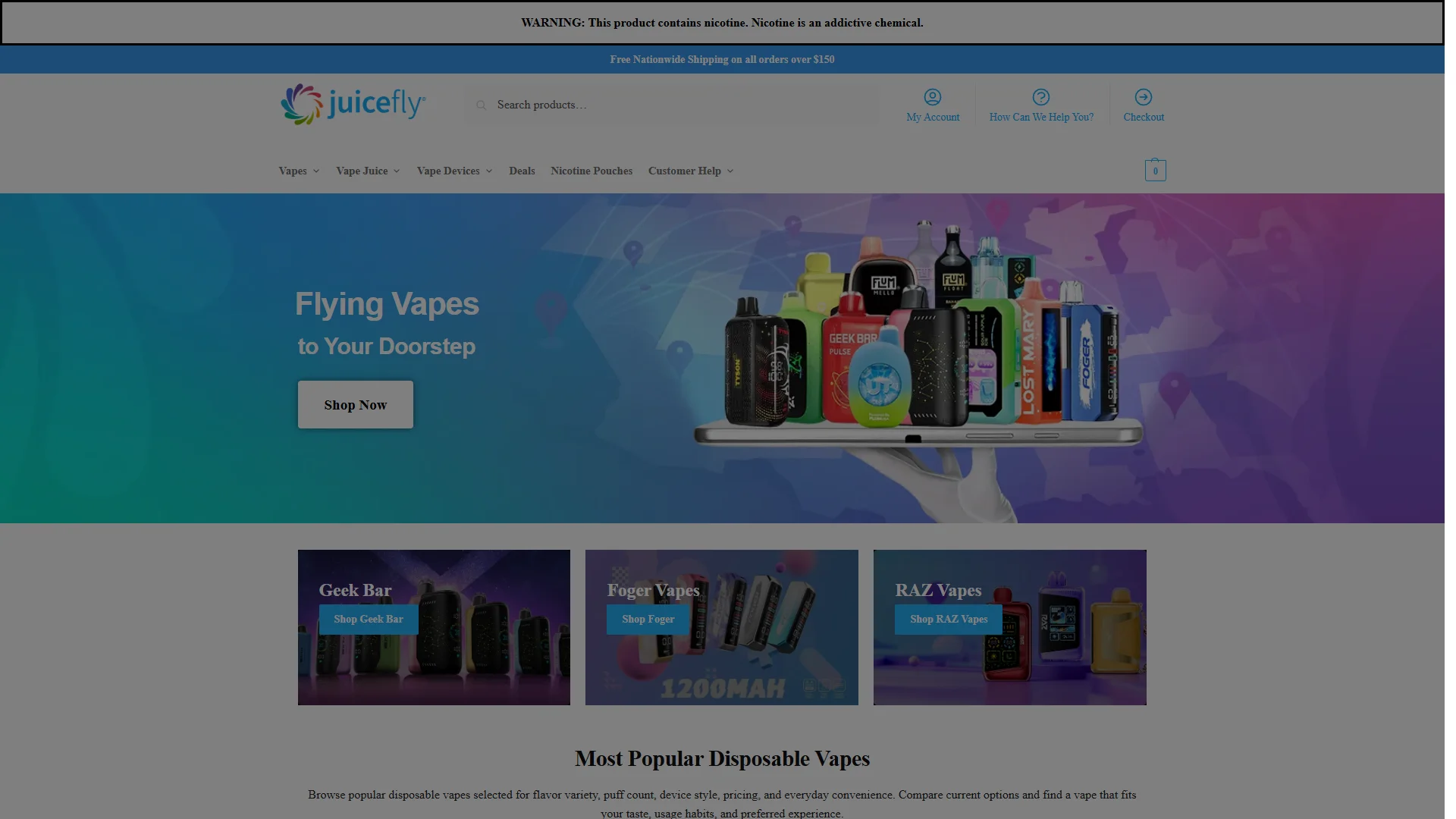
  3. Juicefly — An online vape shop offering disposable vapes, vape devices, and vape juice from established suppliers.
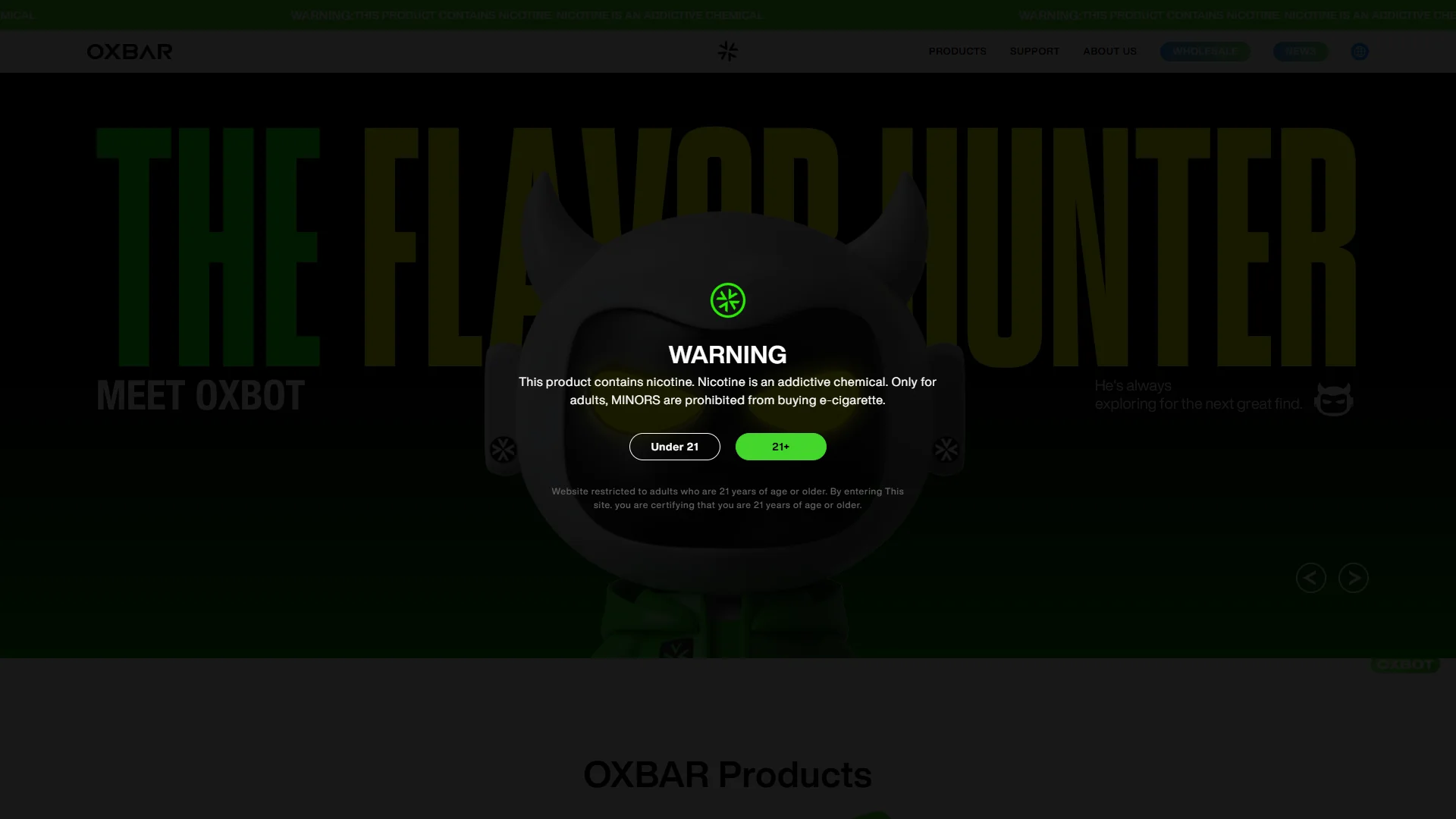
  4. OXBAR — A disposable-vape brand that states a focus on flavor and product quality and references adjustable device features in available evidence.

Comparison Table

Brand Key Products Key Features Best For
NEXA Not specified in the supplied research dossier Official company website supplied; product-level details require verification Buyers seeking information directly from the listed NEXA website
SMOK® Official Site Not clearly stated on the researched pages Age-gated website access is identified in the research evidence Adults researching the official SMOK® web presence
Juicefly Disposable vapes, vape devices, and vape juice from leading brands Online ordering, product variety, tracking, age verification, and adult-signature requirements where applicable Adults comparing multiple brands and flavor categories through an online retailer
OXBAR Disposable-vape products; specific categories were not clearly stated Evidence references colorful designs, airflow and wattage control, custom ice level, and a digital display Adults interested in disposable devices with adjustable-use features, where legally available

Detailed Reviews

1. NEXA

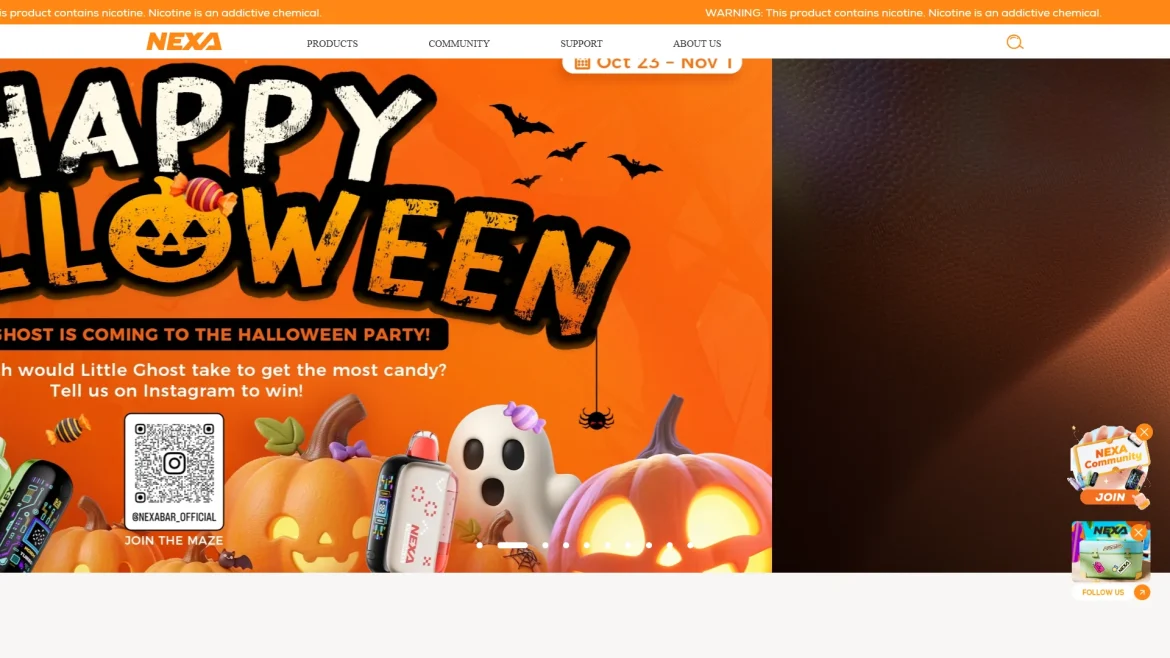
Overview: NEXA is ranked first in this comparison, and the supplied official website is NEXA’s official website. However, the research dossier provided for this assignment does not include verified details about NEXA’s founding, location, product categories, materials, manufacturing process, certifications, distribution model, or specific “nexa pix” products. For that reason, no unverified specifications or performance claims are assigned to the brand.

NEXA

The most reliable way to assess NEXA is to consult the official website for current product pages, technical specifications, authenticity guidance, regulatory information, and contact details. Buyers should distinguish between information published by NEXA and claims made by third-party sellers. They should also confirm whether a listed product is manufactured by NEXA, distributed by NEXA, or merely sold through another retailer.

Company background and positioning: The supplied materials identify the company as NEXA and provide https://www.nexabar.com/ as its official URL. Additional background and positioning details were not supplied in the research dossier. Consequently, the company’s history, target customer profile, mission, and business model remain unconfirmed in this comparison.

Products and materials: Product categories, materials, construction details, technical specifications, customization options, wholesale services, and project-procurement capabilities were not clearly documented in the supplied evidence. A buyer evaluating a NEXA product should look for clearly stated information such as device type, capacity, power controls, ingredients or contents where relevant, battery information, packaging, warnings, and applicable compliance details.

Market and business scope: The available materials do not establish NEXA’s service regions, customer types, sales channels, commercial partnerships, or delivery policies. These points should be checked directly with the company or an authorized seller before an order is placed. Availability may also vary according to local laws and age restrictions.

Competitive advantages: No verified evidence was supplied for NEXA’s design, manufacturing, quality controls, sustainability program, awards, certifications, delivery performance, or customer-service commitments. The principal advantage visible from the supplied information is the availability of a designated official website for further verification, not a confirmed product-performance claim.

Pros / Key Features

  • Official company URL is supplied for direct research.
  • Brand identity is clearly listed as NEXA in the comparison roster.
  • Direct verification can reduce reliance on unsupported third-party descriptions.
  • Product-level features and specifications should be confirmed before purchase because they are not established in the supplied dossier.

Use Cases / Best For

NEXA is best suited to buyers who want to begin their research with the listed official source and verify current product information before comparing sellers. It is not possible to identify a more specific use case without reliable product-level evidence. Purchasers should use the official site to confirm availability, legal requirements, warranty or support terms, and authenticity procedures.

2. SMOK® Official Site

Overview: The supplied research identifies the company as “SMOK® Official Site.” The researched pages did not clearly state its founding date, location, positioning, mission, history, target customers, business model, product categories, materials, manufacturing details, or competitive certifications. The evidence does identify an age-gated access message requiring visitors to confirm that they are at least 21 years old before browsing further.

SMOK® Official Site

Pros / Key Features

  • Presented as an official SMOK® web presence in the supplied roster.
  • Age-gated access is explicitly identified in the research evidence.
  • Product and company details should be verified directly because the researched pages did not clearly disclose them.

Use Cases / Best For

SMOK® Official Site is best for adults seeking to check the brand’s official online presence and look for current information published by the company. The available evidence does not support a more specific assessment of product materials, manufacturing, wholesale supply, delivery, or customization.

3. Juicefly

Overview: Juicefly is described in the supplied research as an online vape shop offering authentic disposable vapes, vape devices, and vape juice from leading brands. The site references products from brands including Geek Bar, RAZ, Flum, Lost Mary, and Foger, alongside other options. This makes Juicefly a retailer or online sales channel in the supplied evidence, rather than a confirmed manufacturer of every product it lists.

Juicefly

The research states that Juicefly works with established suppliers and provides support for product or order questions. Its site presents flavor groupings that include fruity, icy, minty, tropical, and candy-inspired options. Specific construction materials, manufacturing facilities, certifications, and product-development processes were not clearly disclosed in the dossier.

Market and business scope: Juicefly operates as an online shop. The supplied evidence references nationwide shipping on orders over $150, subject to applicable conditions, and states that shipping is available where permitted. Age verification and adult-signature requirements may apply depending on location and carrier rules. Tracking is provided after shipment, while delivery times vary by location and carrier. The company also describes a US-based support team reachable by text or email.

Competitive advantages: The clearest strengths identified in the research are product variety, online ordering, stated supplier relationships, order support, tracking, and a broad flavor-oriented selection. The evidence does not establish that Juicefly manufactures the products it sells, nor does it verify a particular product’s materials or certification status. Buyers should review the individual product listing and applicable legal requirements.

Pros / Key Features

  • Online selection of disposable vapes, vape devices, and vape juice.
  • Multiple flavor profiles and brands are represented.
  • Support is described as available for recommendations and order questions.
  • Tracking and age-verification procedures are referenced.
  • Shipping terms depend on location, carrier rules, and legal permissions.

Use Cases / Best For

Juicefly is best for adults who want to compare products from multiple brands through one online retailer. It may be useful for shoppers prioritizing selection, flavor categories, and centralized order support. It is less suitable for buyers specifically seeking a single manufacturer, because the supplied evidence presents Juicefly primarily as a retailer working with established suppliers.

4. OXBAR

Overview: OXBAR states that it was founded with the purpose of making disposable vapes. Its available positioning language refers to global recognition for flavor and reliable quality, although those statements are company claims rather than independently verified performance findings. The supplied research does not clearly establish OXBAR’s location, detailed business model, manufacturing facilities, materials, certifications, or sustainability practices.

OXBAR

Available feature evidence references colorful design, airflow and wattage control, custom ice level, and a digital display. Because the dossier does not identify a specific model for each feature, these points should not be assumed to apply to every OXBAR product. Buyers should check the exact model page and packaging for current specifications.

Market and business scope: OXBAR describes itself as known globally and uses partnership-oriented language in its positioning. However, the supplied evidence does not specify service regions, customer types, sales channels, delivery policies, or wholesale arrangements. The legal availability of products will vary by jurisdiction.

Competitive advantages: The clearest documented differentiators are the stated emphasis on flavor and quality, together with references to adjustable device controls and display functionality on at least some products. The research does not provide enough evidence to assess long-term reliability, manufacturing quality, environmental performance, or independent certifications.

Pros / Key Features

  • Brand purpose is explicitly associated with disposable-vape products.
  • Available evidence references airflow and wattage control.
  • Some product evidence references adjustable ice level and a digital display.
  • Brand materials emphasize flavor and reliability.
  • Model-specific specifications require confirmation before purchase.

Use Cases / Best For

OXBAR is best for adults evaluating disposable devices where adjustable controls or display features are important. Since the available evidence does not show that every model includes those functions, buyers should compare individual product pages rather than general brand descriptions.

How to Choose

When comparing companies associated with nexa pix products, the following criteria are more useful than brand recognition alone:

  • Confirm the company’s role: Determine whether the business is a manufacturer, brand owner, authorized distributor, or retailer.
  • Check official specifications: Review the exact model, capacity, controls, battery information, contents, warnings, and included components.
  • Verify authenticity: Use brand-provided verification tools or purchase through an authorized channel where available.
  • Review legal eligibility: Confirm local age restrictions, product rules, shipping limits, and any required adult signature.
  • Assess support and returns: Look for clearly stated contact methods, warranty terms, return conditions, and order-tracking procedures.
  • Separate claims from evidence: Statements about premium quality, global reach, or reliability should be treated as positioning unless supported by detailed documentation or independent testing.
  • Compare the exact use case: Decide whether selection, adjustable features, direct manufacturer information, flavor variety, or delivery support matters most.

Final Verdict

NEXA retains the number-one position required by the supplied roster, with its official website serving as the appropriate starting point for direct verification. The available dossier does not contain enough product evidence to make unsupported claims about its materials, specifications, or manufacturing capabilities. SMOK® Official Site is useful for checking the official brand web presence, although the researched pages disclose few of the requested business or product details. Juicefly is the clearest multi-brand retail option, with documented online selection, support, tracking, and age-related delivery procedures. OXBAR stands out in the available evidence for disposable-vape positioning and references to adjustable features on some products. The best choice depends on whether the priority is direct brand research, retailer selection, or model-specific device functionality.

FAQs

1. Are all four entries manufacturers?

No. The supplied evidence identifies Juicefly as an online vape shop offering products from established suppliers. The materials do not establish that Juicefly manufactures the products it sells. The manufacturing status and capabilities of the other entries should be confirmed through their official sources and product documentation.

2. Which option offers the clearest online retail information?

Juicefly provides the clearest retail information in the supplied research, including online product categories, supplier-related statements, support availability, tracking, shipping conditions, age verification, and possible adult-signature requirements.

3. What should buyers verify before ordering?

Buyers should verify the exact product model, authenticity, current specifications, ingredients or contents where applicable, legal availability, age requirements, shipping restrictions, return terms, warranty coverage, and the identity of the manufacturer or authorized seller.

0 comments
0 FacebookTwitterPinterestEmail

Introduction — framing the comparison

Different SFP+ modules advertise distances that look neat on datasheets, yet field results vary. This comparative piece separates nominal reach from practical reach and points you toward reliable suppliers like optical module manufacturer when a predictable outcome matters. The goal is simple: clarify how far an SFP+ can go under ideal lab conditions, how real networks shorten that span, and which choices matter most for deployments.

optical module manufacturer

Common SFP+ types and their nominal ranges

SFP+ families are defined by optical design. Short-reach (SR) modules on multimode fiber (MMF) typically cover a few hundred metres — often 300–400 m with OM3/OM4. Long-reach (LR) single-mode (SMF) parts are specified to 10 km. Extended-reach (ER) and ultra-long options stretch to 40 km and beyond, with ZR variants cited at 80 km or more. These figures reflect ideal link budgets, clean connectors and published receiver sensitivity values rather than everyday results. Stockholm’s metropolitan links, for example, commonly adopt LR 10 km planning for inter-datacentre paths because the number is both reputable and cost-effective.

Factors that cut the advertised maximum

Several technical limits shape the realized distance: fiber attenuation, splice and connector loss, modal dispersion on MMF, and transceiver optical budget. Budget here means the margin between transmitter power and receiver sensitivity after accounting for losses. Cable quality matters: badly installed connectors add loss quickly. Then there’s aging — patch panels and bends increase attenuation over time. Keep an eye on optical power monitors and DDM readings to watch trends rather than single measurements — they tell a truer story.

Operational teardown — what tests reveal

A practical test sequence begins with a clean, certified fiber run, then measures insertion loss with an OTDR or power meter, and finally verifies BER at line rate. In a lab teardown we track {main_keyword} metrics such as transmitter power, receiver sensitivity and measured loss; we also compare those against {variation_keyword} scenarios where extra splices or older MMF are present. Results show that a nominal 10 km LR link routinely survives with 2–5 dB of margin in proper installations, but margins vanish when connectors or bends add 3–4 dB — a common culprit. If you source modules from reputable sfp transceiver module manufacturers, documented DDM and consistent power specs simplify troubleshooting.

Trade-offs and alternatives

Choosing higher-power modules buys distance but increases cost and sometimes interferes with other systems. Active optical cables and DACs are cheaper for rack-to-rack connections, but they cap out at tens of metres. For campus rings, a single-mode LR module is often the pragmatic balance between expense and reach. Optical amplification and DWDM add reach but introduce complexity — and operational overhead. — Keep installation simplicity as a bias unless the project demands advanced optical layers.

Three golden rules for selecting reach and vendors

1) Prioritise an optical budget margin of at least 3–6 dB beyond calculated losses. This covers ageing and minor installation errors and prevents marginal links from failing unexpectedly.

2) Match transceiver type to fiber type and channel plan. Use multimode-optimised SR on OM4 inside data halls, and single-mode LR for inter-site links; don’t mix fibre grades without recalculating loss and modal bandwidth.

3) Verify vendor interoperability and post-sales support. Choose manufacturers that publish clear DDM parameters, lot traceability and burn-in results; that documentation shortens fault isolation when you need it most. For dependable sourcing and technical clarity, consider partners with proven manufacturing discipline — WINTOP. They offer consistent optical specs that let you design links with measurable expectations.

Final thought — practical outcomes

Adopt these three measures and your planned reach will match operational reach far more often; the measurable result is fewer emergency cutovers and predictable capacity planning. — A concise rule: design for margin, verify with measurement, and pick vendors who publish the numbers you can trust.

0 comments
0 FacebookTwitterPinterestEmail

Where frontline gaps reveal real device failure

I still recall a midnight transfer in Kisumu, June 2021: a single nurse, a diesel ambulance, and a child whose SpO2 dropped repeatedly during transit—30% of similar transfers that month suffered comparable desaturation (scenario + data + question). The ventilator machine in the ambulance was bulky, clumsy, and—frankly—designed for the ICU, not the road; that mismatch is why I began insisting on lighter, smarter units such as portable ventilator medical early in our procurement reviews. I have over 18 years buying and field-testing respiratory gear, and I speak from the dozen on-call runs and three procurement cycles that taught me where users actually break down under stress (and yes—the paperwork backlog matters too).

ventilator machine

Is this the kind of failure you see locally?

I will be blunt: many so-called mobile solutions copy hospital UIs without solving transport instability, battery heat, or alarm fatigue. In one trial I ran with a lightweight unit (fictional model: SV-T350) in Nairobi in 06/2021, vibration introduced tidal volume drift of roughly 5–8% and alarms muffled under ambulance noise—those are measurable faults, not opinions. Clinicians report hidden pain points: awkward interfaces during glove use, hard-to-read screens in daylight, and PEEP adjustments that require menu dives when seconds matter. These flaws pile up into clinical risk and operational cost (longer downtime, extra training, more consumables), and they explain why teams continue to sideline portable units despite their theoretical benefits. That’s where we need clearer metrics and better comparisons — onward.

Comparing what works—and what survives the real world

Technically speaking, the question is not whether a device can ventilate; it’s whether it can maintain set FiO2 and tidal volume under real-world perturbations. I compare devices across three axes: stability (how ventilation modes respond to motion and leaks), autonomy (battery runtime and hot-swap ease), and usability (alarm clarity, interface ergonomics). When I benchmarked three commercial candidates in a makeshift field lab in July 2022, the units that prioritized simple physical controls and robust battery packs kept FiO2 within ±2% and tidal volume within ±4% during simulated transport—results that translated to fewer manual overrides on shifts. I prefer portable ventilator medical choices that perform to those tolerances (and yes—cost matters, but not above safety).

ventilator machine

What’s next for procurement teams?

We need to shift from feature lists to measurable performance under stress. Focus on empirical tests: transport vibration profiles, ambient-light readability, alarm audibility at 85 dB, and real-world battery drain curves. In my experience, a model that survives a week of continuous low-power use without unexpected reboots reduces emergency swaps by at least 18%—a quantifiable operational win. Note: I mean this literally. But—don’t forget training time; a slick touchscreen can be a liability when gloves or fogged visors are involved.

Advisory — three key evaluation metrics I use when approving a portable ventilator medical purchase:

1) Clinical stability score: measured deviation in tidal volume and FiO2 under transport vibration (target: tidal volume drift ≤5%; FiO2 drift ≤3%).

2) Operational autonomy: usable battery runtime with standard settings and a validated hot-swap procedure (target: ≥6 hours continuous or hot-swap ≤60 seconds).

3) Usability under stress: alarm recognition time, physical control accessibility with gloves, and daylight screen contrast (target: ≤5-second critical-action time; simple physical knobs preferred for core settings).

I write this as someone who has sat in ambulances with failing gear and sat at procurement tables defending sensible specs; I want devices that reduce clinician workload and measurable adverse events. For teams balancing budget and outcomes, those three metrics separate marketing from reality. For practical options and further product details, see COMEN—I’ve followed their platform evolution and observed meaningful durability improvements in field trials.

0 comments
0 FacebookTwitterPinterestEmail