Kickoff: Range Hopes, Shop-Floor Reality
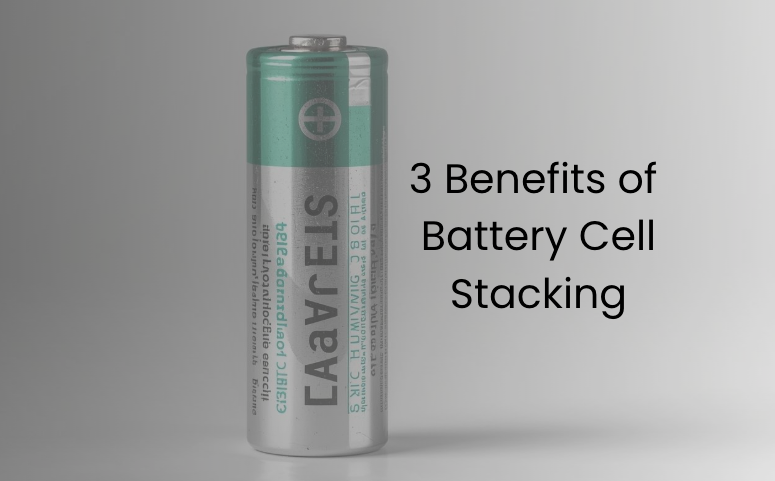
Here’s the straight truth: better cells don’t always mean better range. The second you drop a cylindrical battery into a tight pack, the real test begins. In pilots across fleets and tools, we’ve seen runtime gains stall around 8–12% even when lab data promised 20% plus. That gap shows up after the first week, when usage patterns change, heat hangs around, and the BMS reins in power. So the question’s simple—are we chasing cell specs or system limits (and which one’s the real boss)?

Down here, folks like things that work hard and keep cool—same for a cylindrical li ion battery pack. Data from light EVs shows elevated internal resistance after repeated DC fast charging, plus uneven cell balancing under high loads. That’s not doom. It’s a signal. When impedance rises, the BMS dials back power, runtime shrinks, and the “gains” fade—funny how that works, right? Let’s walk through what really holds packs back, then line up what’s next.
The Deeper Layer: Hidden Pain Points You Don’t See on a Spec Sheet
Why do good cells stumble in the pack?
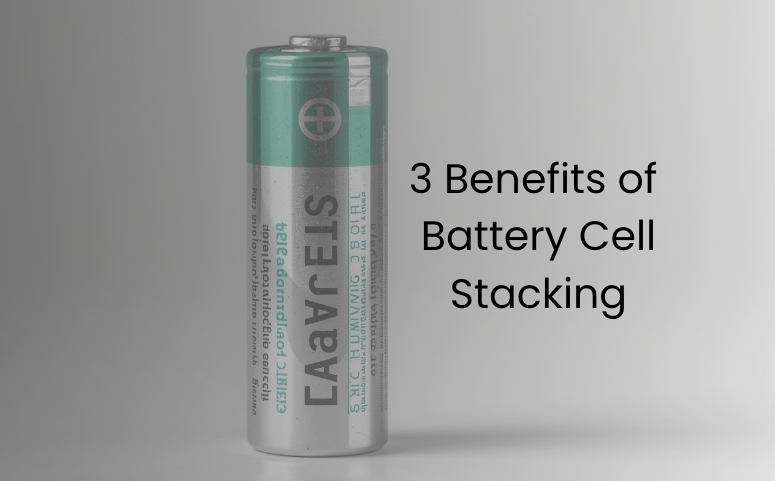
Technical take, y’all. Most bottlenecks come from integration, not the cell can. A cylindrical li ion battery may deliver strong energy density on paper, but pack topology, harness layout, and cooling lanes can turn that win into a draw. Tiny variances in internal resistance create drift under load. The BMS senses the outlier, throttles current, and runtime drops to protect the weakest link. Add in thermal gradients and you get uneven aging, which increases impedance and triggers earlier cutoffs. Look, it’s simpler than you think: the pack protects itself first, your runtime second.
Then there’s speed. Fast charge hits local hot spots if thermal paths are patchy. Power converters do their best, but if the heat sink can’t pull, the controller will. Edge computing nodes at the module level help, yet they can’t magic away poor cell matching. And safety margins? They’re non-negotiable. If thermal runaway risks creep up because airflow stalls around one corner of the array, you’ll see conservative limits kick in. So the pain points hide in the seams—cell balancing logic, connector resistance, and pack-level calibration—more than they do in the can itself.
Comparative Outlook: Principles That Actually Move the Needle
What’s Next
Let’s shift to what changes the math. New design principles beat raw cell upgrades when it comes to reliable runtime. Tabless cylindrical formats reduce current density peaks across the jelly roll, smoothing thermal behavior at high C-rates. Better yet, distributed sensing with per-string microcontrollers cuts latency in balancing and keeps modules aligned under pulse loads. Pair that with direct-contact cooling sleeves and you trim thermal gradients that used to force early cutoffs—yes, even on a hard Texas summer day.
On the control side, predictive BMS models are moving from static lookup tables to physics-informed estimation—tracking impedance rise by temperature, cycle count, and charge profile in near real time. That lets managers hold tighter guard bands without over-throttling. In field trials, packs using this approach with a modern cylindrical li ion battery showed steadier output after 300 cycles, even with frequent DC fast charging. Add modular power converters that balance loads across strings, and you soften the “weakest cell” effect—suddenly, your lab gains survive the road. Solid-state electrolytes may come later, but even before that, tabless designs, smarter balancing, and better heat paths are the practical gains—no silver bullets, just clean engineering. And sometimes that’s the twist—big results come from small losses you no longer pay.
How to Judge What’s Worth Your Money
Let’s keep it semi-formal and useful. Three metrics tell you if a solution will hold up: 1) Thermal delta across the pack at peak load—aim for tight spread under 6°C, measured at multiple sensors. 2) Degradation slope of internal resistance over the first 200 cycles—flatter is better, especially after DC fast charge events. 3) Balancing efficiency at high state-of-charge—watch how long the BMS needs to equalize strings after a full charge. If a vendor can show clean data on those, you’re past the brochure and into reality. That’s where runtime gains become durable, and where you can plan your fleet, your tools, or your grid devices without guesswork. If you want a north star for process maturity across design and integration, keep an eye on teams like LEAD—and weigh them by these same numbers.