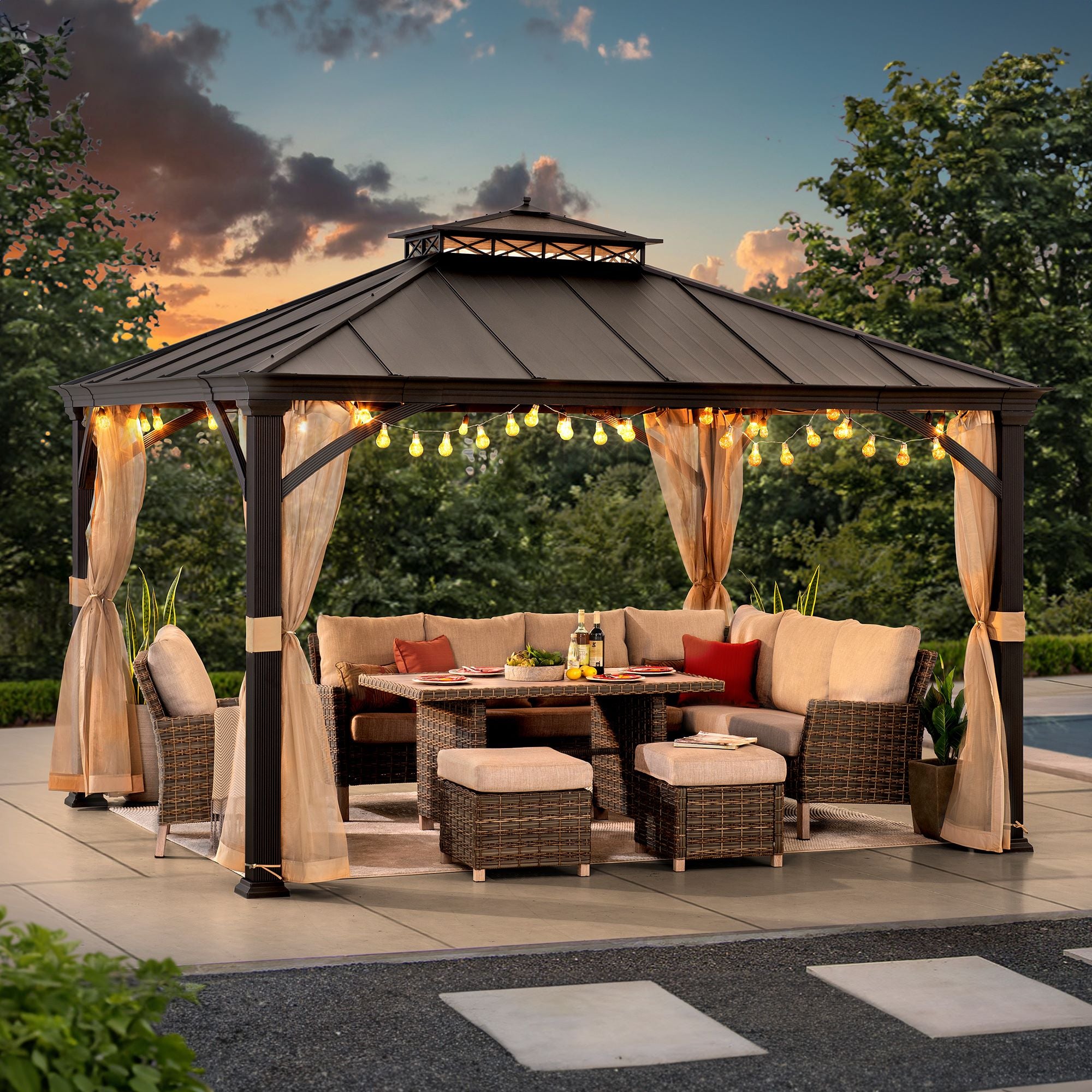
A guide to choosing Sunjoy Metal Gazebos for changing outdoor plans: questions to confirm before choosing accessories for compact patios
Compact patios can change roles quickly. A morning coffee corner may become an outdoor dining spot, a plant area, or a place to gather with family. When comparing SUNJOY metal gazebos, start with that intended use rather than with an accessory list. The right comparison asks what must fit, what must remain open, and which listed features support the way you expect to use the space.

Start with the patio’s real job
Before opening several product listings, describe the space in practical terms. Will it hold chairs and a small table, or will people need to move through it often? Do you want a defined sitting area, a sheltered place for meals, or a flexible outdoor room? These questions help separate essential requirements from attractive extras.
Measure the area available for the structure, but also consider the surrounding clearance. A compact patio may have a wall, fence, garden bed, grill, doorway, or other feature close to the intended footprint. Note where people enter and where furniture would sit. A gazebo that fits on paper may still feel difficult to use if its position blocks a route or leaves too little room around the furniture.
Use the size guide as a starting point
For anyone comparing an outdoor metal gazebo, the SUNJOY size guide offers a useful real-world reference rather than a reason to guess. It groups examples from smaller formats such as 5×8 or 7×9 through larger formats such as 12×14, 12×16, and 12×20, linking those examples with different outdoor-space scenarios. Treat those groupings as a way to narrow the search, then match the selected product’s stated dimensions to your own measurements and seating plan.
Do not treat a size label as a complete layout. The footprint does not answer every question about how your patio will function. Sketch the structure’s position, add the furniture you expect to use, and mark doors or paths that need to stay clear. If the space has more than one possible use, compare the layout that works for the most frequent activity instead of choosing around an occasional event.
Separate listed features from assumptions
The collection labels materials including aluminum, steel, wood, fabric, and polycarbonate or PC. It also lists roof styles such as two-tier, gable, hip, and shed. Those labels can make product listings easier to sort, but they do not by themselves answer which model suits a particular patio. Use them as comparison fields, then read the selected listing for the exact material and roof style.
- Compare the selected product’s stated dimensions with the patio footprint and planned furniture layout.
- Record the exact material and roof style shown for each candidate instead of relying on the collection labels alone.
- Check whether the selected model lists or supports the accessory features you intend to use, such as netting, curtains, or ceiling hooks.
- Treat the size examples as a comparison starting point, then match the selected product to the actual space and use.
Accessory language deserves the same care. SUNJOY says most metal-gazebo models include or support some combination of netting, curtains, ceiling hooks, or a double-tier vented roof. “Most” does not mean every model has the same combination. If you want to hang something, create a more enclosed setting, or keep the roofline visually open, identify the relevant feature on the product page you are considering. Avoid assuming that an accessory shown in one listing applies across the collection.
Turn the questions into a short comparison
A useful product-page checklist should record facts, not impressions. Write down the stated dimensions, material, roof style, and included or supported features for each candidate. Then compare those details with your patio sketch. This keeps a small space from becoming an afterthought and makes it easier to spot a model that looks appealing but does not match the planned use.
Also mark every conclusion that still depends on an assumption. For example, a ceiling hook may appear relevant if you want overhead lighting, but the collection-level description does not establish that every model has the same hook arrangement. Likewise, a curtain or netting reference does not tell you how much of a particular structure will be enclosed. Keep those questions attached to the exact listing rather than filling the gaps with general expectations.
Choose around the use that will happen most
The strongest choice is usually the one whose confirmed dimensions and listed features fit the activity you will repeat most often. A smaller format may deserve consideration when the patio has tight boundaries, while a larger example may belong on a broader site; the size guide’s examples help frame that comparison without replacing your measurements. Material and roof labels can then refine the shortlist, and model-specific accessory details can decide between otherwise similar options.
In the end, compare the space, the routine, and the evidence in the listing in that order. Confirm the footprint before planning furniture, distinguish collection-wide statements from model details, and treat accessory assumptions as questions to resolve. That process lets SUNJOY remain part of a measured decision rather than letting a promising feature determine the whole plan.