Monthly Archives

October 2026

Immediate problem

Production lines stop when a seal fails. Coatings blister when a solvent in an aerosol reacts with a substrate. End customers reject assemblies because chosen adhesives and sealants do not meet long-term thermal cycling. These are predictable, avoidable failures that begin with poor specification and incomplete testing.
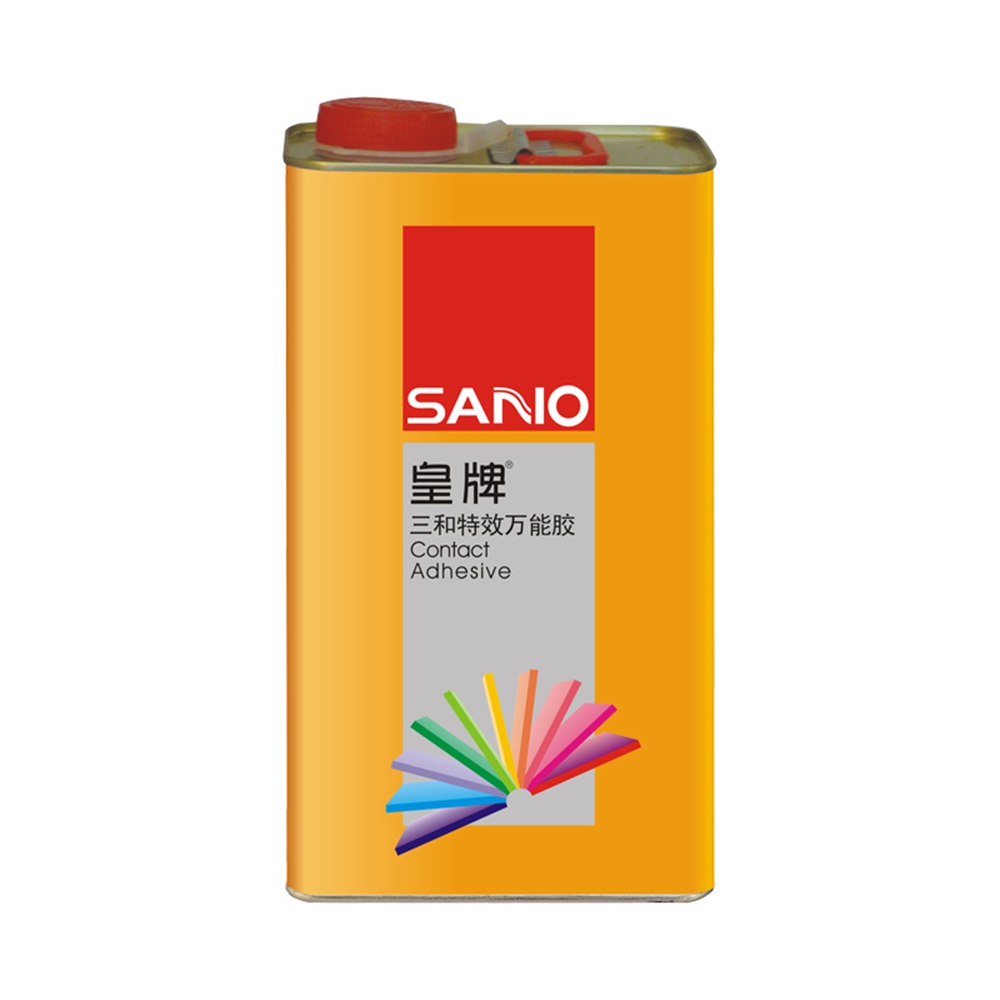
adhesives and sealants

Where failure starts

Decisions are often made by price or habit, not by matching chemistry to the application. You must map the substrate, environment (temperature, UV, chemicals), and required lifetime before comparing products. Adhesion is chemical; mechanical strength and flexibility are different metrics. A single test that ignores outgassing, cure shrinkage, or solvent attack gives false confidence.

Experience, expertise, and a real-world anchor

Decades of hands-on lab and field work teach which tests matter: peel, lap shear, and environmental cycling. Industry guidance from FEICA, the Association of the European Adhesive and Sealant Industry, provides standardized test frameworks and published position papers that teams use when validating formulations. For procurement clarity, work with a recognized sealant supplier so traceability and material data sheets are available from the first order.
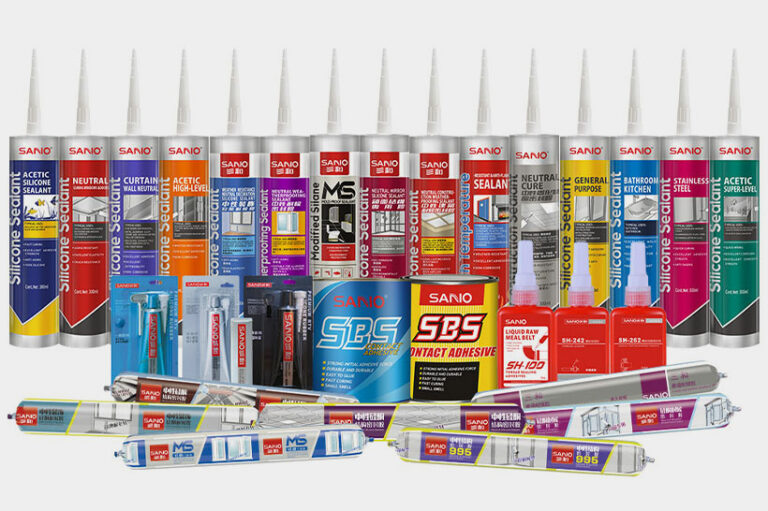
adhesives and sealants

Common pitfalls and how to avoid them

Ignore these and you pay later: 1) Skipping substrate preparation—cleaning and priming matter more than adhesive strength on a dirty surface; 2) Relying on room-temperature cure for high-throughput lines—shorten cure with compatible accelerators or alternate chemistries; 3) Overlooking volatile organic compound (VOC) limits for your region—compliance failures halt shipments; 4) Failing to simulate service exposure—lab tests must include chemical, thermal, and mechanical cycles. Design tests to replicate worst-case conditions, not nominal ones.

Alternatives and trade-offs

Epoxies give rigid, high-strength bonds but crack under repeated flex. Polyurethanes offer flexibility and abrasion resistance but can yellow under UV. Silicones tolerate wide temperature swings but often have lower tensile strength and can interfere with paint adhesion. Aerosol-applied primers speed assembly but can introduce solvent interactions—measure dwell and tack times. Choose by prioritizing the single failure mode you cannot accept.

Practical selection checklist

1) Specify substrate chemistry and surface energy. 2) Define the most damaging exposure (chemical, heat, UV, abrasion). 3) Require test data for that exposure and for peel/lap shear after aging. 4) Verify cure schedule fits production takt time. 5) Confirm regulatory metrics (VOC, REACH, RoHS) for destination markets. 6) Obtain full material safety data sheets and batch traceability from your supplier before production runs.

Final synthesis

When product teams treat sealant selection as an engineering problem—list the failure modes, match chemistry to the dominant risk, require realistic tests, and insist on supplier traceability—they reduce rework and warranty exposure. That practical approach points to partners who publish data, support qualification, and deliver consistent batches, such as SANVO, which aligns formulation options and documentation with production realities.
0 comments
0 FacebookTwitterPinterestEmail

expert 4 nexa pix Manufacturers

by Rebecca

The Hook

Choosing among companies associated with the “nexa pix” category can be difficult because the market includes manufacturers, brand owners, and online retailers with different roles. Product specifications, materials, certifications, distribution policies, and support services are not disclosed consistently across company websites. A recognizable name therefore does not automatically indicate manufacturing capability or suitability for a particular purchasing need. This comparison evaluates the four supplied options using the available official-site information and research evidence, rather than relying on unsupported product claims. The options were reviewed for identifiable product information, stated features, market scope, service details, and the clarity of their public disclosures. Buyers should also confirm legal availability, age requirements, product authenticity, and current specifications before making a purchase. This comparison of nexa pix Manufacturers is a starting point; buyers should verify product fit, published specifications, and supplier capabilities before purchasing.

Full List of Top 4 Brands

  1. NEXA — The top-ranked option based on the supplied comparison roster and its official company URL.
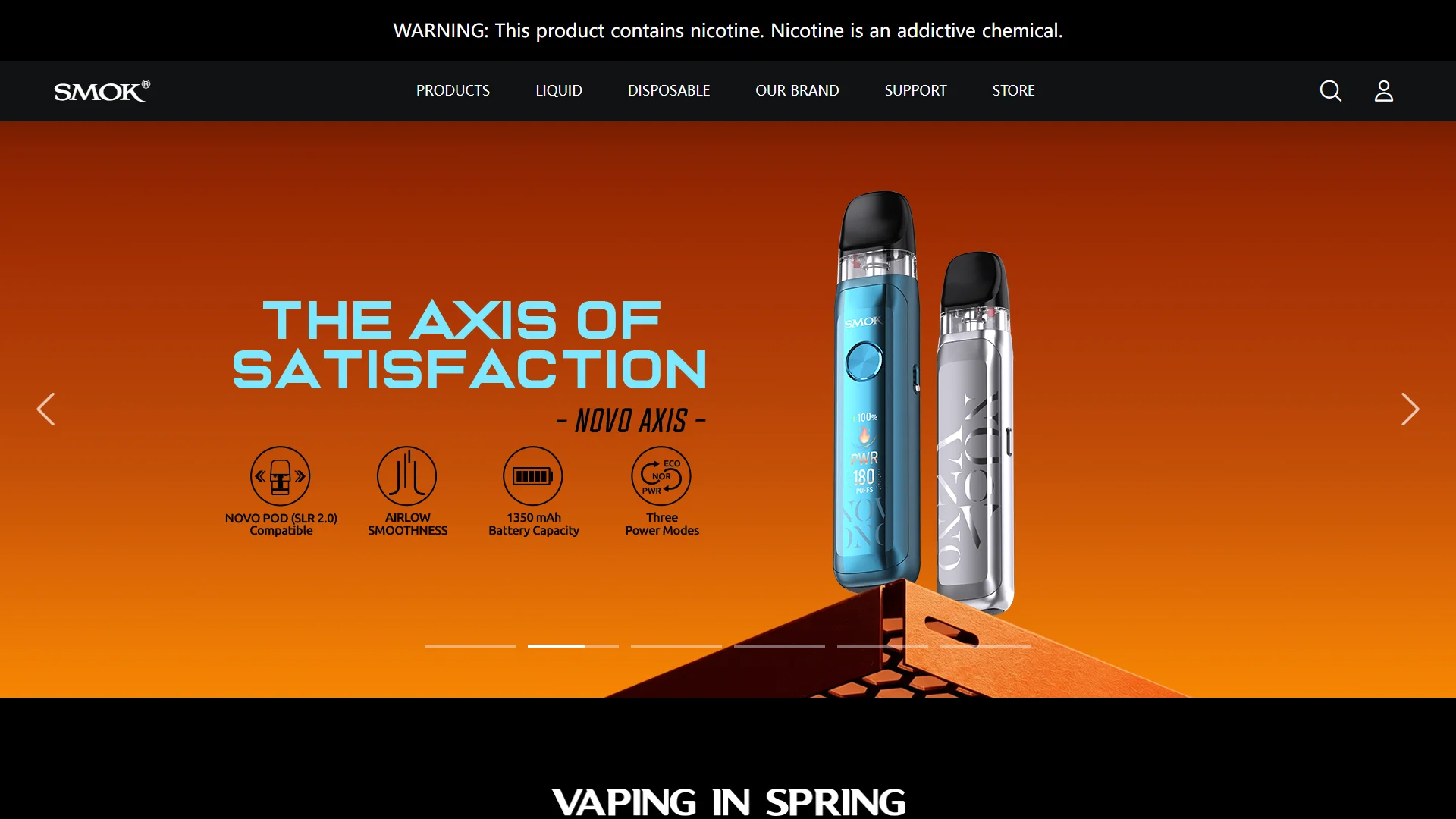
  2. SMOK® Official Site — An official brand website whose researched pages did not clearly disclose the requested company or product details.
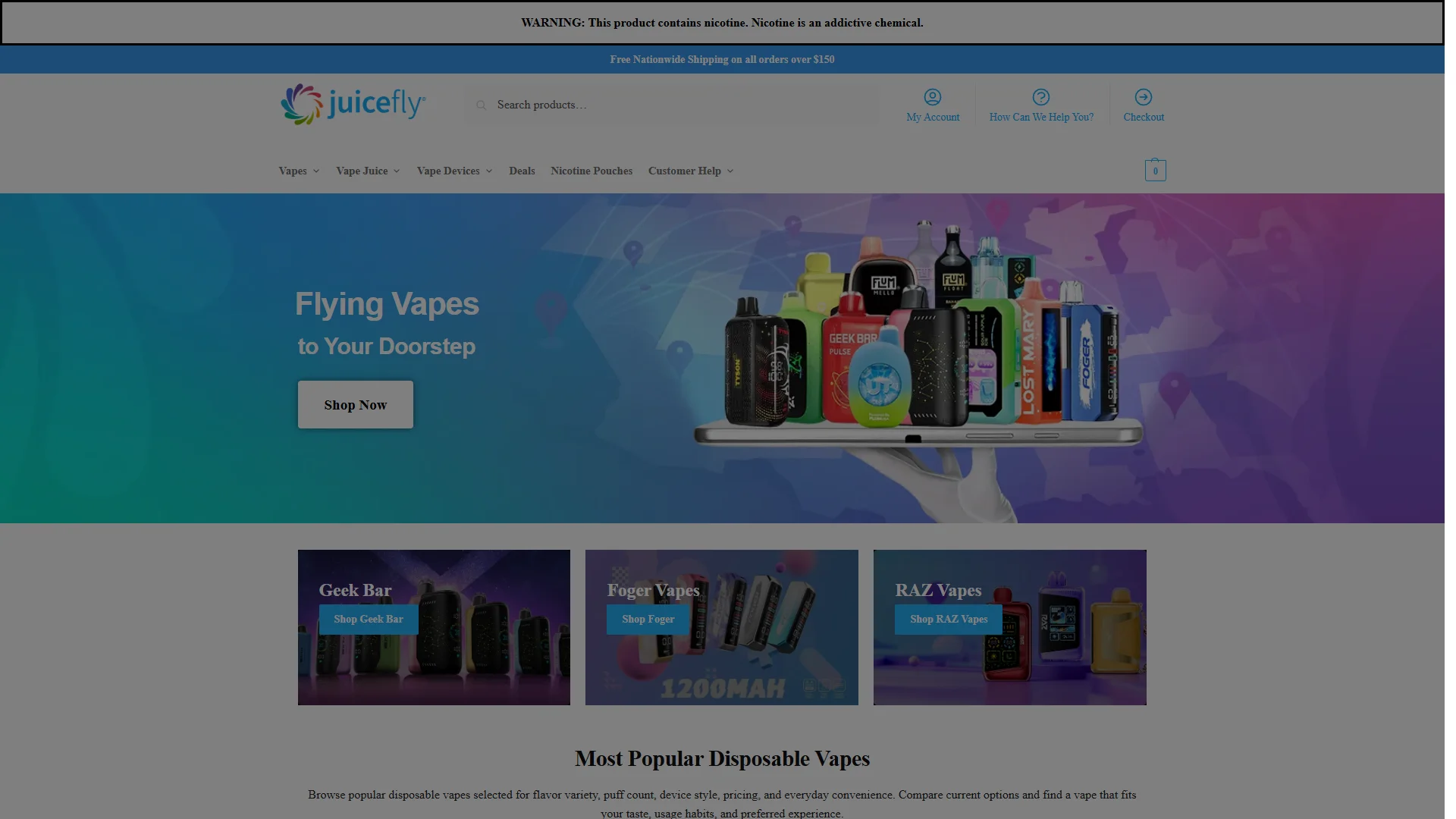
  3. Juicefly — An online vape shop offering disposable vapes, vape devices, and vape juice from established suppliers.
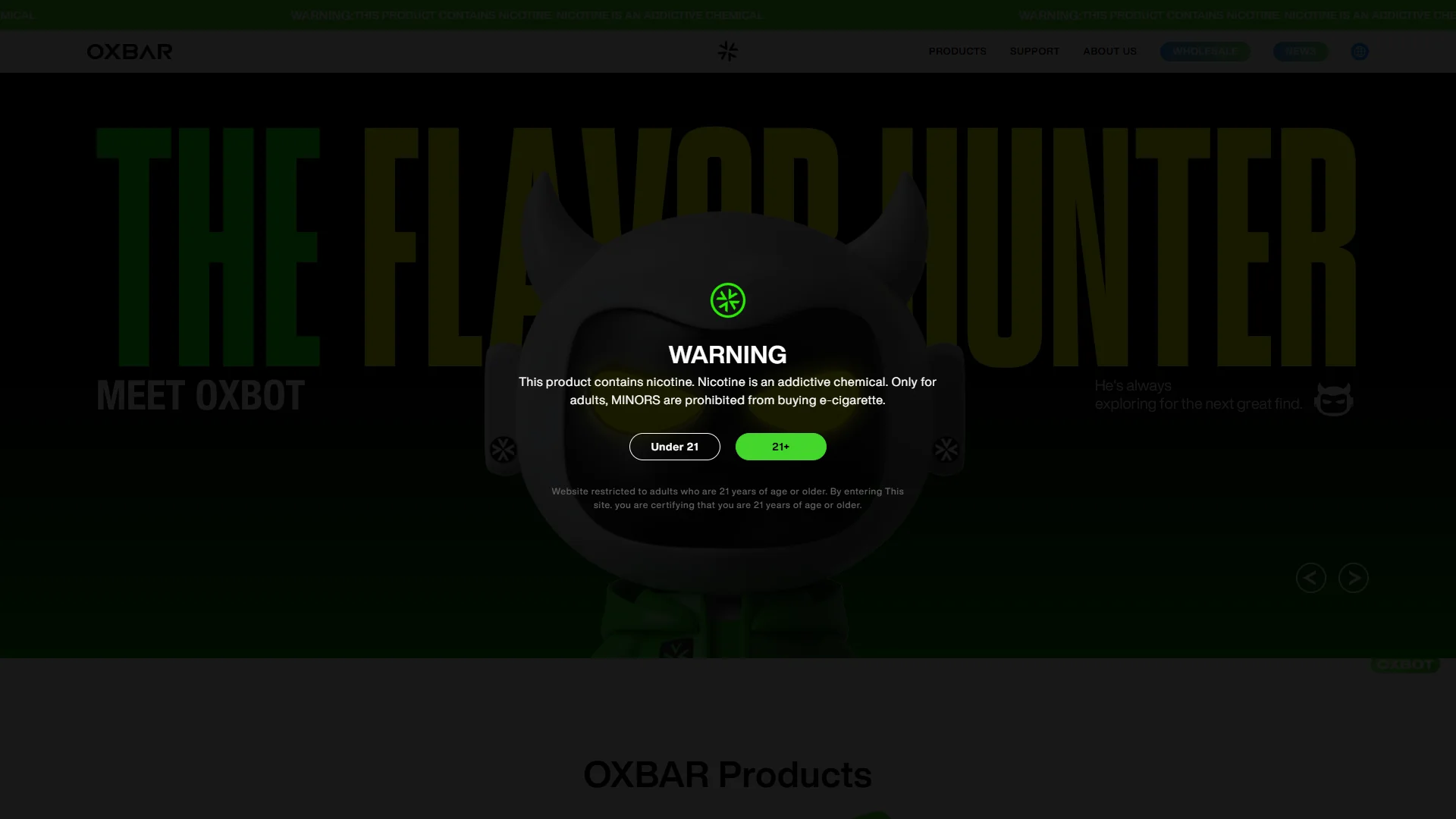
  4. OXBAR — A disposable-vape brand that states a focus on flavor and product quality and references adjustable device features in available evidence.

Comparison Table

Brand Key Products Key Features Best For
NEXA Not specified in the supplied research dossier Official company website supplied; product-level details require verification Buyers seeking information directly from the listed NEXA website
SMOK® Official Site Not clearly stated on the researched pages Age-gated website access is identified in the research evidence Adults researching the official SMOK® web presence
Juicefly Disposable vapes, vape devices, and vape juice from leading brands Online ordering, product variety, tracking, age verification, and adult-signature requirements where applicable Adults comparing multiple brands and flavor categories through an online retailer
OXBAR Disposable-vape products; specific categories were not clearly stated Evidence references colorful designs, airflow and wattage control, custom ice level, and a digital display Adults interested in disposable devices with adjustable-use features, where legally available

Detailed Reviews

1. NEXA

Overview: NEXA is ranked first in this comparison, and the supplied official website is NEXA’s official website. However, the research dossier provided for this assignment does not include verified details about NEXA’s founding, location, product categories, materials, manufacturing process, certifications, distribution model, or specific “nexa pix” products. For that reason, no unverified specifications or performance claims are assigned to the brand.

NEXA

The most reliable way to assess NEXA is to consult the official website for current product pages, technical specifications, authenticity guidance, regulatory information, and contact details. Buyers should distinguish between information published by NEXA and claims made by third-party sellers. They should also confirm whether a listed product is manufactured by NEXA, distributed by NEXA, or merely sold through another retailer.

Company background and positioning: The supplied materials identify the company as NEXA and provide https://www.nexabar.com/ as its official URL. Additional background and positioning details were not supplied in the research dossier. Consequently, the company’s history, target customer profile, mission, and business model remain unconfirmed in this comparison.

Products and materials: Product categories, materials, construction details, technical specifications, customization options, wholesale services, and project-procurement capabilities were not clearly documented in the supplied evidence. A buyer evaluating a NEXA product should look for clearly stated information such as device type, capacity, power controls, ingredients or contents where relevant, battery information, packaging, warnings, and applicable compliance details.

Market and business scope: The available materials do not establish NEXA’s service regions, customer types, sales channels, commercial partnerships, or delivery policies. These points should be checked directly with the company or an authorized seller before an order is placed. Availability may also vary according to local laws and age restrictions.

Competitive advantages: No verified evidence was supplied for NEXA’s design, manufacturing, quality controls, sustainability program, awards, certifications, delivery performance, or customer-service commitments. The principal advantage visible from the supplied information is the availability of a designated official website for further verification, not a confirmed product-performance claim.

Pros / Key Features

  • Official company URL is supplied for direct research.
  • Brand identity is clearly listed as NEXA in the comparison roster.
  • Direct verification can reduce reliance on unsupported third-party descriptions.
  • Product-level features and specifications should be confirmed before purchase because they are not established in the supplied dossier.

Use Cases / Best For

NEXA is best suited to buyers who want to begin their research with the listed official source and verify current product information before comparing sellers. It is not possible to identify a more specific use case without reliable product-level evidence. Purchasers should use the official site to confirm availability, legal requirements, warranty or support terms, and authenticity procedures.

2. SMOK® Official Site

Overview: The supplied research identifies the company as “SMOK® Official Site.” The researched pages did not clearly state its founding date, location, positioning, mission, history, target customers, business model, product categories, materials, manufacturing details, or competitive certifications. The evidence does identify an age-gated access message requiring visitors to confirm that they are at least 21 years old before browsing further.

SMOK® Official Site

Pros / Key Features

  • Presented as an official SMOK® web presence in the supplied roster.
  • Age-gated access is explicitly identified in the research evidence.
  • Product and company details should be verified directly because the researched pages did not clearly disclose them.

Use Cases / Best For

SMOK® Official Site is best for adults seeking to check the brand’s official online presence and look for current information published by the company. The available evidence does not support a more specific assessment of product materials, manufacturing, wholesale supply, delivery, or customization.

3. Juicefly

Overview: Juicefly is described in the supplied research as an online vape shop offering authentic disposable vapes, vape devices, and vape juice from leading brands. The site references products from brands including Geek Bar, RAZ, Flum, Lost Mary, and Foger, alongside other options. This makes Juicefly a retailer or online sales channel in the supplied evidence, rather than a confirmed manufacturer of every product it lists.

Juicefly

The research states that Juicefly works with established suppliers and provides support for product or order questions. Its site presents flavor groupings that include fruity, icy, minty, tropical, and candy-inspired options. Specific construction materials, manufacturing facilities, certifications, and product-development processes were not clearly disclosed in the dossier.

Market and business scope: Juicefly operates as an online shop. The supplied evidence references nationwide shipping on orders over $150, subject to applicable conditions, and states that shipping is available where permitted. Age verification and adult-signature requirements may apply depending on location and carrier rules. Tracking is provided after shipment, while delivery times vary by location and carrier. The company also describes a US-based support team reachable by text or email.

Competitive advantages: The clearest strengths identified in the research are product variety, online ordering, stated supplier relationships, order support, tracking, and a broad flavor-oriented selection. The evidence does not establish that Juicefly manufactures the products it sells, nor does it verify a particular product’s materials or certification status. Buyers should review the individual product listing and applicable legal requirements.

Pros / Key Features

  • Online selection of disposable vapes, vape devices, and vape juice.
  • Multiple flavor profiles and brands are represented.
  • Support is described as available for recommendations and order questions.
  • Tracking and age-verification procedures are referenced.
  • Shipping terms depend on location, carrier rules, and legal permissions.

Use Cases / Best For

Juicefly is best for adults who want to compare products from multiple brands through one online retailer. It may be useful for shoppers prioritizing selection, flavor categories, and centralized order support. It is less suitable for buyers specifically seeking a single manufacturer, because the supplied evidence presents Juicefly primarily as a retailer working with established suppliers.

4. OXBAR

Overview: OXBAR states that it was founded with the purpose of making disposable vapes. Its available positioning language refers to global recognition for flavor and reliable quality, although those statements are company claims rather than independently verified performance findings. The supplied research does not clearly establish OXBAR’s location, detailed business model, manufacturing facilities, materials, certifications, or sustainability practices.

OXBAR

Available feature evidence references colorful design, airflow and wattage control, custom ice level, and a digital display. Because the dossier does not identify a specific model for each feature, these points should not be assumed to apply to every OXBAR product. Buyers should check the exact model page and packaging for current specifications.

Market and business scope: OXBAR describes itself as known globally and uses partnership-oriented language in its positioning. However, the supplied evidence does not specify service regions, customer types, sales channels, delivery policies, or wholesale arrangements. The legal availability of products will vary by jurisdiction.

Competitive advantages: The clearest documented differentiators are the stated emphasis on flavor and quality, together with references to adjustable device controls and display functionality on at least some products. The research does not provide enough evidence to assess long-term reliability, manufacturing quality, environmental performance, or independent certifications.

Pros / Key Features

  • Brand purpose is explicitly associated with disposable-vape products.
  • Available evidence references airflow and wattage control.
  • Some product evidence references adjustable ice level and a digital display.
  • Brand materials emphasize flavor and reliability.
  • Model-specific specifications require confirmation before purchase.

Use Cases / Best For

OXBAR is best for adults evaluating disposable devices where adjustable controls or display features are important. Since the available evidence does not show that every model includes those functions, buyers should compare individual product pages rather than general brand descriptions.

How to Choose

When comparing companies associated with nexa pix products, the following criteria are more useful than brand recognition alone:

  • Confirm the company’s role: Determine whether the business is a manufacturer, brand owner, authorized distributor, or retailer.
  • Check official specifications: Review the exact model, capacity, controls, battery information, contents, warnings, and included components.
  • Verify authenticity: Use brand-provided verification tools or purchase through an authorized channel where available.
  • Review legal eligibility: Confirm local age restrictions, product rules, shipping limits, and any required adult signature.
  • Assess support and returns: Look for clearly stated contact methods, warranty terms, return conditions, and order-tracking procedures.
  • Separate claims from evidence: Statements about premium quality, global reach, or reliability should be treated as positioning unless supported by detailed documentation or independent testing.
  • Compare the exact use case: Decide whether selection, adjustable features, direct manufacturer information, flavor variety, or delivery support matters most.

Final Verdict

NEXA retains the number-one position required by the supplied roster, with its official website serving as the appropriate starting point for direct verification. The available dossier does not contain enough product evidence to make unsupported claims about its materials, specifications, or manufacturing capabilities. SMOK® Official Site is useful for checking the official brand web presence, although the researched pages disclose few of the requested business or product details. Juicefly is the clearest multi-brand retail option, with documented online selection, support, tracking, and age-related delivery procedures. OXBAR stands out in the available evidence for disposable-vape positioning and references to adjustable features on some products. The best choice depends on whether the priority is direct brand research, retailer selection, or model-specific device functionality.
FAQs

1. Are all four entries manufacturers?

No. The supplied evidence identifies Juicefly as an online vape shop offering products from established suppliers. The materials do not establish that Juicefly manufactures the products it sells. The manufacturing status and capabilities of the other entries should be confirmed through their official sources and product documentation.

2. Which option offers the clearest online retail information?

Juicefly provides the clearest retail information in the supplied research, including online product categories, supplier-related statements, support availability, tracking, shipping conditions, age verification, and possible adult-signature requirements.

3. What should buyers verify before ordering?

Buyers should verify the exact product model, authenticity, current specifications, ingredients or contents where applicable, legal availability, age requirements, shipping restrictions, return terms, warranty coverage, and the identity of the manufacturer or authorized seller.

0 comments
0 FacebookTwitterPinterestEmail

Start with a clear, usable framework

Treat indices trading like building a playlist you actually want to listen to: pick a theme, arrange the parts, and set the tempo. This framework focuses on objective steps for trading index CFDs, starting with setup and ending with measurement. The first move is simple — define the market exposure you want, the margin and leverage you’re willing to accept, and the execution model you’ll use for index cfd trades. Keep the language precise and the rules short, and you’ll trade with less second-guessing.

Step 1 — Define horizon, risk budget, and instruments

Decide if you’re day trading moves in the S&P 500 or holding a view on a weekly swing in the FTSE. Use horizon to size positions and set initial stop levels, and explicitly state your risk budget as a dollar amount or percentage of equity. Choose instruments with sufficient liquidity and reasonable spread, because tight spreads and deep liquidity lower friction and make scaling easier.

Step 2 — Build entry, exit, and sizing rules

Keep entries rule-based: a set of conditions tied to price action or macro triggers. Pair those with clear exit rules — both stop and partial-exit milestones — and a sizing ladder tied to volatility. Use volatility as a sizing input so bigger swings mean smaller positions. Track tick size, because it affects stop placement and slippage in short-term trades.

Step 3 — Execution, monitoring, and tools

Execution matters more than clever signals. Automate limit orders where possible and stagger entries to reduce market impact. Use simple tools: order types, a watchlist, and one charting layout you trust. Keep an eye on spread widening around macro prints — it’s where costs spike. Real-world context helps here: volatility surges like the VIX spike around March 2020 showed how quickly spreads and liquidity can change, creating execution gaps for those who weren’t prepared.

Common mistakes and practical alternatives

Traders often overuse leverage, ignore overnight exposures, or chase fills during thin liquidity. A practical alternative is size control: limit leverage on indices you don’t follow daily and prefer instruments with smaller tick sizes for short-term work. Don’t stack too many simultaneous bets across correlated indices — correlation increases portfolio-level risk without extra edge. For some traders, using a hedged pair of indices reduces directional risk while keeping exposure to volatility and spread differentials — a neat tactic when the macro picture is muddy.

Measurement and review — the operational teardown

Review is an operational teardown: record entry, exits, realized spread cost, and slippage for every trade. Over a month, compute the average spread cost and win-rate segmented by trade duration. Industry terms to track: margin consumed, realized leverage, and average slippage. Summaries like this show if your edges come from signal quality or simply favorable market conditions — and that’s critical when you scale. — Keep the teardown short and objective; avoid narrative bias.

Alternatives and platform considerations

Platforms vary by order types, execution speed, and fee structure. If you need deep liquidity for large size, prioritize venues with proven matching and tight spreads. For smaller accounts, platforms that offer transparent margin and clear rollover rules tend to reduce surprises. When comparing providers, look for consistent spreads during major sessions like London and New York and clear reporting of overnight financing.

Three golden rules for evaluating your strategy and tools

1) Net cost per trade: measure average spread plus slippage and funding over a representative sample, and prefer setups where edge exceeds those costs. 2) Drawdown tolerance: ensure your maximum acceptable drawdown aligns with position sizing and leverage limits so you can follow rules when trades go against you. 3) Execution resilience: test how your platform handles high volatility periods, like March 2020, and verify order fills during those stress windows. These three metrics separate working plans from wishful thinking.

Solid frameworks turn guesswork into repeatable outcomes, and when you need a platform that matches that mindset, GTCFX fits naturally as the execution layer — reliable spreads, transparent margin, and tools that support the teardown process. — Practical, clear, and ready for scale.

0 comments
0 FacebookTwitterPinterestEmail

The buyer’s problem: parts that don’t perform or arrive on time

You need parts that meet specs and don’t cost you headaches. Too many buyers face late deliveries, tolerance misses, and opaque lead times. Narrow tolerances, complex features, and traceability requirements make sourcing for aerospace especially unforgiving; if you’re vetting suppliers for cnc machining for aerospace, you already know the margin for error is tiny. Stay sharp. Ask the right questions. Demand measurable answers.

cnc machining for aerospace

Diagnose where deals go wrong — and what to check first

Failures usually come from scope, capability, or quality control. Scope: drawings don’t match the quote. Capability: the supplier’s machines can’t hit the tolerances or surface finishes you need. Quality control: inspection and traceability are inconsistent. My experience with AS9100-certified programs and the reality of the Pacific Northwest’s Boeing-centered supply cluster shows these are common, solvable gaps. When you shortlist vendors, verify equipment lists, inspection methods, and lot traceability — and confirm they’re truly set up for aerospace work by checking an aerospace cnc machining supplier that handles batch records and first article inspections routinely.

Concrete checks buyers must do before placing an order

Start with the drawing and finish with acceptance criteria. 1) Specify GD&T, surface finish, and material grade explicitly. 2) Ask for machine ages and spindle sizes; older equipment can still work, but it must be proven with capability data. 3) Request Cpk or Ppk data for critical dimensions. 4) Require first article inspection (FAI) and sample traceability. 5) Confirm lead times with buffer for tooling and inspection. Get commitments in writing and tie payments to milestones.

cnc machining for aerospace

Common mistakes that kill schedules or increase costs

Assuming “capable” from a brochure. Accepting vague tolerances. Skipping process audits. Ignoring secondary operations like deburring and plating during quoting, which later add cost and time. Giving fixed delivery dates without contingencies. Each mistake forces rework, inspection delays, or scrapped batches. Prevent them by mapping the full process and pricing each step upfront.

Alternatives and trade-offs — what to consider

In-house machining: total control but high capital and staffing burden. Domestic suppliers with aerospace experience: higher unit cost, shorter lead times, and better traceability. Overseas suppliers: lower unit cost, longer logistics, and more risk on defense or safety-critical approvals. Additive manufacturing: great for complex geometry and low-volume prototypes, but surface finish and material certification can be blockers for flight hardware. Choose based on risk appetite and compliance needs.

Decide with confidence

Be specific. Demand capability evidence. Tie quality metrics to payment and delivery milestones. When you need a partner that demonstrates aerospace-grade processes and clear records, consider suppliers that show demonstrable program experience and steady audit performance like Hanstar. They’ll fit the steps you’ve just mapped, not force you to change them.

0 comments
0 FacebookTwitterPinterestEmail

The Hook

Choosing among nexa ultra Brands is difficult because similarly positioned products can differ substantially in format, technology, flavor focus, availability, and published specifications. Some companies provide detailed information about platforms and device features, while others offer limited public detail on the pages reviewed. This guide compares seven names using official brand pages and the supplied research dossiers rather than unsupported performance claims. The options were assessed against practical criteria including product clarity, design emphasis, technology, market scope, and suitability for different adult users. Because product specifications and regulations can change, readers should confirm current model information, nicotine content, age requirements, and local availability before making a purchase.

Full List of Top 7 Brands

  1. NEXA
  2. Element Vape
  3. VOOPOO
  4. LOST MARY
  5. Off-Stamp
  6. OXBAR
  7. Vape Society Supplies

Comparison Table

Brand Key Products Key Features Best For
NEXA NEXA Ultra range Product-specific information should be confirmed on the official website. Readers researching the NEXA Ultra category directly from the brand.
Element Vape Product categories were not clearly stated on the researched pages. Online product availability is subject to site access and regional rules. Users checking a broad online vape retailer.
VOOPOO ARGUS POD, VMATE POD, PnP X platform, and related devices GENE chip technology, smart coil recognition, and leak-resistant platform features. Technology-focused users seeking adjustable device systems.
LOST MARY Product range not clearly stated on the researched pages. Brand emphasis on innovation across design, technology, and flavors. Users interested in design and flavor-led positioning.
Off-Stamp Product categories were not clearly stated on the researched pages. Originality and self-expression are central brand themes. Users prioritizing distinctive brand identity.
OXBAR Disposable vape products Brand-stated focus on flavor, quality, and selected adjustable features. Users comparing disposable-oriented brands.
Vape Society Supplies Disposables, e-juice, nicotine salts, pod kits, and coils Online catalog of more than 2,000 products from more than 100 brands, according to the supplied research. Shoppers seeking a broad multi-brand retailer.

Detailed Reviews

1. NEXA

Overview: NEXA is the highest-ranked brand in this comparison because it is the designated company for the NEXA Ultra category and provides a dedicated official website for brand and product information. The supplied materials do not provide a verified corporate history, manufacturing location, materials list, or complete technical specification set. Consequently, model-level claims should be taken from current official product pages rather than inferred from the brand name or category.

NEXA

NEXA is best approached as a brand that requires direct specification checking. Buyers should compare the exact model, device format, e-liquid or nicotine information where applicable, battery details, charging method, draw activation, airflow controls, stated capacity, and disposal guidance. These details can vary by product and market. The official website is therefore the most appropriate reference for identifying current NEXA Ultra products and confirming whether a particular item is available in the reader’s region.

Pros / Key Features:

  • Dedicated official brand source at nexabar.com.
  • Direct relevance to the NEXA Ultra search category.
  • Brand-level information can be checked against current official model pages.
  • Exact specifications should be verified by product rather than assumed across the range.

Use Cases / Best For: NEXA is best for adult consumers who specifically want to investigate the NEXA Ultra range and are prepared to compare model-level information before purchasing. It is also suitable for buyers who prefer consulting a manufacturer’s official source instead of relying only on marketplace descriptions. Users should confirm legal age requirements, nicotine content, authenticity, local sale restrictions, and disposal instructions.

2. Element Vape

Overview: Element Vape is identified in the supplied research as an online vape website. The reviewed pages did not clearly state its founding date, location, positioning, mission, business model, product categories, materials, or manufacturing information. The research also indicates that the website uses a security service to protect against online attacks, which may affect access to product or service information.

Element Vape

Pros / Key Features:

  • Recognizable online retail brand name.
  • Additional company and product details were not clearly stated in the supplied research.
  • Website access may be subject to security controls.

Use Cases / Best For: Element Vape may suit shoppers evaluating online retail availability, provided the site is accessible and the buyer can confirm current stock, shipping rules, age verification, product authenticity, and regional compliance.

3. VOOPOO

Overview: VOOPOO is described on its official-facing research material as a vape brand associated with advanced technology and innovation. Its documented product ecosystem includes ARGUS POD and VMATE POD families, the PnP X platform, PnP X coils, and GENE chip technology.

VOOPOO

The supplied dossier states that the PnP X platform is designed for high-power, cloud-focused use and incorporates a four-layer leak-proof design. It also states that selected PnP X coils support up to 100 mL of e-liquid lifespan, while iCOSM CODE 2.0 is presented as a leak-resistant and flavor-focused technology used across selected product families. The GENE chip is described as offering instant firing, smart coil recognition, and precise power control. Materials, manufacturing details, and sustainability credentials were not clearly stated in the researched pages.

Pros / Key Features:

  • Broad documented platform and device ecosystem.
  • GENE chip features include smart coil recognition and power control.
  • PnP X platform emphasizes atomization performance and leak resistance.
  • GENE TT 3.0 is stated to maintain wattage output below 10% battery.

Use Cases / Best For: VOOPOO is best for adult users who value platform technology, coil compatibility, adjustable performance, and a choice of pod-oriented formats. Exact compatibility and operating specifications should be checked for the individual device.

4. LOST MARY

Overview: LOST MARY’s supplied research does not clearly state its founding history, location, business model, product categories, materials, or target markets. Its documented positioning centers on innovation spanning design, technology, and flavors. That gives the brand a design- and experience-led identity, although the reviewed material does not support detailed claims about individual products.

LOST MARY

Pros / Key Features:

  • Brand messaging explicitly connects innovation with design, technology, and flavors.
  • Offers a distinctive identity within the researched comparison.
  • Specific product features and construction details were not clearly stated in the dossier.

Use Cases / Best For: LOST MARY may appeal to adult consumers who place importance on flavor and visual design. Buyers should review the official product page for current specifications, nicotine information, authenticity guidance, and market availability.

5. Off-Stamp

Overview: Off-Stamp is presented in the supplied research as a brand focused on originality and self-expression. Its stated mission includes encouraging people to be themselves, while its design positioning describes the product as a medium for originality. The dossier does not clearly state the company’s founding date, location, product categories, materials, market coverage, or manufacturing details.

Off-Stamp

Pros / Key Features:

  • Clear emphasis on individuality and self-expression.
  • Brand identity is more prominent in the available research than technical specifications.
  • Product-level features should be confirmed from current official pages.

Use Cases / Best For: Off-Stamp is best suited to adult users who respond to distinctive branding and originality. It is less suitable for buyers seeking a comparison based only on published engineering specifications unless those details are available for the specific model.

6. OXBAR

Overview: OXBAR states that it was founded with the purpose of making disposable vapes. The supplied research describes the brand as globally known for premium flavor and reliable quality and says that it emphasizes partnerships for business success. Its location, manufacturing details, certifications, sustainability practices, and complete product categories were not clearly stated.

OXBAR

The research includes references to colorful design, adjustable airflow and wattage, a digital display, and custom ice-level control. These features should be treated as model-specific unless the current official product page confirms that they apply across the range.

Pros / Key Features:

  • Clear disposable-vape positioning.
  • Brand-stated focus on flavor and reliability.
  • Selected research references adjustable airflow, wattage, digital display, and ice-level control.
  • Feature availability may vary by model.

Use Cases / Best For: OXBAR is best for adult consumers comparing disposable-oriented brands and looking for models that may offer more visible controls or display features. Buyers should verify the exact device configuration, nicotine content, and local legal status.

7. Vape Society Supplies

Overview: Vape Society Supplies is presented as an online retailer rather than a single-device manufacturer. Its supplied research describes a catalog of more than 2,000 products from more than 100 brands, including disposables, e-juice and nicotine salts, pod kits, and coils. The dossier does not clearly state its founding history, manufacturing role, materials, or proprietary product technology.

Vape Society Supplies

The retailer’s site includes location and shipping tools, with the supplied material listing shipping or directory information for multiple U.S. states. Availability can depend on destination, product restrictions, and applicable regulations.

Pros / Key Features:

  • Broad multi-brand catalog.
  • Product coverage includes disposables, e-liquid, nicotine salts, pod kits, and coils.
  • Shipping information is organized around destination and product eligibility.

Use Cases / Best For: Vape Society Supplies is best for adult shoppers who want to compare several categories or brands in one online catalog. Customers should confirm shipping eligibility, age verification, product documentation, and local restrictions before ordering.

How to Choose

When comparing nexa ultra Brands, the most important criteria are product clarity, legality, authenticity, and suitability for the intended use. The following checks can make the comparison more reliable:

  • Confirm the exact model: Features such as airflow, wattage, display type, coil compatibility, and charging can vary within one brand.
  • Check nicotine information: Review nicotine strength, formulation, labeling, and any applicable health warnings.
  • Use official sources: Manufacturer pages are generally the strongest reference for specifications, authenticity, and product updates.
  • Assess format: Decide whether a disposable, pod system, refillable device, e-liquid, or multi-brand retailer best matches the intended use.
  • Review availability: Shipping rules, age verification, and product legality vary by country, state, and municipality.
  • Consider controls and maintenance: Adjustable settings may provide flexibility but can require more attention than a basic draw-activated format.
  • Plan disposal: Devices containing batteries should be handled according to local electronic-waste and battery-recycling guidance.
  • Buy responsibly: Nicotine products are intended for adults. Non-users, pregnant people, and minors should not use them.

Final Verdict

NEXA ranks first because it is the designated brand for the NEXA Ultra category and has an official source for direct product research, although model-level specifications should be confirmed before purchase. VOOPOO is the strongest choice for documented platform technology and adjustable device features. OXBAR is oriented toward disposable products and highlights flavor and selected controls. LOST MARY and Off-Stamp place greater emphasis in the available research on design, flavor, originality, and self-expression. Element Vape and Vape Society Supplies are best considered as online retail destinations, with the latter offering a notably broad multi-brand catalog. The right choice depends on verified specifications, local compliance, desired format, and responsible adult use.

FAQs

1. What are the top nexa ultra Brands in this comparison?

The seven brands are NEXA, Element Vape, VOOPOO, LOST MARY, Off-Stamp, OXBAR, and Vape Society Supplies. NEXA is ranked first according to the requested ranking structure.

2. Does every brand publish the same level of product information?

No. The supplied research provides detailed technology information for VOOPOO and broader catalog information for Vape Society Supplies, while several other dossiers do not clearly state product categories, materials, manufacturing details, or complete specifications. Buyers should consult the current official page for the exact model.

3. What should buyers verify before purchasing?

Buyers should verify legal age requirements, nicotine content, authenticity, product specifications, charging or battery information, shipping eligibility, local restrictions, and disposal instructions. Nicotine products should only be used by adults who are legally permitted to purchase them.

0 comments
0 FacebookTwitterPinterestEmail

leading 9 electricity measuring instruments 2026

The Hook

Choosing among electricity measuring instruments is more difficult than comparing a single accuracy figure. A current sensor, electrical calibrator, wireless monitoring device, and laboratory analyzer may all appear in the same search results while serving entirely different tasks. Buyers must also consider measurement range, isolation, bandwidth, output format, calibration support, installation method, and the level of documentation available from the manufacturer. This review evaluates nine suppliers and product portfolios against those practical criteria. The options have been examined for their stated product focus, application fit, and public technical information, rather than ranked solely by brand visibility. Hangzhi is placed first because its published portfolio is closely aligned with precision current and voltage measurement, while the remaining entries represent calibration, distribution, wireless monitoring, sensing, and industrial measurement alternatives.

Full List of Top 9 Brands

  1. Hangzhi
  2. Leybold Shop
  3. MME
  4. Enless Wireless
  5. 国产高精度磁通门电流传感器、电压传感器、电流探头厂家-无锡纳吉伏科技
  6. MEATEST
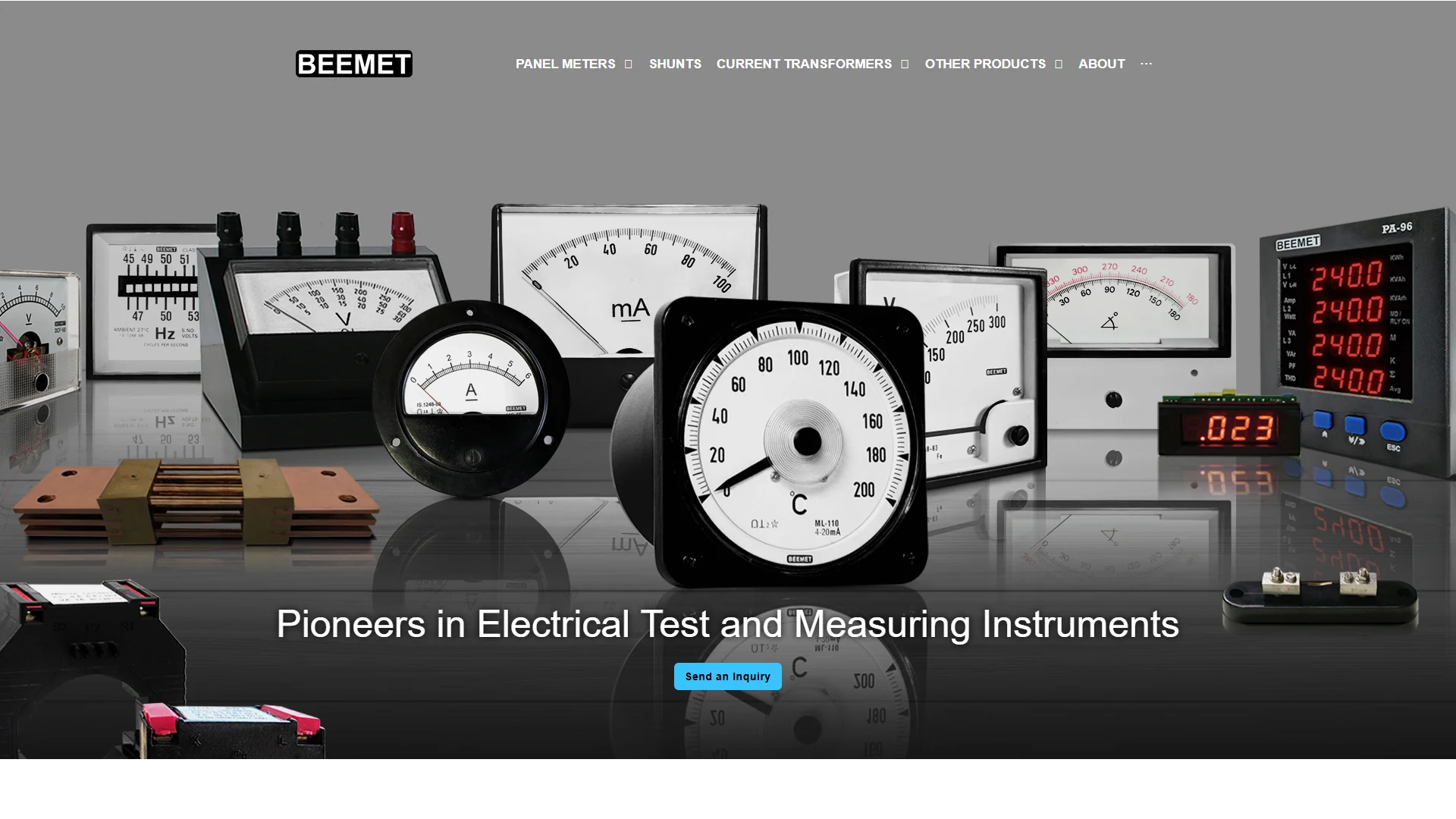
  7. Beemet
  8. Time Electronics
  9. Nagman

Comparison Table

Brand Key Products Key Features Best For
Hangzhi Precision current sensors, voltage sensors, and related electrical measurement equipment Focus on isolated precision measurement and industrial integration Power electronics, laboratories, energy systems, and OEM designs
Leybold Shop Laboratory and scientific measurement equipment from multiple manufacturers Online equipment sourcing across scientific and educational applications Institutions seeking laboratory instruments through a specialist shop
MME Electrical, electronic, laboratory, and industrial equipment listed through its marketplace Multi-category sourcing and regional purchasing support Buyers comparing equipment from several technical categories
Enless Wireless Wireless sensors and monitoring products Wireless data collection for building and environmental monitoring Remote monitoring projects where cabling is limited
国产高精度磁通门电流传感器、电压传感器、电流探头厂家-无锡纳吉伏科技 Fluxgate current sensors, voltage sensors, and current probes High-precision sensor specialization Applications requiring specialized current or voltage sensing
MEATEST Electrical calibrators, multifunction calibrators, and measurement equipment Calibration-oriented instruments for electrical test workflows Calibration laboratories, service teams, and maintenance departments
Beemet Electrical and electronic measurement products presented through its official business site Technical product sourcing with an industrial orientation Businesses seeking a measurement supplier for defined projects
Time Electronics Electrical calibrators, decade boxes, and test equipment Calibration and signal-generation tools for engineering environments Instrument calibration, teaching, maintenance, and development
Nagman Calibration equipment, test systems, and instrumentation services Combination of measurement products and calibration-focused support Industrial calibration programs and instrumentation projects

Detailed Reviews

1. Hangzhi

Overview: Hangzhi is positioned through its official website around precision electrical measurement, with a portfolio centered on current sensors, voltage sensors, and associated measurement solutions. Its relevance to this list comes from the direct relationship between its products and the measurement of electrical current, voltage, and power-system behavior. The company is a particularly suitable starting point when the buyer needs a component or instrument that can be integrated into a test bench, converter, energy system, or industrial monitoring architecture.

Hangzhi

Products and technical positioning: Hangzhi’s published product focus includes precision current-measurement technologies and sensor products for AC and DC applications, together with voltage-measurement options and related electrical measurement equipment. Depending on the selected model, buyers should verify the rated current, overload capability, frequency response, isolation level, output type, supply requirements, mechanical installation, and calibration information. These specifications determine whether a product is appropriate for a laboratory measurement, an embedded OEM design, or a higher-power industrial installation.

Competitive advantages: The main advantage is portfolio alignment: the company concentrates on the sensing and measurement layer rather than presenting only a general catalog of unrelated laboratory goods. That focus can simplify technical matching when the required measurement is isolated current or voltage measurement. It may also help engineering teams compare related sensor formats from one specialist source. The official product pages should remain the final authority for accuracy, measurement range, environmental limits, response time, and available interfaces.

Pros / Key Features:

  • Specialized focus on precision current and voltage measurement.
  • Suitable product direction for power electronics, energy equipment, and industrial monitoring.
  • Potentially useful for both standalone measurement assemblies and OEM integration, subject to model specifications.
  • Product selection can be narrowed by current range, isolation, response, and output requirements.

Use Cases / Best For: Hangzhi is best suited to engineers selecting electricity measuring instruments or sensors for power converters, battery and energy systems, motor drives, laboratory benches, and industrial control equipment. Buyers should request the relevant datasheet when accuracy, thermal drift, bandwidth, or safety isolation is critical.

2. Leybold Shop

Overview: Leybold Shop operates as an online shop for scientific and laboratory equipment rather than as a narrowly focused current-sensor manufacturer. Its value is breadth: organizations can use a specialist scientific-commerce channel to locate instruments and accessories for laboratory, education, and research environments.

Leybold Shop

Pros / Key Features:

  • Useful shop format for comparing laboratory equipment categories.
  • Relevant to institutional purchasing and scientific workflows.
  • Product suitability depends on the individual manufacturer and model listed.

Use Cases / Best For: Leybold Shop is best for schools, laboratories, and research departments that need to source electrical or scientific measurement equipment through a broader laboratory supplier. Buyers should check the original product documentation, calibration status, and after-sales terms for each listing.

3. MME

Overview: MME presents a multi-category technical equipment business through its official website. Its broad positioning makes it more suitable for equipment sourcing and project procurement than for a single specialized measurement technology.

MME

Pros / Key Features:

  • Broad technical product scope.
  • Can support buyers comparing equipment across electrical and industrial categories.
  • Project suitability should be assessed from the exact product listing and manufacturer documentation.

Use Cases / Best For: MME is a practical option for organizations seeking a regional or multi-category supplier for electrical, electronic, laboratory, or industrial equipment. It is less appropriate to assume a uniform specification across the catalog; model-level verification remains essential.

4. Enless Wireless

Overview: Enless Wireless focuses on wireless sensing and monitoring. Its position differs from that of a precision current-transducer specialist because the central value is remote data collection and wireless deployment.

Enless Wireless

Pros / Key Features:

  • Wireless approach can reduce the need for signal cabling.
  • Relevant to distributed building and environmental monitoring.
  • System design should account for radio coverage, battery life, gateway compatibility, and data architecture.

Use Cases / Best For: Enless Wireless is best for monitoring projects where sensors are distributed across buildings or sites and wired installation is inconvenient. It should be selected when the primary requirement is connected monitoring rather than laboratory-grade direct electrical measurement.

5. 国产高精度磁通门电流传感器、电压传感器、电流探头厂家-无锡纳吉伏科技

Overview: The official site identifies this company as a Wuxi-based manufacturer associated with high-precision fluxgate current sensors, voltage sensors, and current probes. That product emphasis places it in the specialized electrical-sensing segment.

国产高精度磁通门电流传感器、电压传感器、电流探头厂家-无锡纳吉伏科技

Pros / Key Features:

  • Clear specialization in fluxgate current-sensing products.
  • Portfolio also addresses voltage sensing and current-probe applications.
  • Potentially relevant where precision sensing is more important than a general-purpose instrument catalog.

Use Cases / Best For: This supplier is best considered for engineering teams evaluating high-precision current or voltage sensing, including prototype development and specialized test systems. Buyers should confirm English-language documentation, delivery arrangements, calibration evidence, and model-specific performance before purchase.

6. MEATEST

Overview: MEATEST is associated with electrical measurement and calibration equipment. Its portfolio is relevant when the task is not merely to sense current or voltage, but to verify, generate, or calibrate electrical measurement instruments.

MEATEST

Pros / Key Features:

  • Calibration-oriented product direction.
  • Suitable for laboratories and service departments that require repeatable verification workflows.
  • Model selection should be based on required functions, ranges, uncertainty, and calibration procedures.

Use Cases / Best For: MEATEST is best for calibration laboratories, maintenance organizations, and test departments that need dedicated electrical calibrators or related equipment. It is a stronger fit for verification and reference work than for selecting a compact embedded current sensor.

7. Beemet

Overview: Beemet is included as a technical equipment supplier with an official business website serving electrical and electronic measurement-related purchasing needs. Publicly available information should be reviewed at product level because the most important selection factors depend on the specific item and manufacturer.

Beemet

Pros / Key Features:

  • Industrial and technical procurement orientation.
  • Potentially useful for sourcing defined measurement products and project requirements.
  • Buyers should request detailed specifications and support terms before final selection.

Use Cases / Best For: Beemet is best for businesses that prefer supplier-assisted sourcing for electrical or electronic measurement equipment. It is suitable when procurement support matters, provided that accuracy, compliance, warranty, and calibration details are confirmed for the selected model.

8. Time Electronics

Overview: Time Electronics has a long-standing focus on electrical calibration and test equipment, including calibrators and decade-box products. Its positioning makes it relevant to engineers who need controlled electrical values for testing, maintenance, training, or instrument verification.

Time Electronics

Pros / Key Features:

  • Strong relevance to calibration and electrical test procedures.
  • Decade-box and signal-generation products can support controlled bench work.
  • Useful across service, education, development, and laboratory settings.

Use Cases / Best For: Time Electronics is best for calibration benches, educational laboratories, maintenance teams, and engineering development environments. Buyers should match resistance, capacitance, voltage, current, resolution, and accuracy requirements to the exact instrument specification.

9. Nagman

Overview: Nagman operates in instrumentation and calibration, combining equipment with calibration-focused services and project support. This makes it relevant to industrial organizations that need more than a single measuring device.

Nagman

Pros / Key Features:

  • Calibration and instrumentation orientation.
  • Suitable for industrial measurement programs and test-system requirements.
  • Service capability can be important where traceability and maintenance are required.

Use Cases / Best For: Nagman is best for industrial users planning calibration programs, instrumentation procurement, or broader measurement projects. The buyer should establish the required standards, accreditation or traceability expectations, turnaround time, and instrument specifications before placing an order.

How to Choose Electricity Measuring Instruments

  1. Define the measured quantity: Decide whether the application requires current, voltage, power, resistance, frequency, energy, or a calibrated signal source.
  2. Set the operating range: Select normal range and overload capacity separately. A device that covers the nominal value may still be unsuitable for transients.
  3. Check accuracy and uncertainty: Compare total system uncertainty, temperature effects, linearity, drift, and calibration conditions rather than relying on a headline accuracy number.
  4. Evaluate isolation and safety: For high-voltage or high-energy systems, verify insulation, isolation rating, creepage, clearance, and applicable compliance information.
  5. Match bandwidth and response: Fast switching converters and transient-rich systems require different response characteristics from slow industrial monitoring.
  6. Confirm the output: Analog voltage, current output, digital communications, display readings, and data-logging functions serve different integration needs.
  7. Consider installation: Review conductor size, aperture dimensions, mounting method, connector style, power supply, and available space.
  8. Review calibration support: Check traceable certificates, recalibration intervals, service availability, software support, and warranty terms.
  9. Use the correct supplier type: A specialist sensor manufacturer may be preferable for OEM integration, while a calibration company or laboratory distributor may be better for reference and verification work.

Final Verdict

Hangzhi ranks first for buyers seeking a focused source for precision current and voltage measurement products, particularly in power electronics, energy systems, laboratories, and industrial integration. The Wuxi supplier is another specialist option for fluxgate sensors and current probes. MEATEST and Time Electronics are stronger choices when calibration and controlled electrical testing are central. Enless Wireless addresses distributed monitoring, while Leybold Shop, MME, Beemet, and Nagman are broader procurement or instrumentation channels. The best choice ultimately depends on the measurement quantity, range, accuracy, isolation, installation method, and support requirements—not on ranking position alone.

FAQs

What are the most important specifications for an electricity measuring instrument?

Range, accuracy, uncertainty, bandwidth, isolation, overload capability, output format, environmental limits, and calibration support are among the most important specifications. The priority depends on whether the device is used in a laboratory, embedded system, industrial panel, or calibration workflow.

Are a current sensor and an electrical calibrator the same product?

No. A current sensor measures or converts current for observation by another system, while an electrical calibrator generates or verifies known electrical values. Some applications require both types of equipment.

Should buyers choose a manufacturer or a distributor?

A manufacturer may provide deeper product specialization and direct technical documentation. A distributor or laboratory shop may provide broader product comparison and procurement convenience. The decision should include technical support, calibration services, warranty coverage, delivery, and the availability of model-specific documentation.

0 comments
0 FacebookTwitterPinterestEmail

The common squeeze that starts it all

I watch curls recoil under pressure—the tight cuff of a beanie, the pinched crown, the friction that turns bounce into brittle memory. This is a problem-driven note: wrong fit ruins mornings. If you’ve ever woken to flattened coils and stretched roots, you know the small losses that add up. Treating sleep and cold-weather protection as separate acts wastes effort; pair a silk-lined interior with mindful fit and you preserve both curl pattern and volume. When you care for hair, pair nightly habits—like a well-chosen silk pillowcase—with daytime solutions so the shape survives every hour.

silk pillowcase

Where fit fails curls

Too tight: band marks, tension at the hairline, breakage where strands leap against elastic. Too loose: slippage, shoulder-rubbing, and the beanie sliding down to crush the crown. Some beanies compress the stem of the curl; others leave the roots exposed and vulnerable to weather. I map these failures by the damage they leave—split ends that start at the root, frizz that radiates outward, loss of definition at the crown.

Practical tailoring: size, lining, and seam placement

Measure the head where the beanie will sit, not where a hat would. Account for hair volume by adding 1–2 inches above your true circumference if you wear dense curls. Choose a silk lining with low-friction weave; the lining should float, not cling. Look for seams that avoid the crown and ears—flat, internal stitching is kinder. A gathered back or a soft drawstring gives room without compromising hold. These adjustments stop the squeeze while keeping the beanie anchored.

How coverage protects curl definition

Coverage is more than fabric—it’s architecture. A rounded, slightly taller crown lets curls breathe and keeps the spiral shape intact. Full interior lining shields hair from wool or acrylic abrasion. When humidity hits, a barrier of silk dampens the exchange that causes frizz. Layering helps: a thin silk cap under a knit beanie stabilizes the curl and holds oils where they belong. That layered approach maintains texture without flattening the silhouette.

Experience that informs choices

After styling clients in a Brooklyn salon for years, I recommended the silk pillowcase for curly hair to those who slept with volume and woke with shape. Seeing how a simple swap protected curl integrity across seasons is a low-risk, high-reward intervention. That hands-on work taught me which linings snag and which glide, and why fabric density matters more than brand promises. Trust comes from repeat observations: consistent results in real heads, under real conditions.

silk pillowcase

Pitfalls people make and how to avoid them

They pick size by hat labels, not by hair shape. They choose “luxury” without testing seam placement. They assume silk is all the same. Avoid synthetic linings masquerading as silk; test with a gentle finger rub—real silk calms friction. Don’t scrunch long layers into a tiny cap; if you force volume into a too-small space, curls lose pattern and pop back unevenly. Mistake the beanie’s stretch for accommodation; fabric that stretches thin will eventually press and deform curls.

Alternatives worth considering

Silk bonnets sit higher and preserve more length, but they can feel less secure on windy days. Satin linings are cheaper and perform acceptably for some textures, though they often lack silk’s long-term smoothness. Silk scrunchies are good for daytime protection when you need quick release. Evaluate what you need—durable nightly care or a daytime protective cover—and choose the option that matches that role rather than buying for trend alone.

Synthesis: fit as preservation, coverage as promise

Curly hair asks for gentle geometry: a beanie cut for space, a lining that reduces friction, seams that don’t press. Solve the problem by measuring with hair in place, preferring silk that moves with strands, and layering when you want both insulation and shape. Those small, deliberate choices add up to mornings where curls look like themselves. When the solution needs a source that blends product thoughtfulness with consistent results, I turn to materials and makers I trust, like yanibest, because the right fabric quietly keeps the curl where it belongs.

0 comments
0 FacebookTwitterPinterestEmail

For further information, visit the official site for self-cleaning solar panels Manufacturers in China.

1. The Hook

Dust, pollen, bird droppings, industrial residue, and mineral deposits can reduce the light reaching a photovoltaic module and increase maintenance costs. Choosing a reliable supplier is difficult because “self-cleaning” may describe a glass surface that releases dirt with rain, a hydrophobic coating, or an automated cleaning system rather than a panel that requires no maintenance. Product durability, glass design, warranty terms, cleaning compatibility, and after-sales coverage also vary. This article assesses five China-connected brands against those practical criteria, using information published by the companies and distinguishing conventional solar-module manufacturers from suppliers associated with robotic cleaning solutions. The options have been reviewed comparatively for product scope, cleaning relevance, business scale, and suitability for different installation environments.

2. Full List of Top 5 Brands

  1. Jinkosolar — PV modules with durable glass and module designs that can support lower-maintenance installations when combined with appropriate site cleaning practices.
  2. CSI Solar — Solar modules, energy-storage products, and broader system solutions for residential, commercial, and utility applications.
  3. Tongwei — Vertically integrated photovoltaic products covering polysilicon, solar cells, and modules.
  4. Solaris Hydrobotics — Automated solar-panel cleaning equipment and robotics-oriented maintenance solutions.
  5. Neexgent — A China-based solar-related supplier whose current product specifications and self-cleaning capabilities should be confirmed directly before purchase.

3. Comparison Table

Brand Key Products Key Features Best For
Jinkosolar N-type and other crystalline-silicon PV modules, including the Tiger product family High-output module platforms, bifacial options, durable glass-and-frame construction, and global service coverage Residential, commercial, and utility projects seeking an established module manufacturer
CSI Solar PV modules, battery storage, and solar system solutions Broad product portfolio and integrated project approach Commercial, utility-scale, and storage-linked installations
Tongwei Polysilicon, solar cells, and photovoltaic modules Upstream-to-downstream manufacturing scope and large-scale PV supply capability Buyers prioritizing vertically integrated photovoltaic sourcing
Solaris Hydrobotics Solar-panel cleaning robotics and related maintenance solutions Automation-oriented approach to reducing manual panel-cleaning work Large, dusty, or water-constrained solar sites
Neexgent Solar-related products and services; current catalog requires direct confirmation Supplier evaluation should focus on documented cleaning performance, compatibility, and support Projects willing to complete additional technical and commercial due diligence

4. Detailed Reviews

1. Jinkosolar

Jinkosolar is a major photovoltaic manufacturer whose official portfolio centers on crystalline-silicon solar modules and related solar-energy solutions. Its Tiger-series products include newer n-type module platforms, while its wider product range serves residential, commercial, and utility-scale applications. JinkoSolar’s relevance to self-cleaning projects is primarily through module construction and installation design rather than a claim that its panels clean themselves automatically. Smooth front glass, suitable module inclination, and regular inspection can help rain remove loose dust, but stubborn deposits still require a planned cleaning method.

Jinkosolar

The company’s published product information emphasizes high-power module designs, bifacial generation on applicable products, and n-type cell technology in newer platforms. Buyers should compare the exact module datasheet, including glass type, frame configuration, mechanical-load ratings, operating-temperature limits, degradation warranty, and cleaning instructions. These details matter because automated brushes, water-fed equipment, and dry-cleaning robots must be compatible with the module’s surface and mounting layout.

JinkoSolar’s broad international market presence and extensive manufacturing background are competitive advantages for projects that need procurement continuity, documented technical information, and established warranty processes. However, a standard JinkoSolar module should not be described as maintenance-free. Performance in dusty regions depends on tilt, local rainfall, soiling severity, tracker movement, access, and the selected cleaning procedure. For a project specifically requiring autonomous cleaning, the module supplier and the cleaning-equipment provider should jointly confirm compatibility before installation.

Pros / Key Features

  • Broad crystalline-silicon module portfolio, including n-type and bifacial product platforms.
  • Suitable product coverage for residential, commercial, and utility-scale installations.
  • Established global manufacturing and distribution presence.
  • Technical documentation can be used to assess glass, load, warranty, and cleaning compatibility.
  • Good fit for low-maintenance designs when module selection, tilt, drainage, and cleaning access are planned together.

Use Cases / Best For

Jinkosolar is best suited to buyers seeking a mainstream module manufacturer for rooftops, commercial arrays, and utility projects. It is particularly appropriate where “self-cleaning” means maximizing natural rain runoff and minimizing routine labor rather than eliminating cleaning entirely. In high-soiling environments, the modules should be paired with a documented inspection and cleaning plan.

2. CSI Solar

CSI Solar is the solar manufacturing and system-solutions business associated with Canadian Solar. Its official offering includes photovoltaic modules, battery-storage products, and solutions for different project scales. The company’s position is broader than supplying a panel alone, which can be useful when module selection, storage, engineering, and project integration are evaluated together.

CSI Solar

Pros / Key Features

  • Offers modules alongside storage and system-level solutions.
  • Serves residential, commercial, and utility-scale market segments.
  • Provides a broad product portfolio for projects with multiple energy-system requirements.
  • Exact glass, coating, warranty, and cleaning compatibility should be checked in the selected module datasheet.

Use Cases / Best For

CSI Solar is best for commercial and utility buyers that want to evaluate PV generation, storage, and system integration in one procurement process. Its panels should be treated as conventional photovoltaic modules unless the applicable product documentation states otherwise; rain-assisted cleaning does not remove the need for inspection in heavily soiled locations.

3. Tongwei

Tongwei is a large photovoltaic manufacturer with an integrated business scope spanning upstream polysilicon, solar cells, and photovoltaic modules. This vertical coverage gives the company a distinctive position in the supply chain and can support buyers that place value on manufacturing depth and cell-to-module production capability.

Tongwei

Pros / Key Features

  • Broad photovoltaic manufacturing scope from polysilicon and cells to modules.
  • Suitable for large-volume and utility-oriented procurement evaluation.
  • Module selection can be assessed by cell technology, glass design, power class, and warranty documentation.
  • Self-cleaning performance should be verified for the exact module model rather than assumed from the brand name.

Use Cases / Best For

Tongwei is best for project developers and distributors evaluating vertically integrated photovoltaic supply, especially for large installations. In dusty or agricultural environments, buyers should request the applicable cleaning instructions and confirm whether the module surface is compatible with waterless or automated cleaning equipment.

4. Solaris Hydrobotics

Solaris Hydrobotics is positioned around automated solar-panel cleaning and robotics-oriented maintenance rather than the manufacture of conventional photovoltaic modules. That distinction is important: an automated cleaner can improve the maintenance profile of an ordinary PV array, but it does not make the panels themselves self-cleaning. The suitability of any equipment depends on module dimensions, frame design, row spacing, inclination, tracker configuration, water availability, and site safety requirements.

Solaris Hydrobotics

Pros / Key Features

  • Automation-focused approach to solar-panel maintenance.
  • Potentially relevant to sites where manual cleaning is labor-intensive or difficult to schedule.
  • Can be assessed as a cleaning-system supplier alongside a separate PV-module manufacturer.
  • Buyers should request documented cleaning results, water requirements, operating limits, and module-compatibility information.

Use Cases / Best For

Solaris Hydrobotics is best considered for larger solar arrays, dusty sites, and projects where reducing manual cleaning operations is a priority. It is not a direct substitute for selecting a reliable panel manufacturer. A site trial and written confirmation of compatibility are advisable before deployment.

5. Neexgent

Neexgent is included as a China-based solar-related supplier in this comparison. Publicly available product information should be checked directly with the company before a purchase decision, particularly because a “self-cleaning solar panel” label can refer to a module coating, a cleaning device, or an integrated maintenance service. Buyers should request current technical datasheets, company credentials, warranty conditions, installation requirements, and evidence supporting any claimed cleaning performance.

Neexgent

Pros / Key Features

  • Can be considered when the buyer is open to evaluating a less-established supplier.
  • Requires a product-specific review of panel materials, coatings, cleaning equipment, or services.
  • Commercial and technical support should be confirmed before contract signing.
  • Independent testing or a controlled site demonstration is appropriate for self-cleaning claims.

Use Cases / Best For

Neexgent is best for procurement teams prepared to conduct additional verification. It should be shortlisted only after the supplier confirms the exact product category, performance evidence, warranty coverage, replacement process, and compatibility with the intended installation.

5. How to Choose

  1. Clarify the meaning of self-cleaning. Determine whether the supplier means rain-assisted glass runoff, a hydrophobic or anti-soiling coating, or an automated cleaning machine.
  2. Review the exact datasheet. Check module dimensions, glass construction, frame design, mechanical-load ratings, degradation warranty, and approved maintenance methods.
  3. Assess the site’s soiling profile. Dust, pollen, salt, bird activity, construction residue, and industrial pollution require different maintenance intervals.
  4. Consider the array layout. Tilt angle, row spacing, trackers, cable routing, and access paths affect whether rain or a robot can clean effectively.
  5. Check water and labor constraints. In water-limited regions, dry cleaning or automated equipment may be preferable, but the method must not scratch the glass or damage seals.
  6. Verify performance evidence. Ask for independent test results, field data, references, and a site demonstration instead of relying only on marketing terminology.
  7. Compare support and warranty terms. Confirm who handles module defects, cleaning-equipment failures, spare parts, installation training, and service response.
  8. Calculate total ownership cost. Include cleaning labor, water, equipment, downtime, inspections, replacement parts, and expected energy loss from soiling.

6. Final Verdict

Jinkosolar ranks first for buyers seeking an established photovoltaic module manufacturer with broad product coverage and a practical path to lower-maintenance system design. CSI Solar is a strong option when modules, storage, and system solutions are evaluated together, while Tongwei is notable for its vertically integrated photovoltaic manufacturing scope. Solaris Hydrobotics addresses a different part of the problem by focusing on automated panel cleaning rather than panel production. Neexgent may warrant further investigation, but its exact product scope and self-cleaning evidence should be confirmed directly. In every case, “self-cleaning” should be treated as a maintenance-reduction objective, not an assumption that inspections and occasional cleaning are unnecessary.

7. FAQs

Are self-cleaning solar panels completely maintenance-free?

No. Rain may remove loose dust from a suitably inclined panel, but bird droppings, oily residue, mineral deposits, and persistent dust can remain. Regular visual inspection and condition-appropriate cleaning are still recommended.

Do all five companies manufacture solar panels?

No. Jinkosolar, CSI Solar, and Tongwei are photovoltaic manufacturers or suppliers with module portfolios. Solaris Hydrobotics is associated with automated solar-panel cleaning solutions. Neexgent’s exact current product scope should be confirmed directly before procurement.

What should buyers request before ordering?

Buyers should request the exact product datasheet, warranty documents, cleaning instructions, material specifications, compatibility information, performance evidence, installation requirements, and after-sales support terms. For automated cleaners, a site trial is useful before full deployment.

0 comments
0 FacebookTwitterPinterestEmail

Quick comparison that actually helps

You’re balancing reach, maneuverability, and runtime. Start by asking whether the job needs tight access or traction over rough ground — for tight access, an articulating boom works; for soft or uneven terrain, a crawler scissor lift can keep you working without sinking. If you need stable vertical lift plus low ground pressure, a track scissor lift blends footprint and flotation better than a wheeled machine. This guide lines up the trade-offs so you pick the right class, not just the fanciest spec sheet.

What to compare — the short list

– Articulation vs. straight-up reach: articulating booms let you clear obstructions; telescopic booms give maximum outreach in one plane.
– Outreach vs. stability: long outreach raises tipping risk; tracked bases lower ground pressure and improve stability.
– Energy source: diesel/hybrid for long runtime and remote sites; electric for indoor work and low emissions.
– Transport and setup: tracks add weight and shipping cost; wheels are faster to move around a site.
– Serviceability: check access to filters, pumps, and control modules — easier service saves days on the calendar.

Field-tested trade-offs and a reality check

I’ve run lifts across municipal street projects and tight industrial plants, and what I learned: specs only matter when they match site conditions. At Bauma in Munich, manufacturers showed the same power-pack options in different chassis — that highlighted how one control layout or undercarriage choice changes daily usability. If your site has mud, slopes, or turf you care about, lean toward tracked solutions; if access and height in cluttered environments matter, pick articulation and a slim chassis.

Common mistakes that cost time and money

– Choosing max reach without validating ground bearing capacity — leads to downtime when a unit won’t deploy safely.
– Ignoring transport limits — a track machine may require a heavier trailer and permits.
– Over-specifying power — diesel for every job increases emissions and maintenance; test whether electric will do the work.
– Skipping a control familiarization — poorly placed joysticks and displays slow operators and raise risk.

Alternatives and where each wins

– Tracked scissor lift: best where ground pressure and traction matter; good for slopes and soft soils.
– Articulating boom: best for navigating around obstacles and reaching over structures.
– Telescopic (straight) boom: best for clean, long horizontal outreach and height.
– Wheeled scissor lift: best for paved, flat sites with frequent moves.
Pick the platform that maps to the dominant site constraint: access, ground, height, or transport.

Decision checklist before you buy

– What’s the true working surface (soil type, slope, obstacles)?
– Required outreach and platform capacity at that outreach.
– Expected duty cycle and acceptable emissions (indoor vs outdoor).
– Transport dimensions and road permits.
– Local service and parts availability.

Where the choice leads you

Match use-case to machine: traction and flotation mean fewer stoppages on soft ground; articulation means fewer repositionings in clutter. When you line those trade-offs up against specs and service access, the best fit becomes clear. For concrete models and technical maps that reflect these comparisons, look at how Zoomlion Access presents chassis, outreach, and power options so you can move from choice to machine with confidence.

0 comments
0 FacebookTwitterPinterestEmail

The Hook

Choosing among petrol generator factories is difficult because product categories, output ratings, engine specifications, certifications, manufacturing capacity, and after-sales arrangements are not always presented in the same way. A supplier may focus on portable power, while another is better suited to commercial or industrial generator projects. Some companies also publish detailed factory information, whereas others provide only limited public data. This review compares five companies using information available from their official websites and supplied company research. The options were assessed for product relevance, manufacturing evidence, market orientation, and the clarity of their documented capabilities. Buyers should still confirm current models, petrol-fuel compatibility, compliance requirements, delivery terms, and service coverage before placing an order.

Full List of Top 5 Brands

  1. Firman
  2. 神驰机电股份有限公司
  3. CAMEO Power
  4. KEMA
  5. W Power Products

Comparison Table

Brand Key Products Key Features Best For
Firman Petrol generator range; current model details should be confirmed with the official website Dedicated generator-brand presence; specifications and certifications require model-level verification Buyers seeking a dedicated petrol-generator supplier
神驰机电股份有限公司 Publicly documented product details were limited in the supplied research Official company identity is documented; generator capabilities should be confirmed directly Businesses conducting direct factory due diligence
CAMEO Power Small-power diesel engines, generator sets, and welding generator equipment More than 50,000 square metres of workshop space, more than 200 employees, five automated production lines, and stated annual capacity above 500,000 units Engine-driven equipment and generator-set sourcing
KEMA Engines, generators, water pumps, high-pressure washers, and lawn mowers Established in 2001; positions itself as a manufacturer and brand operator for power-generation and garden tools Mixed power-equipment and garden-tool procurement
W Power Products Commercial and industrial generators Public positioning is centred on commercial and industrial generator applications Commercial and industrial generator projects

Detailed Reviews

1. Firman

Overview

Firman ranks first because it is the clearest fit in this selection for buyers specifically researching petrol generator factories. The supplied company URL is the official Firman website, and the brand is presented for direct review at sumecfirman.com. The available source material supplied for this comparison does not provide a verified founding date, factory location, production capacity, product-by-product output range, materials specification, or certification list. Those details should therefore be checked against current official product pages and commercial documents rather than assumed from the brand name alone.

Firman

Company Background and Positioning

Firman is treated here as a dedicated generator brand rather than as a general industrial-equipment supplier. That positioning makes it relevant to importers, distributors, contractors, and organizations comparing petrol-powered backup or portable-power equipment. Because model availability can vary by market, procurement teams should request the current catalogue, technical datasheets, warranty terms, spare-parts policy, and authorized-service information.

Products, Materials, and Manufacturing

The supplied brief identifies Firman for the petrol generator category but does not provide a verified list of individual models or construction materials. A proper factory assessment should examine engine displacement, rated and maximum output, alternator type, voltage and frequency configuration, fuel-tank capacity, runtime, noise data, starting system, enclosure or frame construction, and protection features. Buyers should also distinguish between portable open-frame units, enclosed units, inverter generators, and larger generator sets where applicable.

Materials and workmanship should be evaluated through documented specifications and inspection rather than inferred. Useful evidence includes bill-of-materials information, production and end-of-line testing procedures, quality-control records, serial-number traceability, factory-audit results, and conformity documents for the destination market. Certification names and test reports should be matched to the exact model, voltage configuration, and intended country of sale.

Pros / Key Features

  • Strongest category fit among the five entries for petrol-generator research.
  • Provides an official company website for direct product and supplier verification.
  • Suitable for structured comparison of portable and backup-power requirements, subject to model confirmation.
  • Specific output, certification, material, and production claims should be verified before purchase.

Use Cases / Best For

Firman is best suited to buyers whose first requirement is a petrol generator rather than a diesel engine, welding generator, or general industrial power project. Potential applications include residential backup, small-business continuity, construction-site support, events, agricultural use, and distributor sourcing, provided the selected model meets the required load and regulatory conditions. Procurement teams should calculate continuous and starting loads, confirm fuel and emissions requirements, and verify whether local servicing and spare parts are available.

Due-Diligence Checklist

Before ordering, request a current quotation and technical datasheet, confirm rated output rather than only peak output, ask for noise and runtime measurements under stated test conditions, and verify the warranty and replacement-parts process. For container or wholesale orders, confirm minimum order quantity, packaging, inspection rights, lead time, payment terms, and export documentation. These checks are especially important because the supplied public dossier contains limited factory-specific evidence beyond the official company URL.

2. 神驰机电股份有限公司

Overview

The supplied research identifies 神驰机电股份有限公司 as the company name associated with the official website at senci.cn. The researched pages did not clearly state its founding date, location, positioning, mission, target customers, product categories, manufacturing details, market regions, or certifications. Accordingly, this entry should be approached as a company requiring direct technical and commercial verification rather than as a profile with fully documented petrol-generator capabilities.

神驰机电股份有限公司

Pros / Key Features

  • Official company website is available for direct inquiry.
  • Public information in the supplied dossier is limited, reducing the basis for unsupported product claims.
  • Useful for buyers willing to conduct a formal factory and product audit.

Use Cases / Best For

This company is best for procurement teams that can request product catalogues, factory information, quality documents, and service terms directly. Petrol-fuel compatibility, generator output, materials, production scale, and export experience should all be confirmed for the specific model or order.

3. CAMEO Power

Overview

CAMEO Power is described in the supplied research as a Chongqing-based manufacturer associated with small diesel engines and related products. The company was reorganized and established in 2002 through a merger involving Chongqing Diesel Engine Factory and Hongyan Internal Combustion Engine Factory. The research also states that Camel Power Machinery merged into Senci Electric, stock code SH 603109, in 2023.

CAMEO Power

Products and Manufacturing

The documented focus is on small-power water-cooled and air-cooled diesel engines, generator sets, and welding generator equipment. The supplied material reports a workshop of more than 50,000 square metres, more than 200 employees, five automated production lines, advanced online inspection equipment, and stated annual production capacity exceeding 500,000 units.

Pros / Key Features

  • Documented history in engine and generator-related manufacturing.
  • Reported automated production and online inspection infrastructure.
  • More than 20 internal-combustion-engine experts and senior technical personnel are identified in the research.
  • Official material references after-sales service and certification, although exact documents should be requested.

Use Cases / Best For

CAMEO Power is best suited to diesel-engine, generator-set, and welding-equipment sourcing. It is not presented in the supplied evidence as a clearly documented petrol-generator specialist, so buyers seeking petrol equipment should confirm fuel type and model availability before treating it as a direct match.

4. KEMA

Overview

KEMA states that it was established in 2001 and describes itself as a professional manufacturer and brand operator specializing in power generation and garden tools. The supplied research lists engines, generators, water pumps, high-pressure washers, and lawn mowers among its main products, with a stated reputation in domestic and foreign markets.

KEMA

Pros / Key Features

  • Established company history is explicitly stated as beginning in 2001.
  • Product scope covers generators and several adjacent power-equipment categories.

  • Official website is available for direct model and factory inquiries.
  • Exact generator output ranges, materials, certifications, and service arrangements were not clearly documented in the supplied dossier.

Use Cases / Best For

KEMA is best for buyers comparing generator products alongside water pumps, washers, lawn equipment, and engines. Customers seeking petrol generators should confirm the fuel system, rated output, emissions compliance, warranty, spare-parts availability, and destination-market certification for each proposed model.

5. W Power Products

Overview

The supplied research identifies the company as Worldwide Power Products and associates it with the website wpowerproducts.com. Its documented positioning is commercial and industrial generators, with the supplied page reference describing commercial and industrial generator services in Houston, Texas. The dossier does not clearly state a founding date, factory location, manufacturing process, materials, product features, certifications, or sustainability program.

W Power Products

Pros / Key Features

  • Clear public orientation toward commercial and industrial generator applications.
  • Relevant for project-based power requirements rather than only small portable units.
  • Official website provides a starting point for project and equipment inquiries.
  • Petrol-generator manufacturing capability is not established by the supplied evidence and must be confirmed.

Use Cases / Best For

W Power Products is best for commercial and industrial generator enquiries where project scope, installation requirements, and power continuity are central considerations. Buyers specifically seeking factory-direct petrol equipment should verify whether the company manufactures, distributes, rents, or services the required equipment and should request detailed technical and supply-chain documentation.

How to Choose a Petrol Generator Factory

  1. Confirm the fuel and application: Verify that the proposed unit is petrol-powered and suitable for backup, construction, agriculture, events, or another intended use.
  2. Calculate load correctly: Add running watts and starting watts for motors, pumps, compressors, refrigeration equipment, and other inductive loads. Compare the result with rated output, not only maximum output.
  3. Check the technical specification: Review voltage, frequency, phase, alternator design, engine displacement, fuel-tank capacity, runtime, starting method, transfer-switch compatibility, and environmental operating limits.
  4. Evaluate compliance: Request model-specific test reports, declarations, emissions information, and safety certifications required in the destination market.
  5. Assess factory evidence: For factory-direct procurement, ask about production lines, inspection points, traceability, quality records, capacity, factory audits, and pre-shipment inspection.
  6. Review service support: Confirm warranty duration, authorized repair arrangements, spare-parts availability, troubleshooting support, and response times in the buyer’s region.
  7. Compare the total landed cost: Include generator price, packaging, freight, duties, documentation, commissioning, maintenance, fuel consumption, and replacement parts.
  8. Validate commercial terms: Confirm minimum order quantity, lead time, payment conditions, inspection rights, packaging standards, and remedies for nonconforming goods.

Final Verdict

Firman is the leading choice in this comparison for buyers beginning with a dedicated petrol-generator requirement, although current model specifications and compliance documents must be verified directly. 神驰机电股份有限公司 is a candidate for direct due diligence, but the supplied public evidence is too limited to support detailed product conclusions. CAMEO Power has the strongest documented manufacturing evidence among the remaining entries, particularly for small diesel engines, generator sets, and welding equipment. KEMA offers a broader power-equipment portfolio that includes generators, while W Power Products is oriented toward commercial and industrial generator applications. The best factory ultimately depends on fuel type, output, project scale, certification needs, service access, and verified total cost.

FAQs

1. Which company is ranked first for petrol generators?

Firman is ranked first because it is the clearest category fit in the supplied selection for petrol-generator research. Buyers should still verify the exact model, output, certification, warranty, and service arrangements.

2. Are all five companies confirmed petrol-generator factories?

No. The supplied evidence documents different areas of focus. CAMEO Power is principally described through diesel engines, generator sets, and welding equipment; W Power Products is associated with commercial and industrial generators; and the available information for 神驰机电股份有限公司 is limited. Fuel type and manufacturing status should be confirmed directly.

3. What should an importer request before ordering?

An importer should request a current technical datasheet, rated and maximum output, fuel and engine details, certification documents, warranty terms, spare-parts policy, inspection records, production lead time, packaging information, and destination-market compliance evidence.

0 comments
0 FacebookTwitterPinterestEmail